AI for Hospitality: Benefits, Use Cases, and Tips
Discover how AI for the hospitality industry optimizes the guest experience, boosts efficiency, and provides practical tips for modernizing your establishment.


In a sector as competitive as hospitality, knowing how to leverage artificial intelligence helps optimize internal resource management, reduce operational costs, and elevate the guest experience.
AI has now established itself as a true catalyst for transformation for hotels of all sizes. From virtual concierges to smart pricing engines or robots that answer the phone, AI applications in hospitality are now at the heart of transforming the industry's operations and standards.
What is AI for the hospitality industry?
Artificial intelligence in hospitality refers to the set of technologies that allow automated systems to perform tasks traditionally handled by humans: natural language understanding, voice recognition, behavior prediction, big data analysis, content generation, and more.
There are two main forms of AI:
Predictive AI : relies on big data to anticipate needs, behaviors, or performance (for example, forecasting occupancy rates or identifying call spikes or demand).
Generative AI : capable of producing relevant content (messages, recommendations, summaries, or automated responses) using models such as LLMs (Large Language Models).
The first uses of AI in the hospitality industry appeared via chatbots in the 2010s. Today, it is deployed in complete ecosystems combining big data, IoT, and intelligent automation. It notably allows you to:
Digitize management processes ;
Improve operational performance ;
Offer guests a seamless, personalized, and omnichannel experience.
However, it should be noted that conversational AI is not intended to replace humans, but to work in tandem with them. It is part of a broader digital transformation driven by other technologies: connected devices, CRM, cloud, smart sensors, etc.
What are the main use cases for AI in the hospitality industry?

In various contexts, artificial intelligence offers relevant solutions for optimizing the customer experience and internal operations.
Chatbots, callbots, and digital concierge services
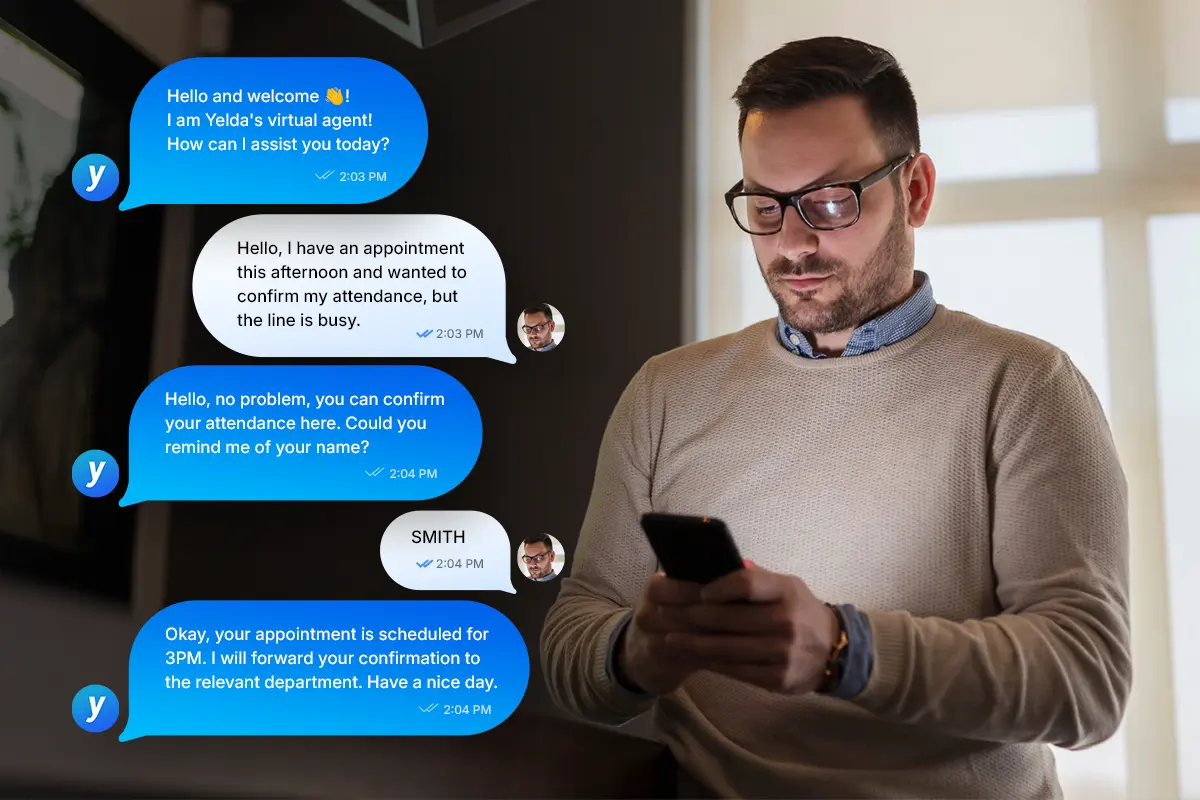
Conversational AI tools such as chatbots (text) and callbot solutions (voice) have become pillars of customer relations. These virtual assistants autonomously answer the most common questions asked by guests:
Opening hours;
Available services;
Room or restaurant reservations;
Local activity recommendations.
In addition to being available 24/7, they offer multilingual support, allowing you to interact with an international clientele without language barriers. In the event of a complex or urgent request, the system can intelligently redirect to a human staff member to ensure seamless service continuity.
Sentiment analysis and customer feedback
Thanks to natural language processing (NLP), AI is capable of decoding the emotions expressed in customer reviews, social media comments, or survey results.
It identifies recurring trends (both positive and negative) to allow establishments to quickly adjust their services:
Continuous service improvement;
Better online reputation management;
Increased customer loyalty.
This analysis allows hotels to quickly address weaknesses, highlight what is working, and reactively adjust their strategy. It is also an asset for improving positioning on platforms like Booking.com or TripAdvisor and earning the trust of future guests.
Voice assistants and smart rooms
So-called "smart"rooms, combining voice assistants and connected devices, represent the ultimate personalization of modern hospitality. With a simple voice command or via an app, guests can adjust:
Temperature, lighting, and soundscapes;
Opening or closing curtains;
Access to services (room service, spa bookings, etc.).
At the same time, IoT sensors analyze actual room occupancy to adapt energy consumption, offering a dual benefit: guest comfort and energy efficiency.
Fraud reduction and security through AI
AI systems can detect unusual behavior: suspicious payments, multiple cancelled bookings, fraudulent logins, etc. Additionally, intelligent video surveillance, from facial recognition or biometric control strengthen physical security for establishments. They provide active monitoring while respecting customer data privacy.
Automatic translation and multilingual communication
In a world with an international clientele, AI makes language barriers obsolete. In other words, establishments no longer need to rely exclusively on multilingual staff. callbots, voice assistants, or mobile apps with built-in translation capabilities allow international guests to easily interact with hotel services, whether booking a room or asking for a recommendation. This contributes to seamless communication that is professional and reassuring at every stage of the customer journey.
Similarly, generative AI integrates easily into websites and allows content to be quickly translated into many languages with just a few clicks.
Personalized recommendations and intelligent upselling
AI-powered CRM tools make it possible to offer targeted offers based on the guest's profile, stay context, or past behavior. This translates into personalized campaigns:
Upselling (room upgrades, additional services);
Cross-selling (excursions, packed lunches, massages);
Proactive notifications via preferred channels (email, SMS, mobile app).
This approach creates a richer guest experience and increases revenue for the hotel.
Revenue management and dynamic pricing
Artificial intelligence systems applied to the hospitality industry allow for continuous analysis of demand, market trends, and competitor data. Using predictive models, they anticipate peak occupancy and off-peak periods with high precision.
These tools adjust prices and availability in real time based on multiple factors:
Demand levels;
Local events;
Weather conditions;
Guest behavior;
Direct competitor rates.
This dynamic pricing model maximizes revenue per available room (RevPAR) while ensuring constant competitiveness in the local market. It also frees up staff from time-consuming manual adjustments by fully automating pricing decisions.
For example, hotel groups like Marriott already rely on integrated yield management solutions, coupled with high-performance predictive algorithms. These tools analyze thousands of variables to recommend the best pricing strategy in real time, based on the targeted customer segment.
Predictive maintenance and automated technical management
AI makes it possible to shift from corrective maintenance to predictive maintenance.
Connected sensors continuously analyze the condition of equipment and flag anomalies before they cause a breakdown. This results in fewer service interruptions, longer equipment lifespan, and reduced maintenance costs.
The benefits of AI for the hospitality industry

Integrating artificial intelligence into the hospitality industry goes beyond mere technological innovation. It brings several benefits to everyone involved in the establishment, from guests and staff to management.
For guests : thanks to 24/7 service availability and the responsiveness of virtual agents, travelers get instant answers to their requests, benefit from targeted offers based on their preferences, and interact in their own language, without waiting or constraints.
For the business : time-consuming tasks such as accounting reconciliations, staff scheduling, or inventory management are automated. This reduces human error, improves responsiveness, and frees up time for higher-value tasks.
For employees AI helps alleviate repetitive tasks and fosters skill development. By freeing staff from operational constraints, it allows them to refocus on what makes hospitality so special: attentiveness, human connection, and personalized service.
➡️ Get a clear view of your future financial performance by running a custom simulation tailored to the specific needs of your project.
Estimate the gains of a voice agent based on your own call volumes with our ROI simulator.
Tips for deploying AI in a hotel: best practices and key considerations
Integrating AI solutions into a hotel establishment requires following a specific process:
Assess real needs : map out areas where AI can add value and prioritize use cases that offer short-term profitability.
Choose the right tools : opt for systems suited to your size, category, and customer profile. Prioritize solutions that can integrate with your existing software (PMS, CRM).
Keep the human element : teams must be trained on how to use and analyze AI tools. It is essential to keep human contact at the heart of complex situations.
Comply with regulations : regarding compliance, GDPR adherence and personal data security must be guaranteed. Performance should be tracked using concrete indicators.
Measure performance : define KPIs (conversion rate or occupancy, satisfaction, cost reduction, customer reviews). Based on this, the establishment can continuously adjust tools according to their effectiveness.
Anticipate risks : it is important to define contingency plans in case of system failure and to provide human oversight for sensitive cases (errors, conflicts, complaints).
Communicate transparently about AI : the company must make it a priority to inform customers about how it uses AI and how their data is protected.
AI FAQ for the hospitality industry
Will AI replace human staff in hotels?
No. AI automates repetitive tasks, but it does not replace humans. It frees up time to focus on hospitality, advice, and guest support, which remain at the heart of the hotel experience.
How can we ensure a personalized guest experience while respecting privacy?
By complying with GDPR. Data must be collected transparently, with guest consent, and limited to what is strictly necessary to improve service.
What are the main risks to anticipate when deploying AI in a hotel?
The risks involve cybersecurity, technical bugs, and staff buy-in. A gradual, tested, and supported integration is essential.
What AI trends should we watch for in the hospitality industry over the coming years?
Smart rooms, facial recognition, and emotional chatbots will become widespread. Predictive AI will become the key to anticipating guest demand and building loyalty.
How many calls can your voice agent absorb?
Estimate in one minute the number of automated calls and the savings on your own volumes, with our ROI calculator.