
Self-service in customer relations: what is it and how do you deploy it?
Discover the concept of customer self-service and optimize your customer experience!


According to Forrester, 72% of people say they prefer to find a solution to their problem on their own, rather than dealing with a customer service department.
Indeed, customer self-service is increasingly appreciated by consumers, much to the delight of customer service and marketing teams: time savings and customer satisfaction are the watchwords of self-service.
So, what exactly is Self-service self-service and how can you implement it in your company? Find out in this blog post, written by our customer relationship experts.
What is self-service?
Customer self-service represents all the tools put in place to promote consumer autonomy when searching for information.
Derived from the English terms "self" and "care," it aims to give customers quick access to information, allowing them to handle simple requests themselves.
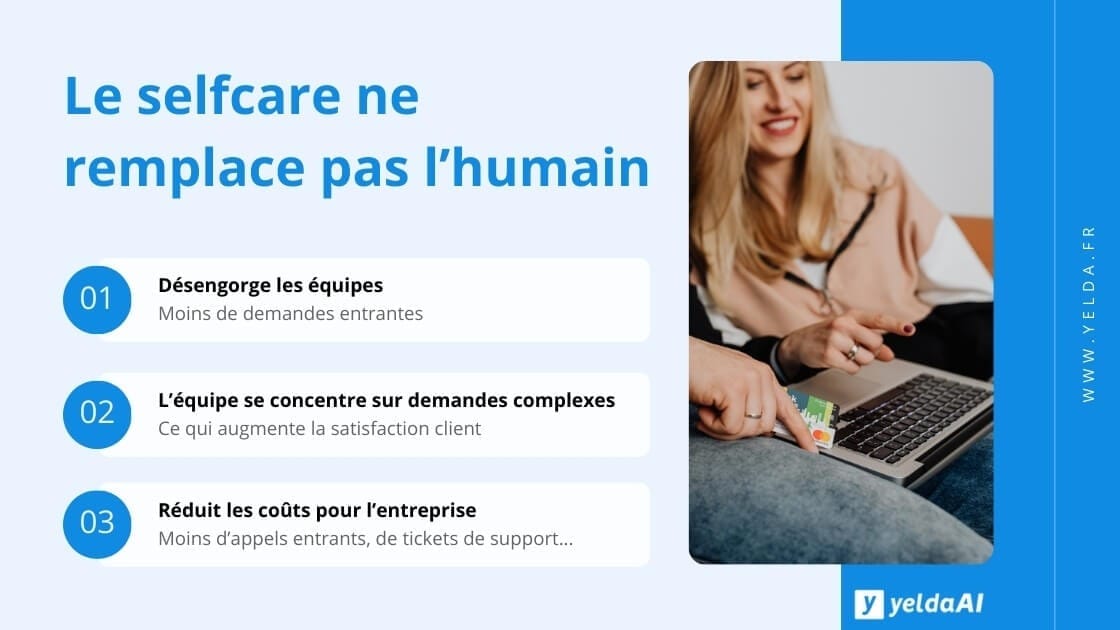
The goal of self-service is not to replace human support, but to complement it by absorbing common and repetitive queries, thereby allowing teams to focus on more complex, higher-value requests.
What are the benefits of self-service in customer relations?
Integrating self-service into your customer relationship strategy is a real asset for building customer loyalty and ensuring a lasting user experience. But it is also beneficial for the company across several departments. In fact, 81% of customers attempt to resolve their issues themselves before contacting customer service and are satisfied with doing so (Zendesk). Let's take a closer look.
The benefits of self-service for customers
- Immediate answers, anytime : Self-service allows customers to get answers without any wait time, even outside of customer service hours. In an age of hyper-connectivity, where a user might visit your site at midnight on a Sunday, 24/7 information availability has become a standard, not just a perk. Self-service meets this demand.
- Reducing friction points : By accessing information directly, customers avoid queues and stay in control of resolving their issues. They choose when and how to act. For companies facing call spikes or long wait times, self-service is a strategic lever. It streamlines the experience, reduces frustration, and contributes directly to improving NPS.
- A smoother customer journey: According to Aspect/eMarketer, 32% of consumers consider the phone a frustrating channel, mainly due to wait times and the need to repeat information. During a call, users often have to restate their personal details and re-explain their request to multiple agents. Conversely, a chatbot connected to the customer portal allows for immediate access to relevant information, without repetition or breaks in the journey. The experience becomes simpler, faster, and more convenient.
The benefits of self-service for the company
- Relieving the burden on customer service: Simple and repetitive requests make up 60% to 80% of total inquiry volume. Customer self-service can drastically reduce this volume. A study by Exaegis and Weyou shows that 68% of repetitive manual tasks are eliminated through self-service.
- Reduction of operational costs : A 2019 Gartner survey revealed that each interaction via phone, email, or live chat costs an average of $8.01, compared to just $0.10 for self-service channels.
- An excellent way to easily redirect your customers: While digital tools used for self-service deployment are not always sufficient on their own, they can be used to redirect a prospect to the right department, which is then fully equipped to handle their request. This helps optimize the customer journey.
- Optimized data collection : Self-service tools can provide a history of all past interactions, which will be useful for your staff in the event of contact by phone or email.
Implementing self-service solutions is now essential for any company that takes its customer service seriously. When well-designed, these tools improve all KPIs for your customer service.
Which tools should you use for customer self-service?
There are various self-service tools available, each addressing specific business needs. Let’s take a look at these digital tools.
The dynamic FAQ
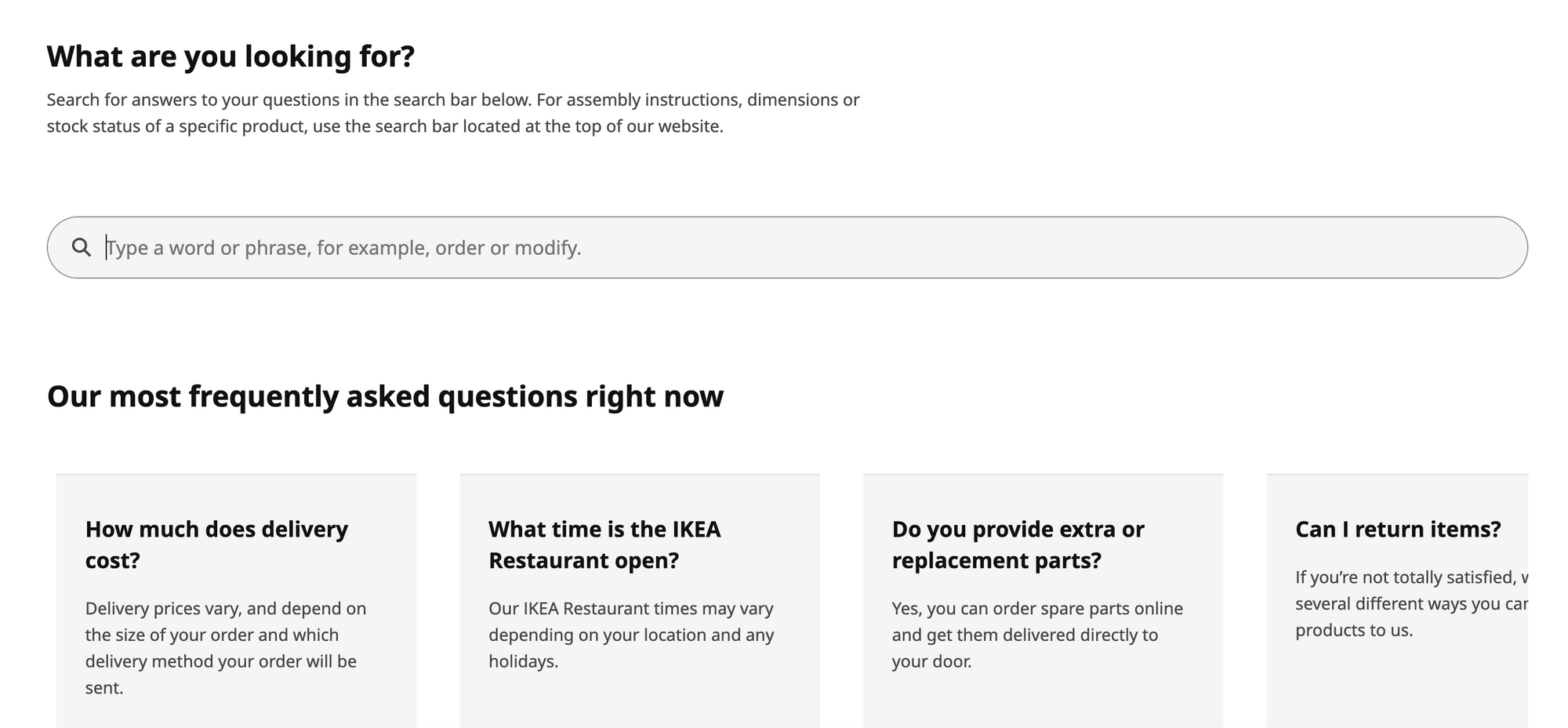
An A standard FAQ is the tool that immediately comes to mind when looking for an answer to a common question. They can be found on the homepage, service pages, product pages, or any other page on the site.
As for the Dynamic FAQ dynamic FAQ, it is a more interactive and personalized version: represented by a search bar, it offers only the answers relevant to the user following a query.
Thanks to machine learning, the tool immediately provides the user with the right page and the right answer related to their question.
The chatbot
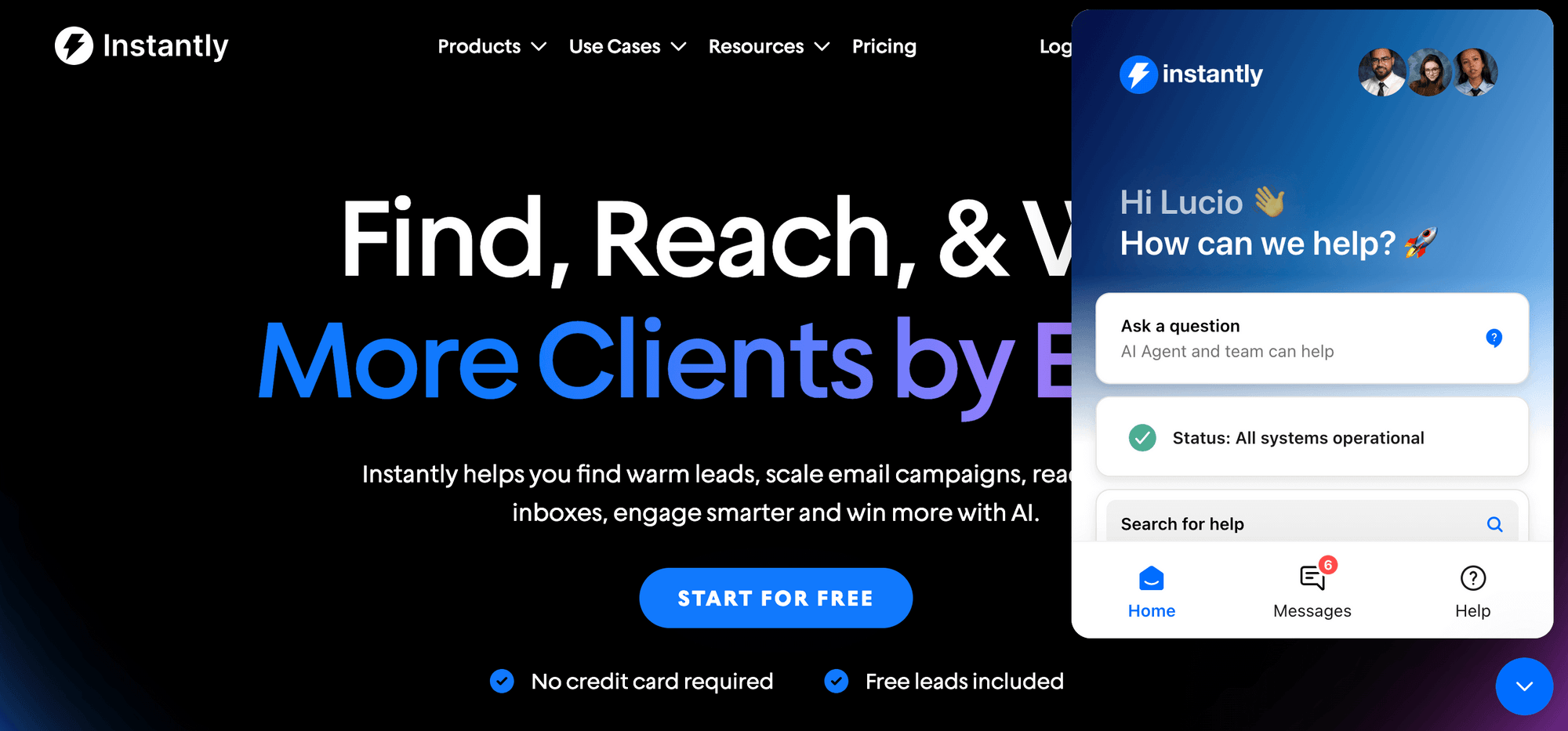
The chatbots is a conversational agent capable of understanding user requests in natural language and responding to them automatically, without human intervention. It relies on the site's knowledge base and AI to provide accurate answers.
Thus, the chatbot can answer frequently asked questions, access customer account data, track an order, suggest actions (refunds, address changes, appointment scheduling), and redirect to a human agent if necessary or if requested by the user.
The callbot
A callbot is a voice-based conversational agent that, thanks to artificial intelligence, can understand and respond to customer requests autonomously and naturally during phone calls.
Thus, implementing an AI callbot (such as AI voice agent YeldaAI) allows you to automate up to 50% of incoming requests and offload call centers so that human agents can focus on complex inquiries.
Help Box (Smart Push)
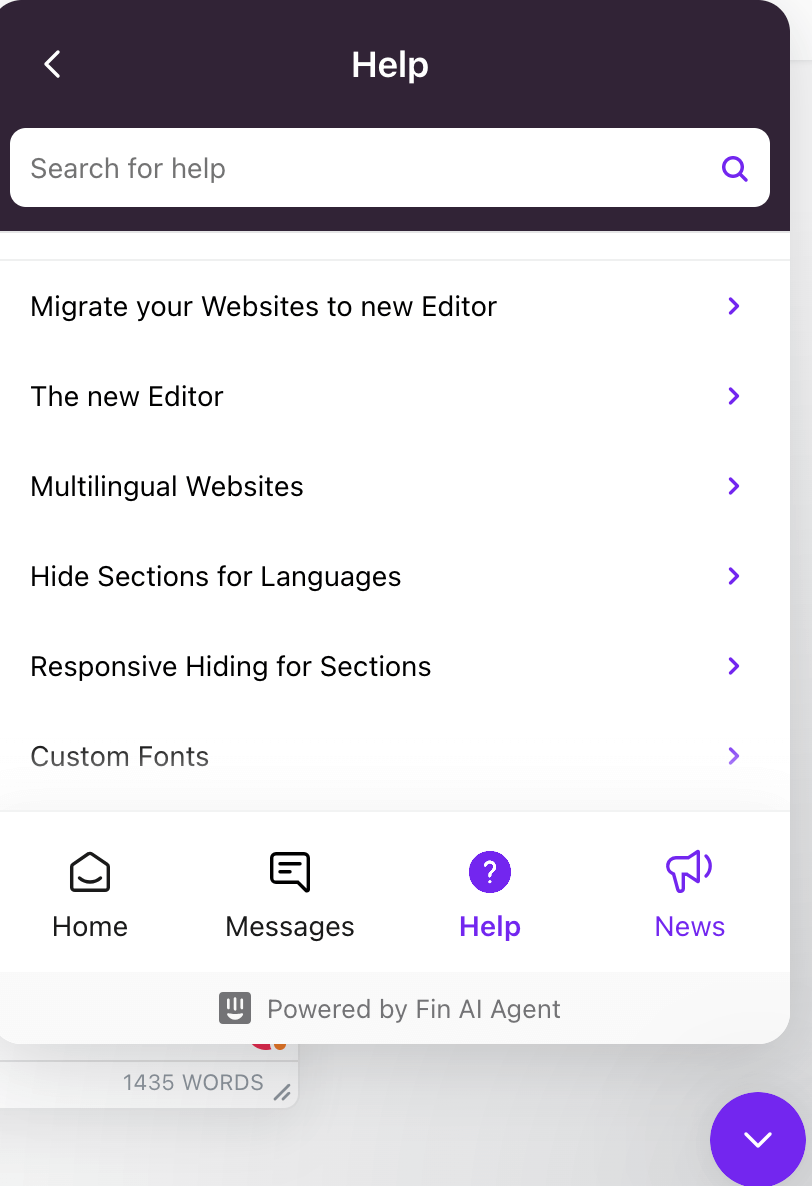
The "Smart Push" (contextualized help box) is a digital tool integrated into a website or other web platform, such as a mobile app. It serves as real-time support, answering user questions via a live chat interface. Unlike a chatbot, a help box does not use artificial intelligence and relies on a more basic, simplistic algorithm. Much like an interactive FAQ, its goal is to address needs without requiring a real-time conversation.
Community-based solutions
Companies can also leverage community-based solutions, where members of a community linked to the organization help one another and share common issues. Forums, discussion groups, and Q&A platforms are all ways for customers to find answers to their questions.
*Discord, for example, is an innovative community-based solution for self-service.

Guides and tutorials
Guides and tutorials are educational resources shared with users. They may contain, for example, step-by-step instructions on how to use products or the process for purchasing a personalized service. The goal is to help customers or prospects resolve issues independently and engagingly through learning.
The Guides can come in several formats : videos, blog posts, PDF files, etc.
Which KPIs should you use to track self-service performance?
It may seem difficult to measure self-service performance because the user is interacting with your company independently. Rest assured, there are various KPIs that still allow you to determine whether implementing a self-service strategy is paying off:
Self-service utilization rate : this measures the proportion of users who actually use the digital tools deployed by the company for self-service.
First-contact resolution rate : it measures the ability of self-service tools to resolve customer issues during the first interaction.
Average resolution time : it evaluates the average time required to resolve customer issues using self-service tools.
Satisfaction surveys : it helps determine the satisfaction of customers who have used self-service tools, in the form of an interactive questionnaire or survey campaign.
Number of monthly calls in your call center.
How many calls can your voice agent absorb?
Estimate in one minute the number of automated calls and the savings on your own volumes, with our ROI calculator.