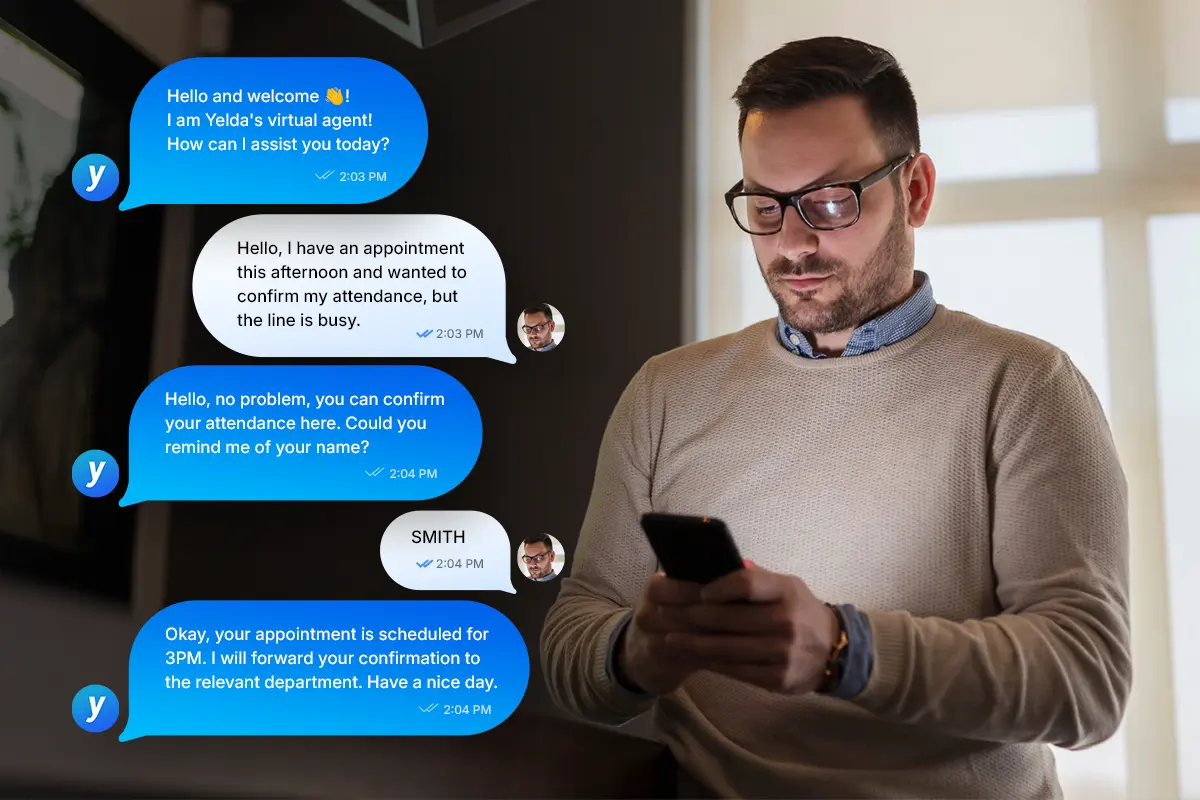
Customer relations in retail: 6 practices to adopt in 2026
Omnichannel, personalization, self-service, virtual agents, data analysis, training: 6 practices to improve customer relations in retail.

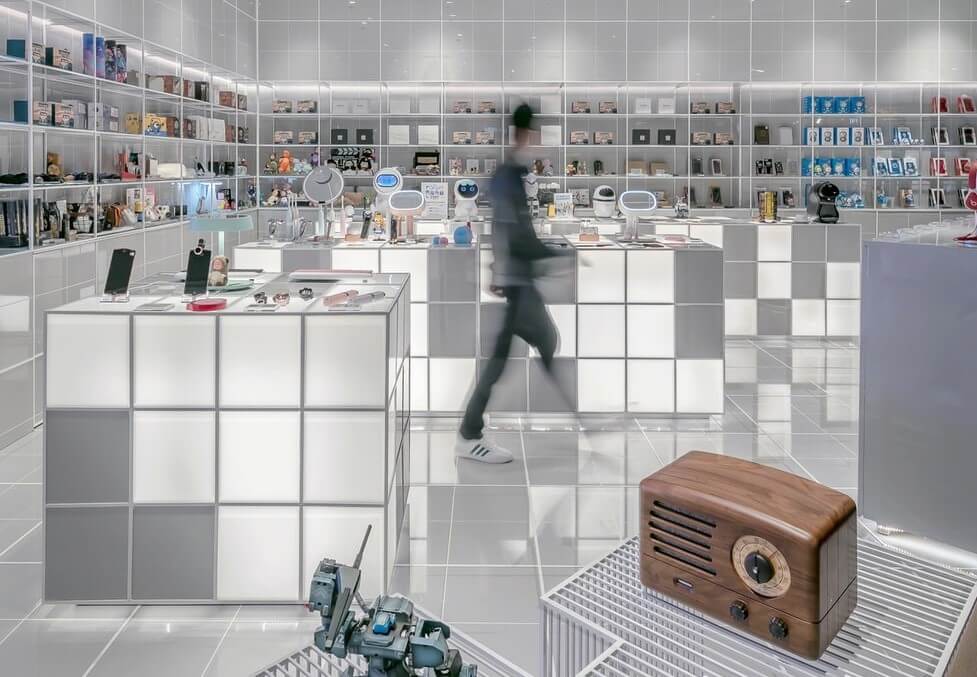
The retail sector, which encompasses all retail trade activities, advocates for impeccable customer service. Consumers today are increasingly demanding, and constant technological evolution requires staying up to date.
For example, the use of artificial intelligence makes it possible to create simplified, more personalized, and intuitive shopping experiences. Also, the rise of the circular economy with second-hand goods is a development to consider. The customer relations in retail is directly linked to your customer loyalty and the growth of your business. So, what are the 6 practices to adopt in 2026?
1. Offer an omnichannel customer experience
Did you know that 28% of French people want a true omnichannel experience? For example, buying products in-store that were showcased on your website?
Shopping channels have evolved significantly, and there are more of them than ever. Today, as a retailer, you must offer a customer experience superior to that of your competitors. Therefore, it is essential to bring together traditional and digital channels to streamline your customers' experience. This is what is known as the omnichannel customer experience: it represents the sum of all emotions and feelings experienced by a customer before, during, and after purchasing a product through the simultaneous or connected use of all available channels, both traditional and digital.
"Offering a compelling omnichannel experience was once the cutting edge of retail. It is now a necessary condition for survival ," according to McKinsey & Company.
Customer satisfaction is certainly at the heart of your concerns as a retailer. As a result, the omnichannel customer experience is a highly effective solution for improving it: omnichannel services allow you to offer your customers an incomparable choice of shopping journeys, thereby improving their purchasing experience.
For example, you can offer:
more stock available for sale (and therefore fewer customer cancellations);
buying via Express Click & Collect;
buying online and returning in-store;
etc.
2. Personalize the customer experience
According to a study by Epsilon, 91% of customers are more likely to do business with a company again if it provides personalized service. It is no longer an option; you must personalize the customer journey, both in-store and on digital channels! So, how do you do it?
Build trust with your customers, a major challenge in retail, while keeping up with technological developments. Today, we are seeing a boom in innovations and new practices in:
Customer care: Did you know that 62% of French consumers prefer to buy in-store (Adyen study, 2022)? Customers expect staff to support them in their purchasing process, to guide them in their buying decisions, and to provide reassurance. In-store customer relations are certainly not obsolete. They are complementary to the integration of new technologies into the customer journey.
Payment methods: the current trends include Tap to Pay, Pay by link, instant payments, BNPL solutions, cryptocurrencies, and QR codes.
The second-hand market: environmentally conscious consumers, mindful of their purchasing power, are now prioritizing second-hand goods—a market expected to double over the next 5 years (ThredUp 2024 study).
Self-service: we will discuss this in detail in the next section.
Amazon, the global e-commerce giant, is a clear example of the trend toward UX personalization. With its vast product selection, fast delivery, and personalized recommendations, Amazon has disrupted traditional retail and set new standards for customer expectations.
3. Integrate self-service tools
Self-service in customer relations is increasingly valued by consumers: time savings and customer satisfaction are the watchwords of self-service. In other words, it is customer self-assistance and represents consumer autonomy when searching for information: there is no human intervention in the search process. The goal is to enable the customer to resolve simple issues on their own. If the issue at hand has low added value, the intervention of a human agent to resolve it is not cost-effective.
According to a Forrester study, 72% of customers and prospects say they prefer to find a solution to their problem on their own rather than dealing with customer service.
Also, did you know that 68% of repetitive manual tasks are eliminated thanks to self-service (Exaegis and Weyou)? This benefit is what makes self-service a trending practice for both the customer and the company.
To implement self-service tools in retail customer relations, you can offer:
A dynamic FAQ : a dynamic FAQ is an interactive and personalized version of a standard FAQ, represented by a search bar. Using machine learning, the tool immediately provides the user with the right page and the correct answer to their question.
A help box (Smart Push) : this is a self-service tool available on a website or app. It serves as real-time support and answers users' questions via a live chat interface.
A community solution : here, customers share their issues and ask each other questions via forums or discussion groups.
A guide or tutorial : these are educational resources shared with users. They contain instructions on how to use products or the process for purchasing a service. The goal is to resolve customer issues through learning.
There are also increasingly common self-service tools: intelligent robots such as the callbot and the voicebot We will cover this in the next section.
4. Using intelligent virtual agents
Artificial intelligence (AI) is transforming the retail relationship with customers: it enables highly personalized CRM (Customer Relationship Management) and optimized use of the supply chain. According to a McKinsey report, retailers that have adopted AI for predictive analytics and automation have increased their revenue by 10% on average.
AI refers, among other things, to the use of increasingly common intelligent virtual agents, such as:
Chatbots: these bots are computer programs capable of having a written conversation with a human. They can answer simple customer questions, process certain requests, and carry out simple transactions.
Callbots: these are conversational agents like chatbots, but voice-based. The callbot uses voice recognition and automatic speech processing technologies and takes less than 3 seconds to understand your customer's spoken request before responding. It offloads call centers and helps reduce the Average Handling Time of calls by human agents.
"Stitch Fix has been using artificial intelligence since long before it was trendy: years before the AI fever currently sweeping the retail sector," cites an article in Retail Brew.
5. Analyzing data to better understand customer needs
With the end of third-party cookies, the collection and use of advertising data are undergoing a major transformation. The retail sector must invest in new technologies to reach its audience in a relevant way.
Now, faced with the challenges of tracking users across websites, the focus is on collecting anonymized information during each visit. Major e-commerce sites like CDiscount or Auchan are seizing this opportunity by improving their data processing and marketing it through specialized advertising networks, known as retail media.
This approach makes it possible to better understand customer behavior and personalize interactions, thereby strengthening the customer relationship in retail.
6. Training agents and advisors
Employee experience (or EXTech) is also a priority for in-store customer relations, according to Gartner's latest Hype Cycle. The goal is to attract and, above all, retain talent, thereby minimizing turnover.
Indeed, agents and advisors are the key to a winning strategy for improving customer relations in retail: as guardians of customer relationship quality and loyalty, they are brand ambassadors and an essential channel for customer feedback.
So, how can you avoid turnover and engage your employees? You can focus on:
Fair and rewarding compensation
An enriching employee experience
Digital tools that improve their working conditions and reduce repetitive tasks.
Training on communication and conflict resolution in-store.
Supportive and flat management.
How many calls can your voice agent absorb?
Estimate in one minute the number of automated calls and the savings on your own volumes, with our ROI calculator.