AI and customer experience: 6 trends for 2026
Virtual agents, self-service, data analysis, prediction, personalization, and feedback: the 6 AI trends to improve customer experience in 2026.


Artificial intelligence is now an integral part of the tools used to improve customer experience and remain competitive in the market. Reduced operational costs, faster response times, increased customer satisfaction, and more—its many benefits have radically transformed the customer service sector.
The rapid transition of brands toward intelligent CX and the approval of French consumers are proof of this! 55% of French people consider AI essential in customer service to provide high-quality support, according to the Zendesk CX Trend Report 2025!
From the integration of virtual agents like voicebots, to customer data automation or personalized customer journeys, discover the 6 main AI trends combined with customer experience in the 2026 market.
1. Integrating virtual agents for faster, more efficient, and cost-effective customer service
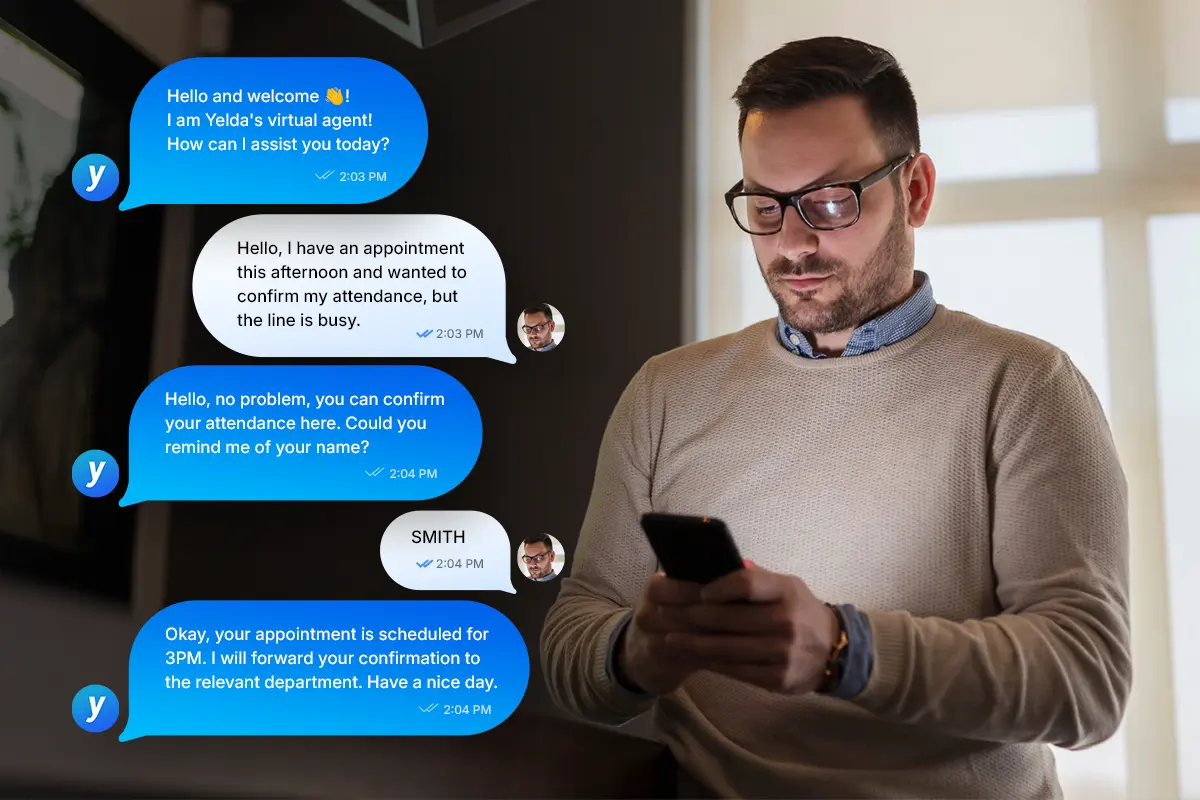
The fastest and most effective way to integrate AI into your customer service is to deploy a callbot platform or other intelligent virtual agents, such as voicebots or chatbots. Let's take a closer look at the differences between these three intelligent robots:
The chatbot is an intelligent conversational agent that communicates with a user via text. It uses Natural Language Processing (NLP) technology to do so.
The voicebot, on the other hand, is also an intelligent conversational agent, but it communicates with the user via voice. To do this, it also uses TTS (Text-to-Speech) and STT (Speech-to-Text) technologies, combined with voice AI.
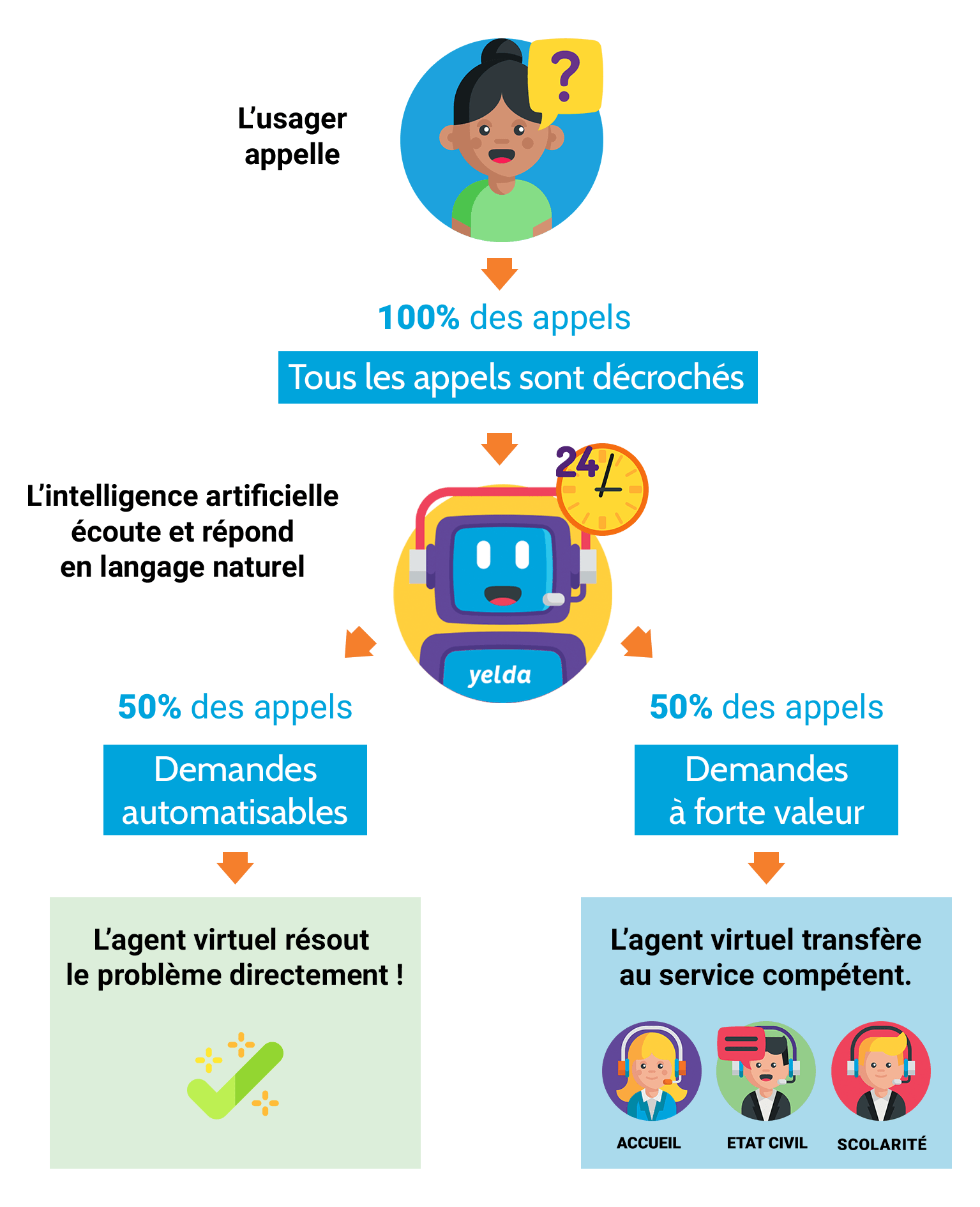
The callbot is integrated into a call center: the robot handles incoming phone calls, where the caller speaks to it over the phone before being redirected to a human agent or the requested department.
All these virtual agents offer undeniable advantages for improving the customer experience:
They are faster : the average wait time for online chats is 88 seconds compared to several minutes with a standard phone call.
They are efficient : continuous customer data updates, ultra-fast request processing, and RPA (Robotic Process Automation) make intelligent bots an efficient solution, allowing human agents to delegate simple, repetitive tasks instead of performing them manually.
They are cost-effective : for example, resolving a request on social media via an intelligent chatbot costs only 1 dollar, compared to 6 dollars via traditional phone support (McKinsey).
Estimate the gains of a voice agent based on your own call volumes with our ROI simulator.
2. Self-service, to facilitate autonomy in problem resolution
Self-service, or self-care, is based on the principle of providing online resources that answer users' questions. This way, the consumer does not have a direct exchange with a human agent and quickly finds the answer on their own.
According to a study by Aspect/eMarketer, 32% of consumers find the phone frustrating due to wait times and the need to repeat personal information. Using a chatbot connected to a personal account on the website can alleviate this frustration by providing direct access to the necessary information.
Personalized omnichannel interactions allow customers to find contextualized solutions while giving them the freedom to search for information themselves. In 2023, 82% of consumers prefer brands that provide a consistent customer experience across all channels (Econsultancy). This consistency is essential for ensuring long-term customer satisfaction.
For your business, self-service represents a significant saving of time and money. An autonomous chatbot on your social platforms can effectively answer your customers' frequently asked questions, thereby improving their experience. Zendesk reports that 81% of customers try to solve their problems themselves before contacting customer service, and they often succeed.
Although digital self-service tools are not always sufficient for every request, they can direct prospects to the appropriate department capable of handling their needs. This optimizes the customer journey and increases the conversion rate. Furthermore, these tools provide a complete history of interactions, which is useful for your staff in the event of a follow-up by phone or email.
In conclusion, self-service can eliminate 68% of repetitive manual tasks, according to Exaegis & Weyou, and relieve the customer service team, thereby providing an undeniable advantage to businesses.
3. Optimizing customer data analysis
We all know the value of having an up-to-date CRM, but analyzing customer data in detail is just as essential as it is complex when done manually. Customer segmentation and the detailed analysis of personas or prospects have become useful tools for standing out from the competition and building customer loyalty.
To achieve this, artificial intelligence has the advantage of optimizing customer data analysis in a highly advanced way. For example, it allows you to:
Classify data automatically, without human intervention.
Identify recurring discrepancies between data from different systems, even the least obvious ones.
Cross-reference information sources to create ultra-detailed personas, categorized by age, interests, location, purchasing behavior, etc.
Thanks to these features, you can provide true personalization in your CRM (Customer Relationship Management) while also saving your employees time.
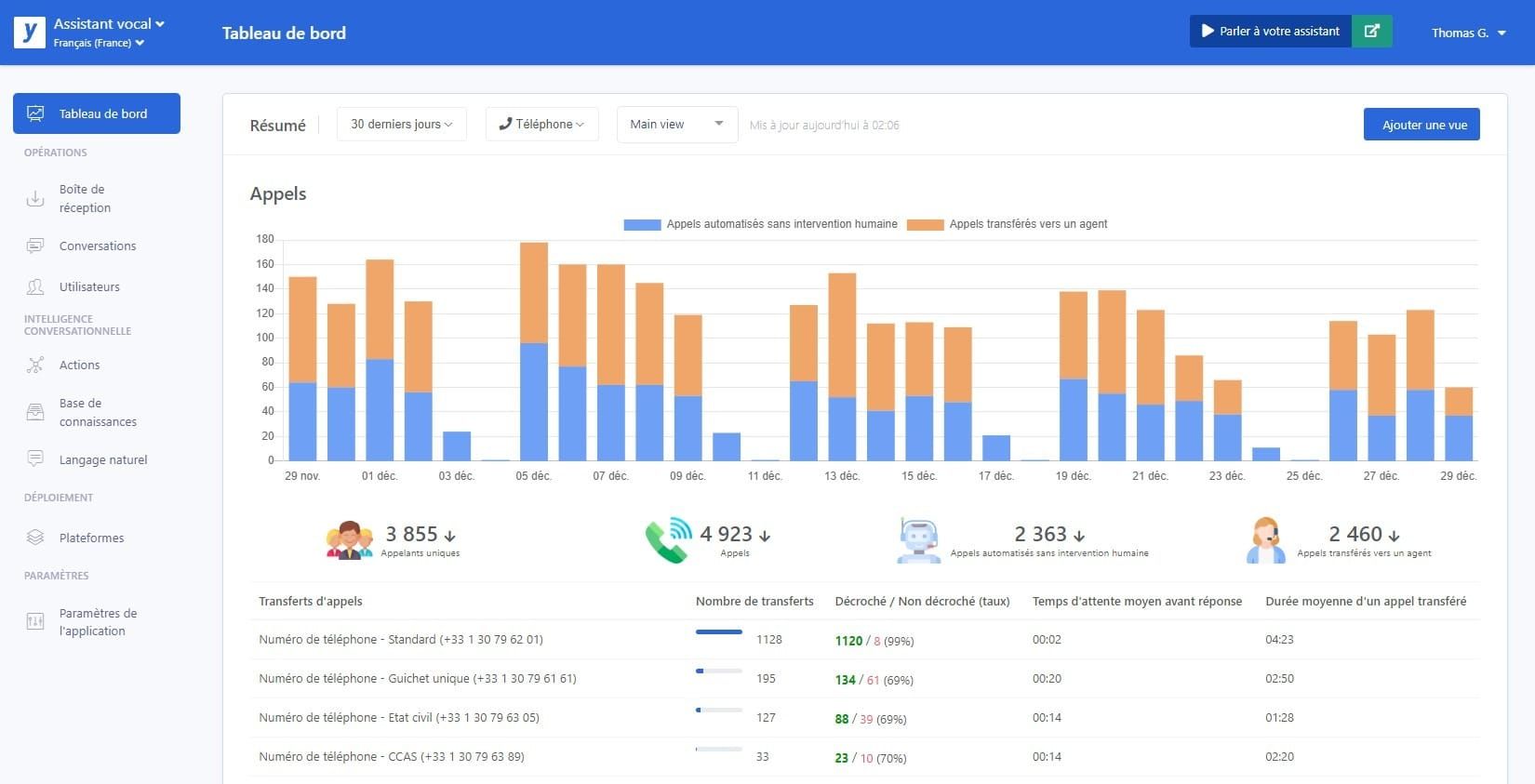
For example, the YeldaAI voice agents connect directly to the client's business tools, including the CRM, to understand customer history and automatically update their file in real time.
4. Predicting needs and behaviors
To personalize a customer journey, optimizing customer data analysis is not enough. Consumers place increasing importance on brands that listen and their ability to identify their needs.
Furthermore, the better you can predict your prospect's behavior, the more capable you will be of refining their customer journey and offering them the right solution at the right time and at the right price. No more endless testing and cold outreach campaigns; thanks to artificial intelligence, you know exactly how to win over your customers!
5. Personalizing the customer journey with AI
As mentioned above, personalizing the customer journey is an essential trend in 2026 and, above all, a must-have.
Let’s look at how AI can personalize a sales funnel:
Digitizing data, for example with the Google Analytics GA4 tool (or its best alternative, Matomo, which is fully compliant with GDPR), which is useful for segmenting your website visitors.
Collecting highly precise information, useful for customer conversion. For example, Salesforce and Hubspot use AI for their CRM.
Building customer loyalty through email marketing campaigns, automated by AI.
This is the case, for example, with Adobe’s intelligent bot: a proponent of artificial intelligence, Adobe chose several years ago to implement the Sensei bot, which helps them collect behavioral data, offers tailored product recommendations, automates upsell and cross-sell areas, and adjusts merchandising based on the customer segment.
6. Automatic collection and analysis of customer feedback
Customer service is also part of CRM. It can be improved using AI by automating the collection of customer feedback to measure customer satisfaction after receiving a product or using a service.
For example, an automated satisfaction survey ensures feedback is collected from all customers quantitatively. Artificial intelligence, supported by human experts, can then reliably analyze this data and draw conclusions representative of overall customer satisfaction in order to improve the customer experience.
As you can see, AI allows you to significantly improve your customer experience, whether through collecting reliable data, conducting in-depth analysis, or integrating high-performance tools that continuously adapt to consumer needs.
How many calls can your voice agent absorb?
Estimate in one minute the number of automated calls and the savings on your own volumes, with our ROI calculator.