Voice assistants for call centers: everything you need to know
What a voice assistant can do in a call center, why it helps agents and customers, and how to deploy it in 5 steps.


In recent years, voice assistants for call centers have become almost essential. These virtual agents take time-consuming tasks off human agents and handle up to 40% of customer requests autonomously.
In today's call centers, agents and voice assistants work as a team to deliver a great customer experience and absorb incoming calls at peak times. Let's see which tasks a voice assistant can handle and how to deploy one in your call center.
In short: a voice assistant understands speech and answers out loud, which makes it a direct reinforcement for call center agents. It can take on many tasks: appointment booking, request qualification, data collection, answers to common questions. And setting it up is simple, in 5 steps.
What is a voice assistant?
A voice assistant is a program designed to understand and interpret the human voice. Its automatic speech recognition (ASR) system lets it understand requests and answer appropriately.
Voice assistants can perform many tasks: web searches, reminders, appointment booking and more. They are often built into smartphones or smart speakers. Well-known examples include Apple's Siri, Google Assistant and Amazon Alexa.
What are the benefits of voice assistants for a call center?
The phone remains one of customers' favorite channels to contact a brand, so call centers are central to customer relationships. Yet call centers are often overwhelmed by incoming calls and cannot absorb every request.
A voice assistant, such as a callbot or voicebot, can then make a real difference to customer satisfaction. Here are the benefits:
- Automation of repetitive tasks: human agents can focus on complex tasks that need their full attention.
- 24/7 availability: voice assistants are always available and work around the clock.
- Shorter waiting times: voice assistants answer customers instantly and increase satisfaction with faster answers.
- Consistent answers: a voice assistant always gives consistent answers, avoiding variations from one call to the next.
- Data analysis: voice assistants can record and analyze conversations to extract insights for continuous improvement.
- Lower costs: by automating some tasks, call centers reduce operating costs, as simple, repetitive tasks no longer need human agents.
- Higher customer satisfaction: fast, accurate answers improve satisfaction. Customers appreciate getting information quickly without waiting on the phone.
Estimate what a voice agent could save on your own call volumes with our ROI calculator.
Which tasks can a voice assistant handle?
A poor customer experience pushes many consumers to switch to a competitor, and long waits on the phone are a major source of frustration.
An efficient, responsive call center is therefore a real business issue. Deploying voicebots or callbots in your contact center helps your agents with their tasks.
A voice assistant can handle many tasks on its own. Here are the main ones you can safely delegate:
- Information search: voice assistants can look up information to answer questions on many topics.
- Data collection for performance tracking: the voice assistant can collect figures to analyze and improve your services.
- Reading messages and emails: they can read text messages, emails and other notifications aloud.
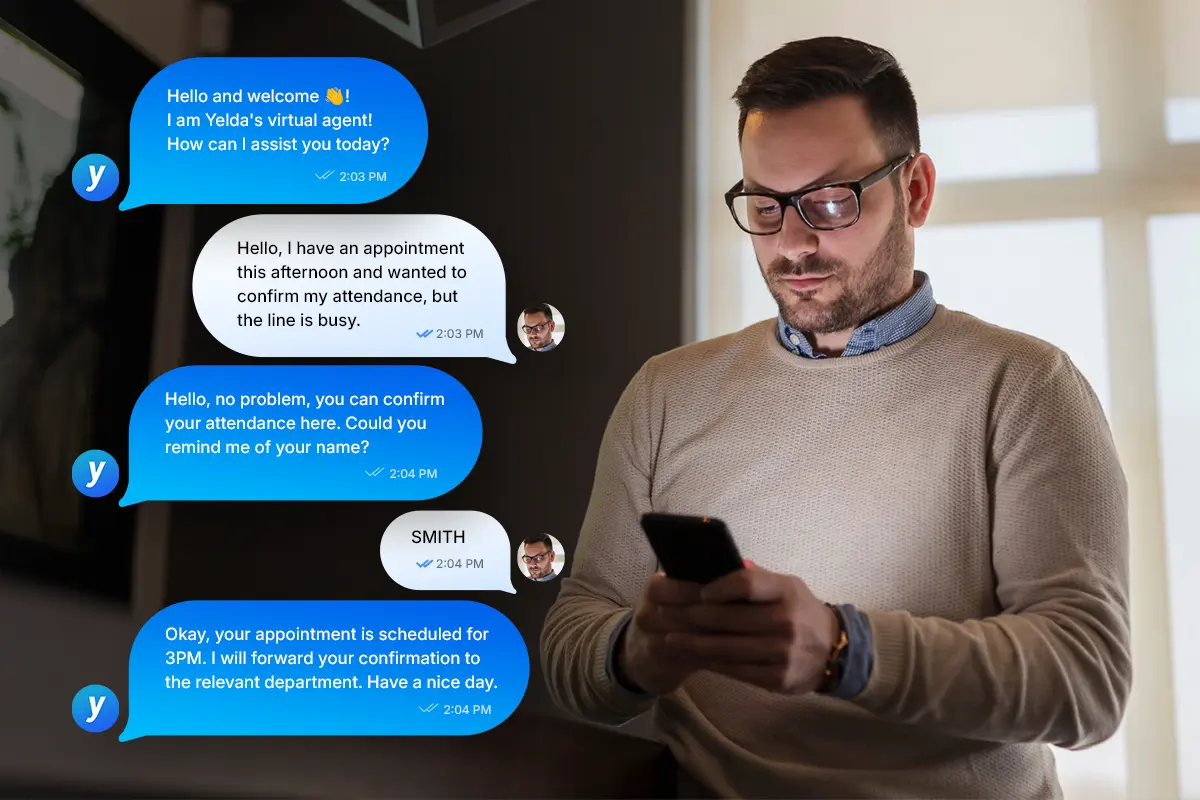
- Reminders and appointments: voice assistants can create, change and read reminders and manage calendar events. Appointment booking, which accounts for a large share of incoming calls, can be fully delegated to your virtual assistant.
- E-commerce orders: users can buy online, add items to their basket and place orders with a voice assistant.
How to set up a callbot in your call center
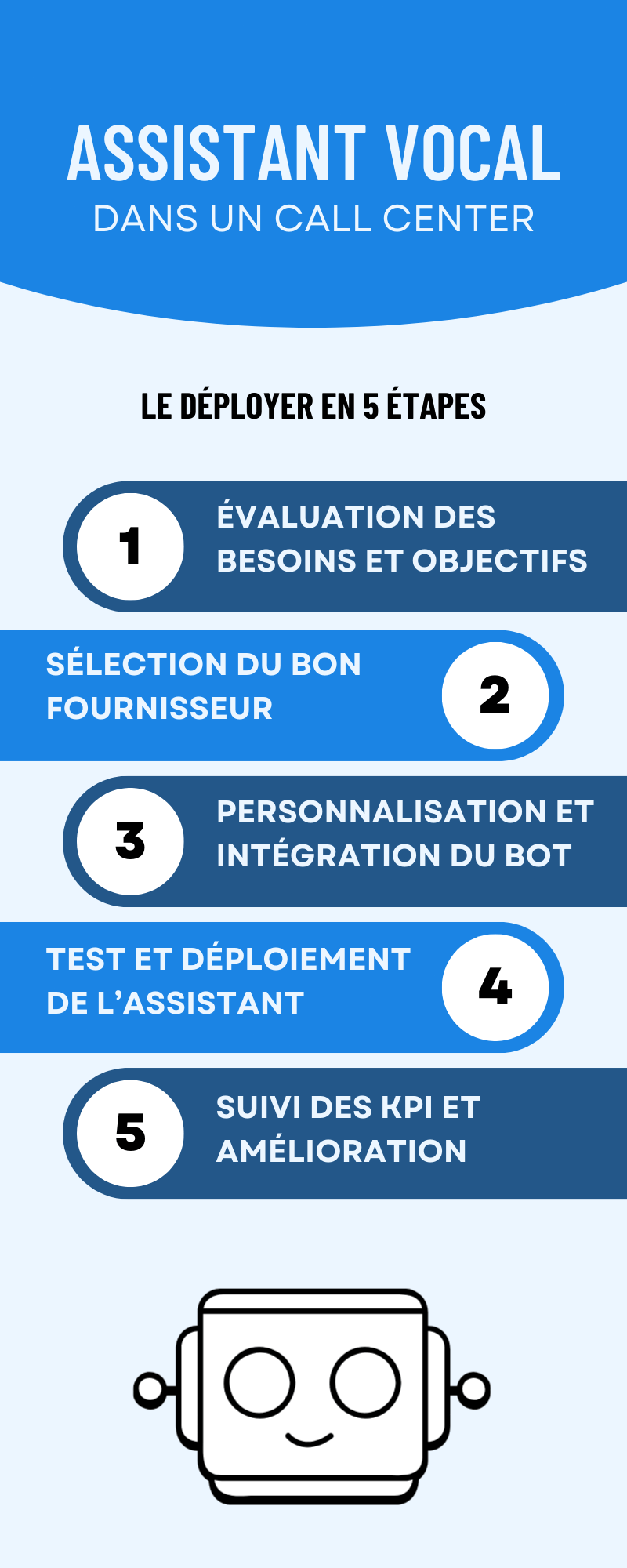
Convinced of the value of a voice assistant in your call center? Here is how to deploy a callbot step by step.
Assess your needs and goals
Define your company's goals and requirements clearly before deploying a voice assistant. The AI voice agent must meet your needs and bring real time and cost savings. Identify your customers' most common requests and the priority use cases to delegate to the callbot.
Choose the right technology or provider
Choosing the right callbot technology is essential. There are many voice assistant providers. You can, for example, choose our AI callbot solution, which stands out for its easy setup (no-code platform) and full customization.
Customize and integrate the AI
Now customize your use cases with different modules: FAQ handling, customer support, HR, marketing, lead management and more.
Test and deploy
Testing is essential to have an intelligent virtual agent that works from the very first call. Do not skip this step. Also train your human agents so virtual and human agents work well together.
Monitor and improve
Track the callbot's results with call center KPIs and measure user satisfaction. Your voice assistant can collect all the indicators you need on its own.
How many calls can your voice agent absorb?
Estimate in one minute the number of automated calls and the savings on your own volumes, with our ROI calculator.