
The 50 essential customer service statistics you need to know in 2026
Discover 50 key statistics to improve your customer service: customer satisfaction, AI, personalized service, agent training, customer expectations and needs, and more.


86% of consumers are willing to pay more for a better customer experience according to The ROI of Customer Empathy study.
In an increasingly saturated market, where products or services are becoming more and more similar, the quality of customer service can make all the difference. A single interaction can turn a one-time buyer into a loyal advocate… or a vocal detractor.
But what levers should you pull to exceed your customers' expectations, build loyalty, and generate more value?
In this article, you will discover 50 key statistics from the latest studies on customer service. Whether you are a customer experience manager, CSM, or executive, these figures will provide the essential insights to turn every customer interaction into a competitive advantage.
Statistics on the importance of customer experience
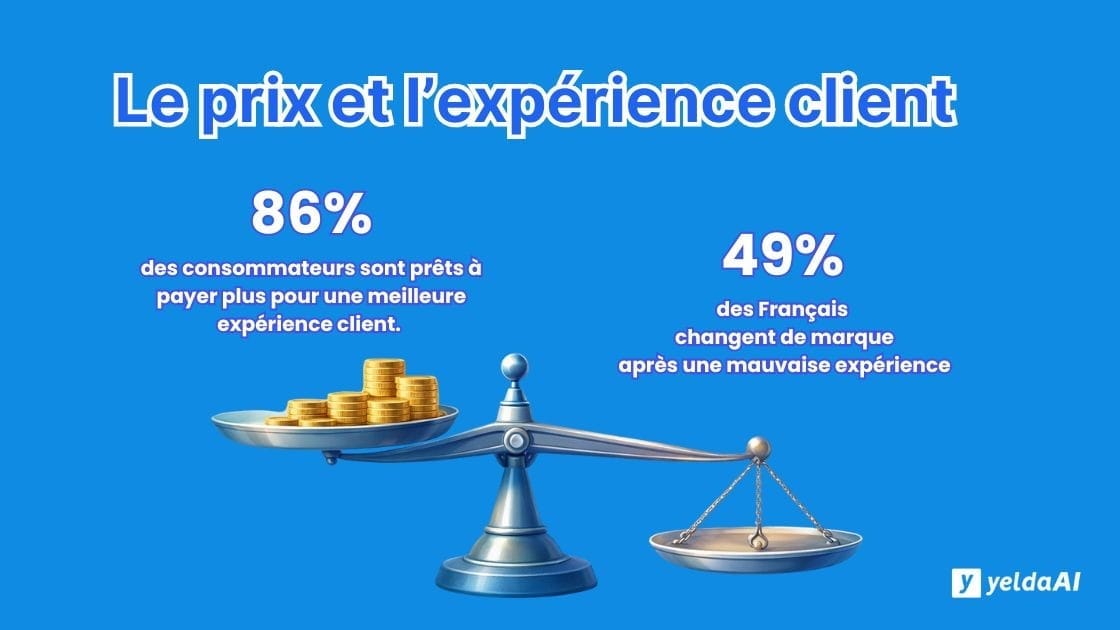
The impact of customer experience on customer relationships is undeniable. In fact, according to a study conducted by Bain & Company, 86% of consumers are willing to pay more for a better customer experience. Furthermore, for 49% of French people, a bad experience can very quickly lead a customer to switch brands.
In addition to these two statistics, others further demonstrate the value of a smooth and pleasant customer experience:
- When making a purchase, 64% of customers consider the customer experience more important than the price of the product or service (Gartner). This figure proves that a low price should not justify a poor customer experience.
- 89% of consumers are more likely to make another purchase from a brand that offers excellent customer service (according to Salesforce). This figure proves the importance of customer service for retention.
- 64% of buyers are willing to recommend a brand to others if it provides simple and positive experiences. (Siegel+Gale)
- 80% of French customers are more inclined to buy when a company offers them a personalized experience. (Voxco). Another study by The ROI of Customer Empathy slightly raises this figure to 86%.
- 86% of consumers state that the responsiveness and accuracy of a service strongly influence their purchasing decisions (Zendesk, CX Trends 2026).
- 85% of customer experience leaders believe that a single unresolved issue is enough to lose a customer, sometimes from the very first contact (Zendesk, CX Trends 2026).
Furthermore, the role of customer experience in differentiating oneself in markets where products and services may be similar cannot be underestimated.
Figures and Statistics on Customer Dissatisfaction
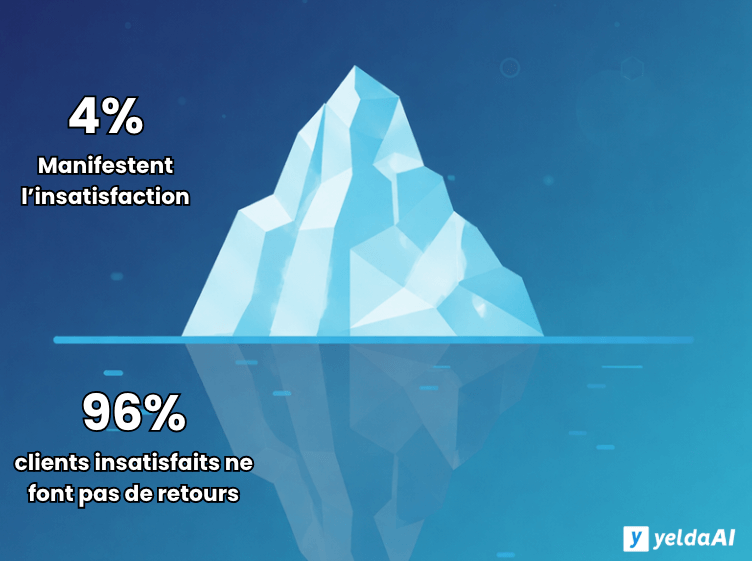
Poor service is extremely costly for businesses. Whether in terms of lost revenue directly linked to a dissatisfied customer canceling their service, or through them sharing their negative experience with their network:
- Only 4% of customers voice their dissatisfaction to the company. Of the 96% of dissatisfied customers who leave without providing feedback, 91% will never return.
Silence does not mean satisfaction. To avoid invisible losses, measure satisfaction with tools like the NPS, to encourage your customers to express their satisfaction and to take action when it falls short. - More than 50% of customers switch service providers after a poor customer service experience (Accenture). This statistic confirms that customer service is a major strategic lever for reducing churn. A single poorly handled interaction can be enough to lose a customer for good.
- Effective complaint management can increase customer retention by 21% among customers who feel satisfied with the response they received (Into The Minds)
- Common causes of dissatisfaction include a lack of human contact, complex processes, slow response times, a lack of personalization, and broken promises (Accenture)
- Globally, nearly $3 trillion in sales are at risk in 2026 due to poor customer experiences (Qualtrics XM Institute, 2026).
- In the United States alone, companies risk nearly $973 billion in sales in 2026 due to poor customer experiences (Qualtrics XM Institute, 2026).
Statistics on AI and automation in customer service
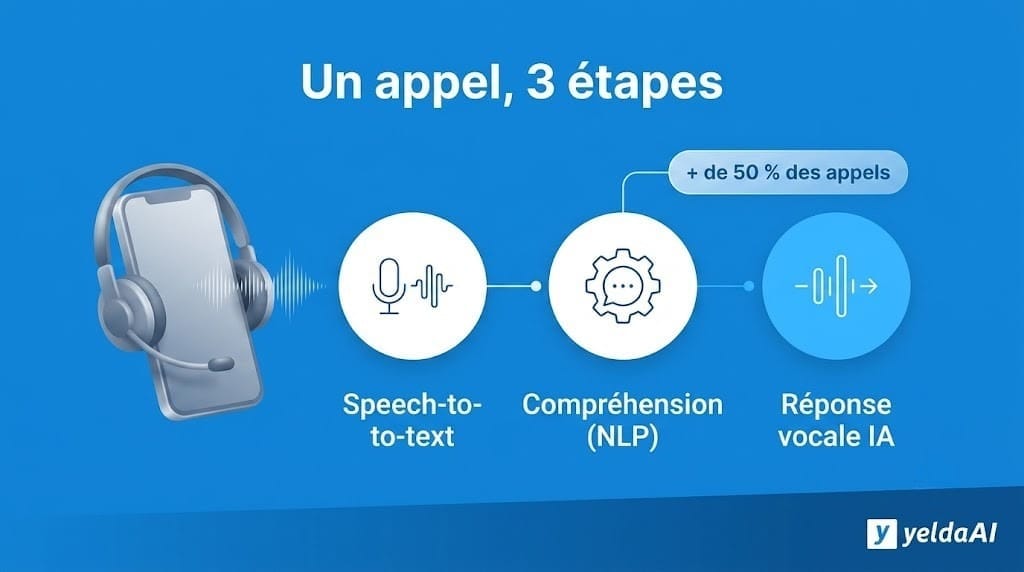
The adoption of artificial intelligence (AI) in customer service is becoming increasingly accessible for customer service teams, with numerous solutions that allow businesses to easily adopt AI technologies.
An AI Voice Agents like the one from YeldaAI make this adoption accessible, with no technical expertise required.
Furthermore:
- 90% of marketing professionals say that AI and automation allow them to reduce the time spent on repetitive tasks. (HubSpot)
- The callbot or chatbot solutions can resolve up to 80% of customer queries without human intervention (Juniper Research).
- 64% of customers appreciate interactions with chatbots for their speed and efficiency. (Salesforce)
- On average, companies can reduce their customer service costs by 30% thanks to AI (Forrester).
- Virtual assistant call times have been reduced by up to 70% thanks to the use of artificial intelligence. (Harvard Business Review)
- 65% of sales professionals say that AI-powered tools help them better understand their customers' needs. (HubSpot)
- AI-based personalization solutions (callbot, chatbot, voicebot, etc.) can increase employee engagement by 20% (McKinsey)
- 81% of consumers believe that AI is now an integral part of modern customer service (Zendesk, CX Trends 2026).
- 83% of customer experience leaders believe that Voice AI can significantly improve the customer experience (Zendesk, CX Trends 2026).
- 90% of companies most advanced in customer experience report a positive return on investment from AI tools designed for their agents (Zendesk, CX Trends 2026).
- 27% of French people already use generative AI to prepare their request before contacting customer service (Observatoire des Services Clients 2025, Ipsos bva).
- 58% of French people want AI to analyze their request for greater speed and efficiency, the highest score in Europe (Observatoire des Services Clients 2024, BVA Xsight).
- Generative AI increases the number of customer issues resolved by approximately 14% per hour by agents (study by Brynjolfsson, Li, and Raymond, Stanford and MIT, Quarterly Journal of Economics).
Customer service personalization statistics
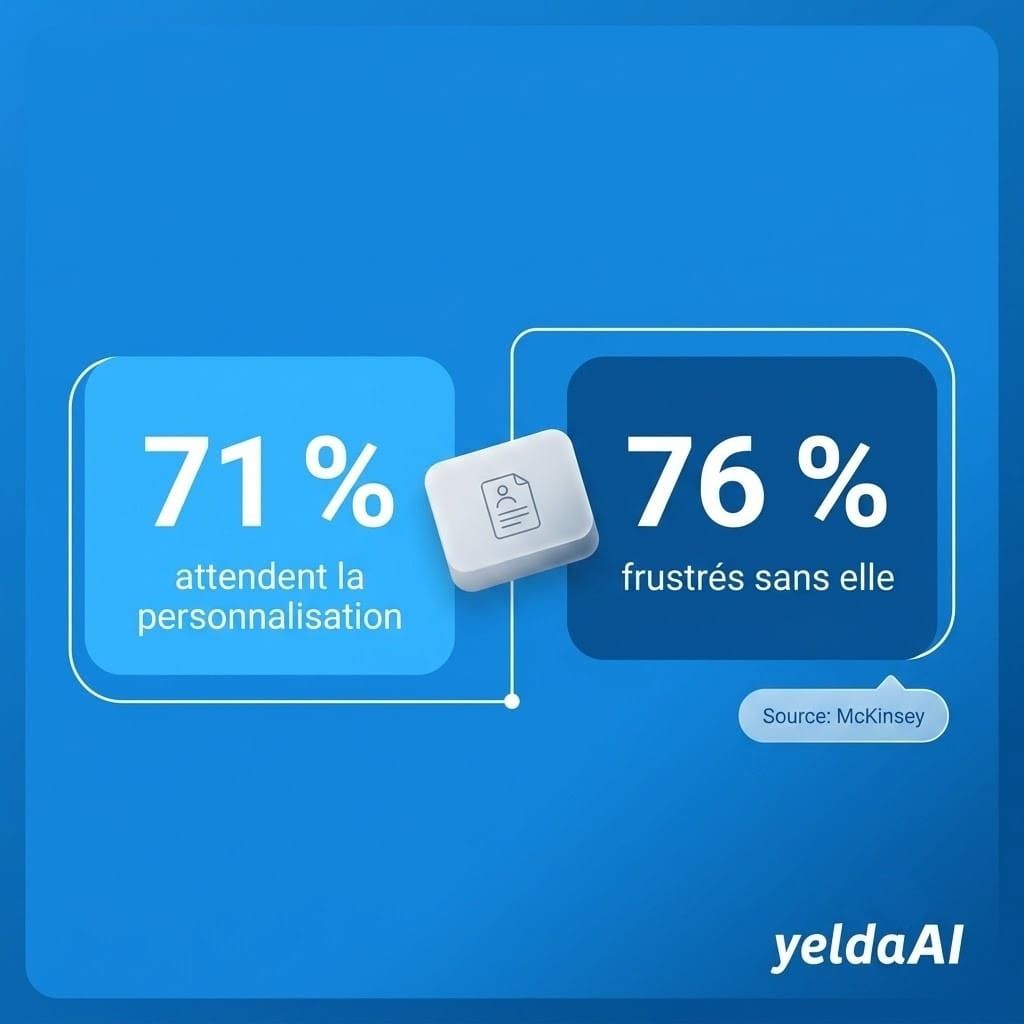
To better meet the increasingly high expectations of the modern consumer, personalizing customer service is a strategic move. For businesses, this approach offers several benefits across various levels:
- 69% of customers believe that personalized service, where the agent is aware of their needs and preferences, significantly impacts their satisfaction. (Salesforce)
- 71% of consumers expect a personalized customer experience, and 76% feel frustrated when they don't get one. (McKinsey & Company)
- Personalizing customer service can lead to a reduction of more than 20% in response times to customer inquiries. (Harvard Business Review)
- Companies that use personalization strategies exceed their annual goals in 79% of cases. (HubSpot)
- 89% of consumers are more likely to be loyal to a brand after a positive and personalized customer service experience. (Accenture)
- For a dynamic company, a 10% improvement in customer satisfaction can increase 30% of its profitability. (Bain & Company)
- 40% of customers are inclined to spend more than planned when they feel they have received a highly personalized experience. (Google)
- 83% of customer experience leaders believe that AI agents capable of remembering conversation history are crucial for truly personalized journeys (Zendesk, CX Trends 2026).
- 74% of customers find it frustrating to have to repeat their request to multiple different representatives (Zendesk, CX Trends 2026).
In addition to all this data, it is worth noting that according to Smart Tribune, more than 70% of consumers are likely to abandon a company if the customer service is perceived as impersonal.
Statistics on agent training and performance

Beyond the points mentioned above, the quality of customer service also relies on the skills and motivation of the agents. In this sense, ongoing internal employee training proves to be a profitable investment, whether to improve their performance or to ensure an optimal customer experience.
According to the statistics:
- Brands that invest in training their agents see an average 25% increase in productivity. (HR Tech Group)
- Agents who receive regular training show a 30% higher level of engagement compared to those who do not receive ongoing training. (Easiware)
- Companies that offer ongoing training to their employees stand out more in the market, with a 17% increase in their market share. (Gartner)
- Training helps improve the quality of responses provided to customers (Gartner).
- Employees with access to learning and development opportunities are 21% more engaged in their work. (Gallup)
- 60% of companies that regularly measure the impact of their training programs see a clear improvement in customer satisfaction. (DataTrend)
- 87% of agents believe that training would help them better understand their role within the company and boost their motivation at work. (Training Insight)
- Agents who use an AI copilot feel 20% more equipped to do their jobs well (Zendesk, CX Trends 2026).
Additionally, well-trained agents are able to resolve customer requests and needs more quickly and effectively. As proof, a Zendesk study reveals that companies with continuous training programs see a 25% increase in first-contact resolution rates.
Statistics on customer expectations
Customer expectations regarding service are constantly evolving, pushing companies to adapt to new trends and rethink their strategies. Beyond personalizing the service provided, one of the keys to achieving this is optimizing response times to inquiries. This is increasingly necessary for several reasons:
- Nearly 60% of consumers expect a response to their inquiry within an hour. (Zendesk)
- According to the same source (Zendesk), customers expect an email response in less than 12 hours, and ideally in less than an hour for live chat channels.
- 47% of consumers state that a quick response is the most essential element of better customer service (SuperOffice).
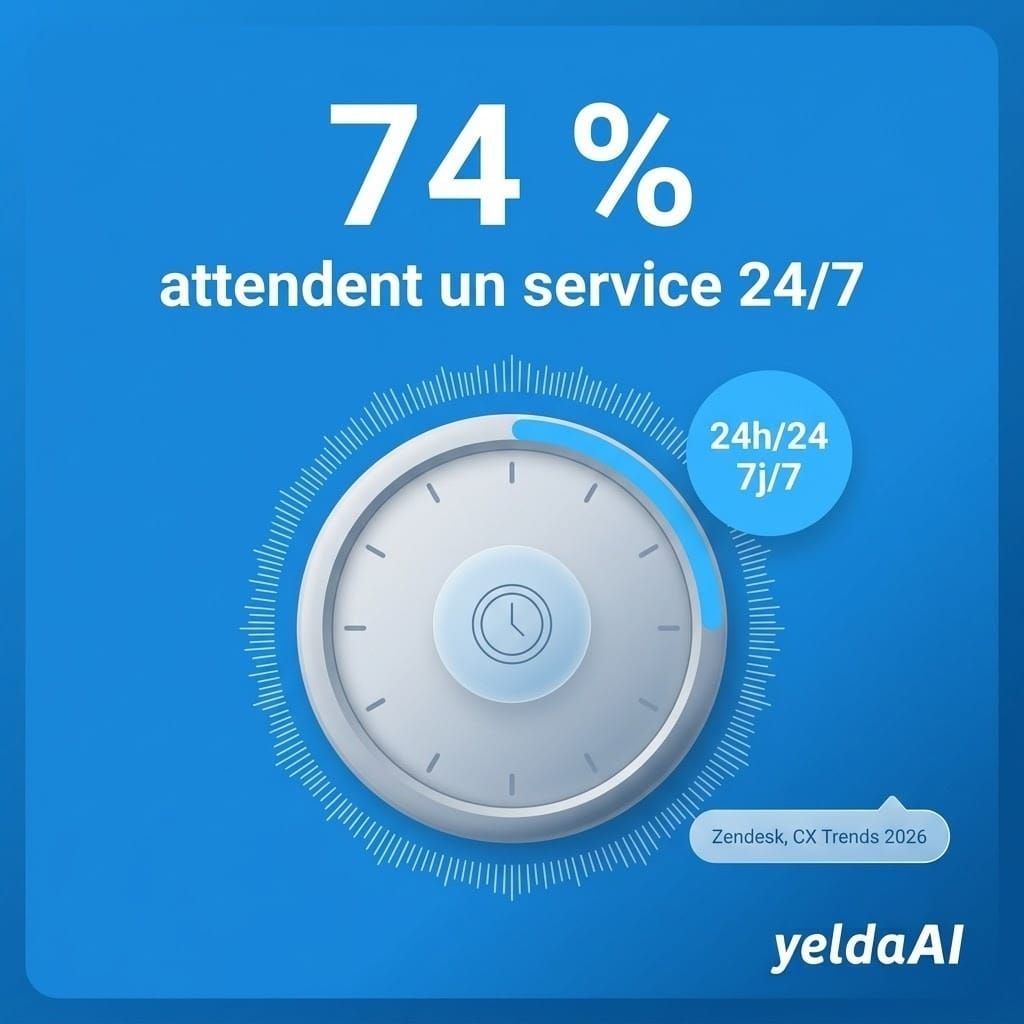
- 74% of consumers now expect 24/7 customer service (Zendesk, CX Trends 2026).
- 88% of customers expect faster response times than they did a year ago (Zendesk, CX Trends 2026).
- 96% of French people consider the phone essential for reaching customer service (Observatoire des Services Clients 2024, BVA Xsight).
However, although AI and customer service automation tools are gaining popularity, consumers continue to value interaction with a human agent. In fact, 75% of them prefer to interact with a human assistant rather than an automated system (Ubisend). Furthermore, 65% of customers believe that human agents are better able to understand their needs, according to a PwC study.
This preference is even more pronounced among older generations, with 82% of 40-55 year olds and those over 56 favoring human contact (according to Ring Central).
Statistics on omnichannel customer service
While today's customers prefer to interact with brands across multiple channels, they primarily expect a seamless and consistent experience, regardless of the touchpoint.
The multichannel chatbots and voicebots meet this expectation across the web, mobile, and messaging apps.
But for what benefits should a company prioritize an omnichannel customer service ? Several data points justify the usefulness of this approach:
- About 55% of companies have already implemented an omnichannel strategy for their customer service. (Salesforce)
- More than 70% of consumers use at least three different channels to get in touch with a company (PwC)
- Customers who enjoy an omnichannel experience are 23% more likely to remain loyal to a brand. (Trengo)
- Companies offering an omnichannel customer experience see a 10% higher revenue growth rate. (Forrester)
- 75% of customers expect their account information to be accessible and consistent across all channels (PwC)
- 34% of customers still prefer to use the phone for urgent issues, while 31% favor email for less pressing requests. (Microsoft)
- Omnichannel customers spend on average 10% more than those who use only one channel. (Harvard Business Review)
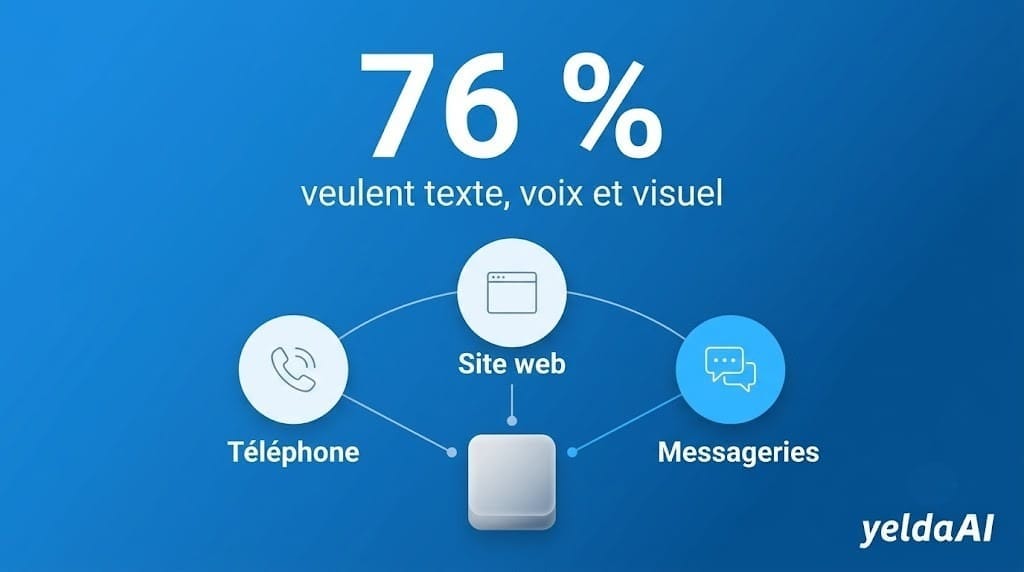
- 76% of consumers would choose a company capable of combining text, voice, and visuals in the same conversation, without starting from scratch (Zendesk, CX Trends 2026).
- 79% of French people believe that brands are increasing their efforts across remote channels (Observatoire des Services Clients 2024, BVA Xsight).
More than three-quarters of customers (Salesforce) expect a similar experience, regardless of the channel they use to reach a brand. Consequently, omnichannel service allows a company to provide a unified experience, no matter how customers contact you or who they speak to.
How many calls can your voice agent absorb?
Estimate in one minute the number of automated calls and the savings on your own volumes, with our ROI calculator.