Comparison of the 10 best AI voice agents for customer service: how they work, the strengths and limitations of each solution, and criteria for choosing the right one.
Thomas Guenoux
19/05/2026
·
8
min read
Rigid IVRs and frustrating automated systems are a thing of the past! AI voice agents understand natural language, detect intent, adapt to context, and handle a large portion of requests without human intervention. Available 24/7, they improve the customer experience while reducing team workload and company costs.
But the market for callbots is vast and not all solutions are created equal : some excel in automation, others in AI voice quality, and still others in business integrations or speed of deployment.
To help you navigate your options, here is our selection of the 10 best AI voice agents for customer service, including their strengths, specific features, and use cases.
What is an AI voice agent and how does it work in customer service?
An AI voice agent, or AI callbot, is a , rather than dealing with customer service or a system capable of understanding human speech that handles calls just like a human agent : it greets callers, asks questions, detects intent, provides answers, opens tickets, schedules appointments, or transfers to the right department when necessary. In practical terms, the voice agent:
Understands what the caller is saying using speech-to-text and NLP.
Responds with a natural, human-like, and contextual voice using text-to-speech.
Interacts dynamically (it can follow up, rephrase, and ask for clarification).
Executes tasks: checking status, creating tickets, modifying orders, etc.
Learns over time, improving the accuracy and quality of interactions.
Operates 24/7, with no wait times and no saturation.
The 10 best AI voice agents for customer service
Given the variety of conversational AI tools, here is a selection of the 10 most effective solutions on the market.
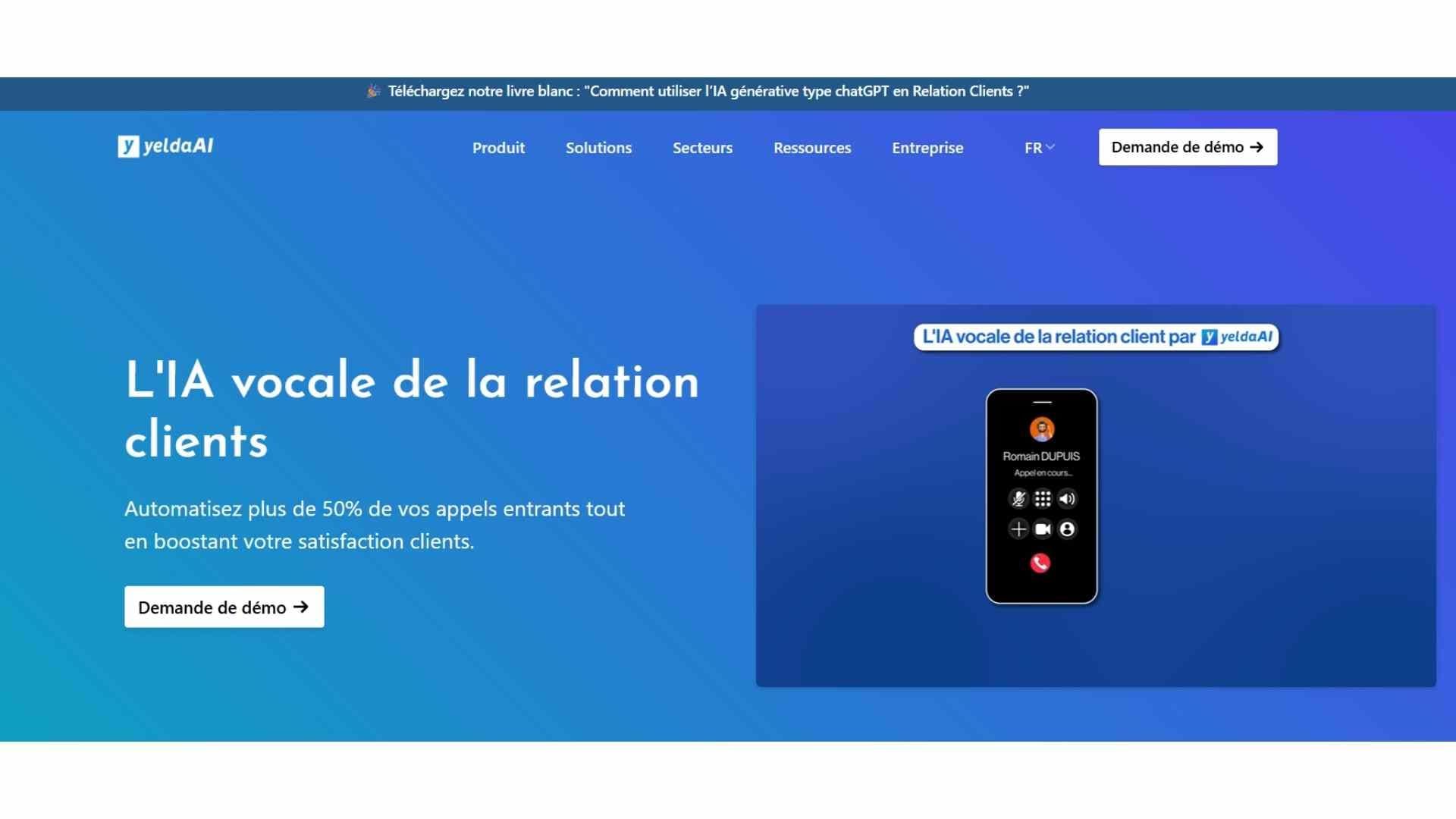
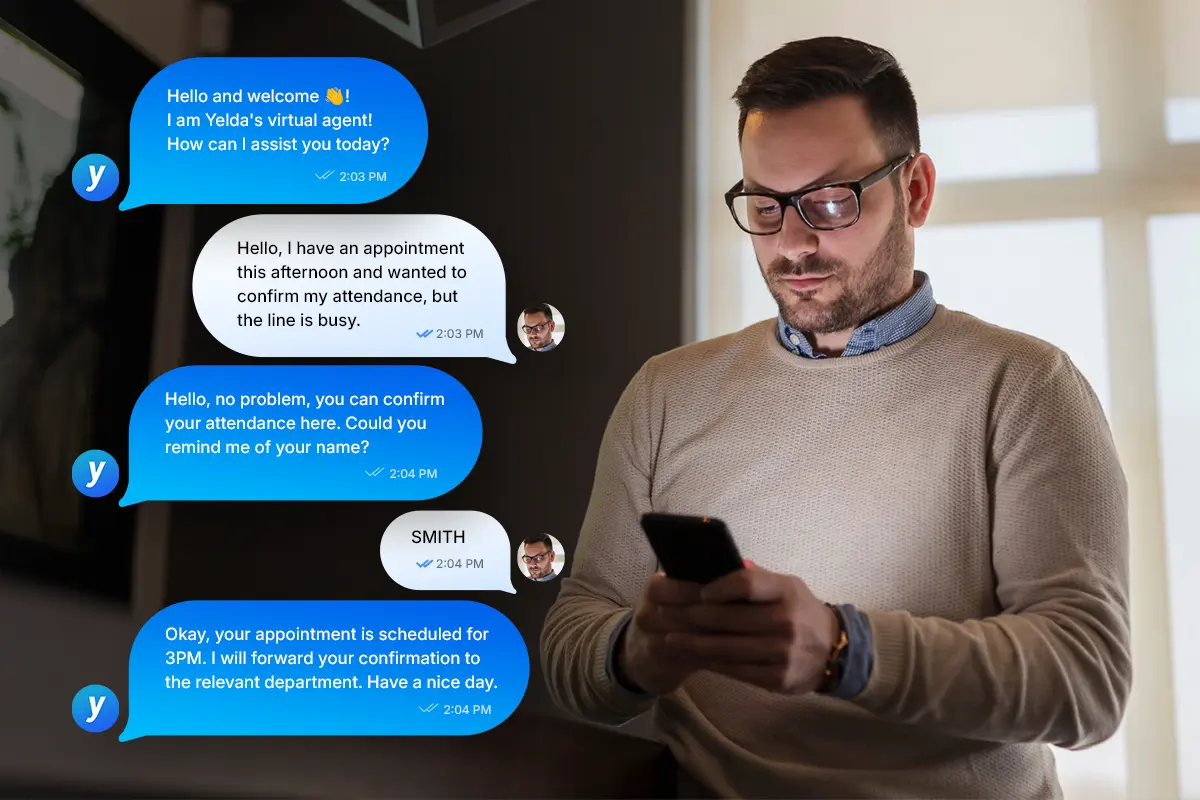
YeldaAI
YeldaAI is the leading French AI voice and conversational solution for companies managing high call volumes. Thanks to its no-code approach, YeldaAI makes it easy to deploy and modify professional AI voice agents that answer the phone. It stands out for the highly natural quality of its voices and a seamless user experience. YeldaAI is one of the leading solutions in France and has already been adopted by major brands such as BNP Paribas, Fnac-Darty, and Best Western.
Pros
Simple no-code interface that is easy to learn, ideal for non-technical teams.
Realistic and fluid voices that sound close to human.
Flexible pricing based on call volume and the level of integration required.
Rapid deployment thanks to an optimized cloud architecture.
Recommended for
French companies looking for a turnkey solution to automate their phone reception.
Organizations wanting a no-code callbot that is quickly operational and easy to maintain.
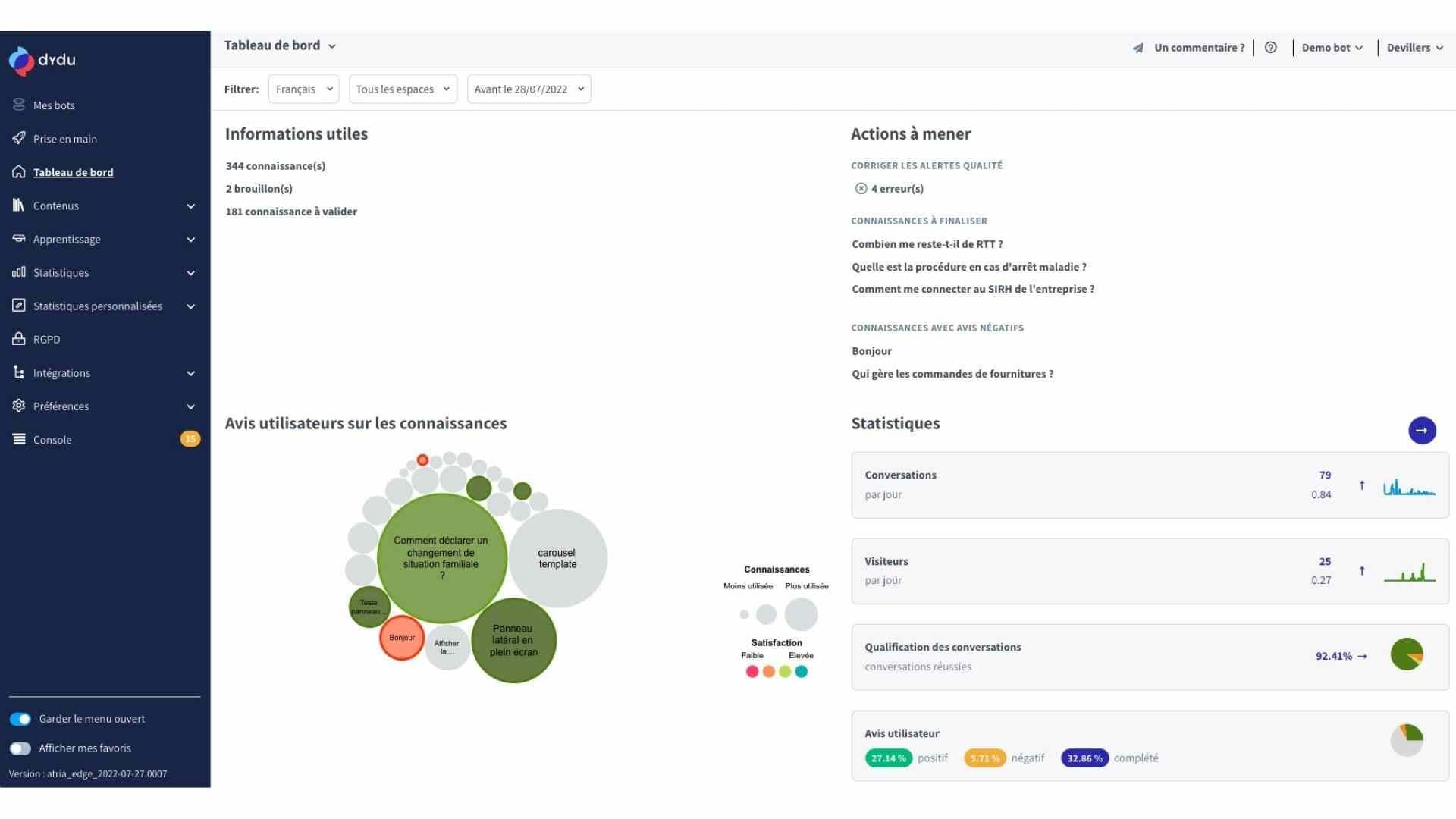
Dydu
Dydu is a unified French platform for creating no-code chatbots and voicebots. Recognized for its performance (over 90% accuracy in speech recognition) and 100% GDPR-compliant hosting, it ensures complete control over data.
Pros
Intuitive no-code interface that simplifies the design and updating of scenarios.
Strong legal compliance and sovereign data hosting.
Conversational consistency across all channels (web, mobile, voice, messaging).
Responsive technical support and business guidance provided by the vendor.
Cons
Initial learning curve for users unfamiliar with conversational logic.
Advanced integrations are sometimes limited without the intervention of the Dydu team.
Recommended for
Companies looking to centralize their conversational strategy (chat + voice) into a single solution.
Organizations committed to data sovereignty and strict compliance within Europe.
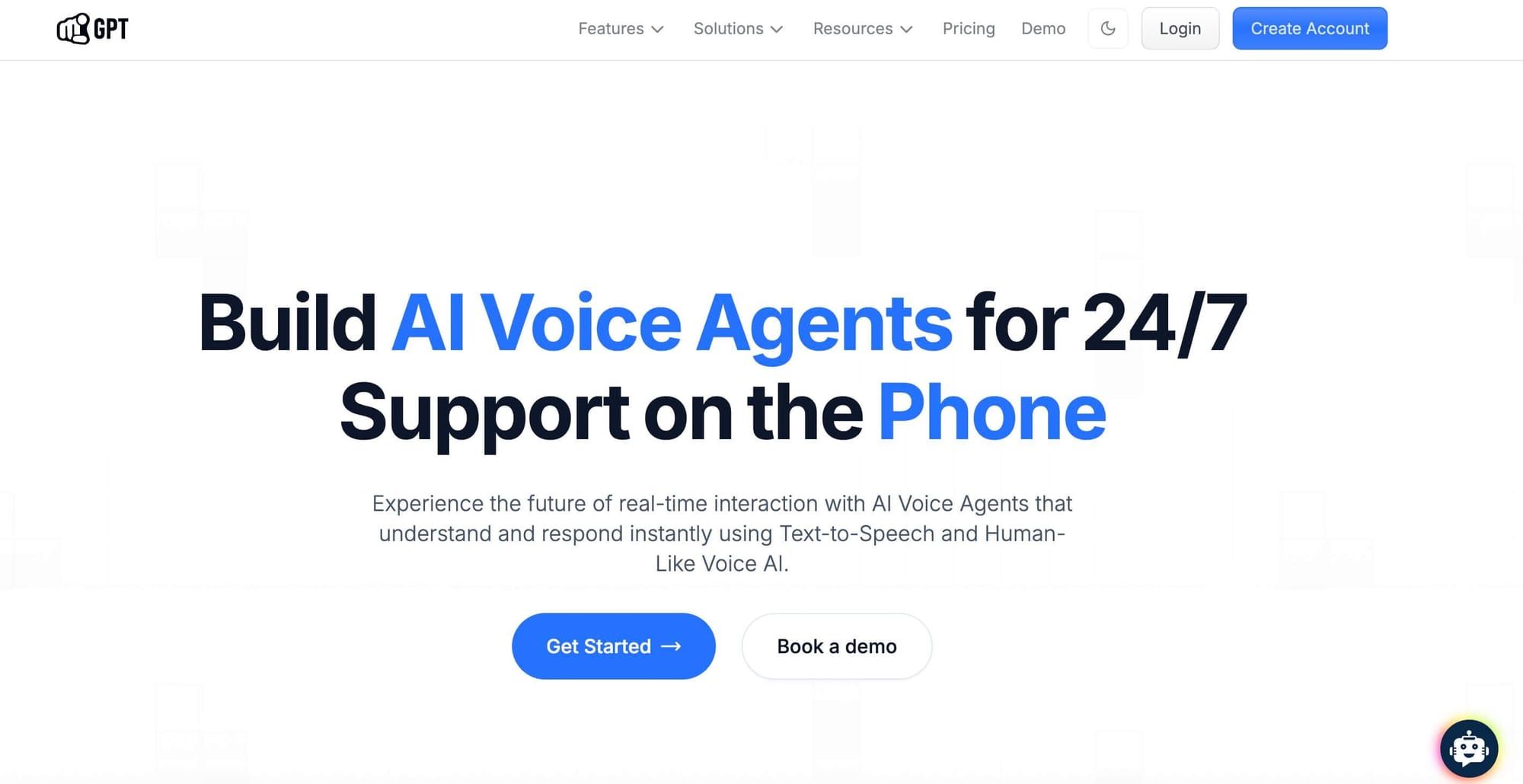
YourGPT
YourGPT is a platform designed to create and deploy AI voice agents for customer support, sales, and operations. It offers a no-code builder for rapid deployment as well as AI Studio for creating complex workflows, allowing companies to automate multi-step processes across more than 10 channels simultaneously, without the need for developers.
Pros
No-code builder with AI Studio, enabling both simple automations and advanced, customizable workflows without the need for developers.
Omnichannel deployment on WhatsApp, Slack, Discord, Instagram, Telegram, email, and web, with real-time synchronization.
Flexible selection of AI voice models with credit-based and usage-based pricing, rather than per-user pricing.
Cons
High-quality data is required to take full advantage of AI agents.
7-day free trial, but no free plan.
Recommended for
Support and sales teams looking to automate multiple channels without internal technical resources.
Companies looking to automate internal workflows and lead qualification across multiple customer touchpoints simultaneously.
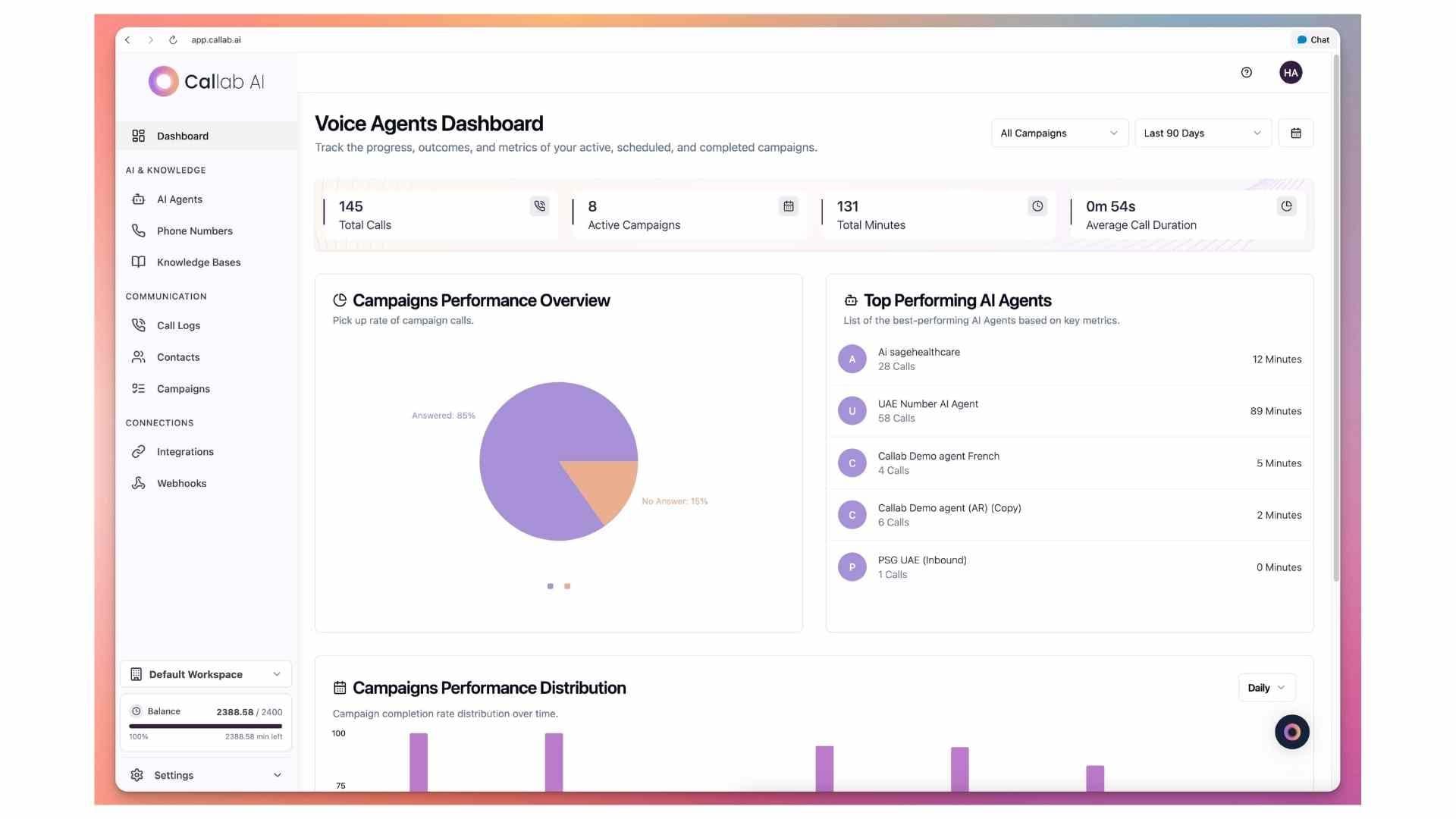
Callabs.ai
Callabs.ai is a voice automation solution dedicated to inbound and outbound calls. It stands out for its ability to analyze tone, emotions, and conversation content in multiple languages.
Pros
Rapid deployment, no technical skills required.
Advanced semantic and sentiment analysis.
Seamless management of high-volume multilingual calls.
Detailed dashboards to track satisfaction and performance.
Cons
Limited customization for highly specific use cases.
Less suitable for complex integrations requiring deep technical control.
Recommended for:
International call centers and high-call-volume businesses.
Organizations looking for an operational, quick-to-deploy, and multilingual solution.
TalkR
TalkR is a French automated call management solution designed for companies looking to digitize their customer relations. It combines voice AI, messaging, and CRM integrations to streamline prospecting or support campaigns.
Pros
No-code solution for easy creation of call scenarios.
Compatibility with major telephony and CRM tools.
Infrastructure hosted in France, ensuring data sovereignty.
Cons
Potentially high cost for smaller organizations.
Limited advanced customization without technical support.
Recommended for:
French SMEs and large enterprises prioritizing a local and sovereign solution.
Sales teams looking to automate prospecting or customer callbacks.
Citizen Call
Citizen Call combines AI agents and human operators to offer a hybrid approach to customer relations. The company outsources calls while maintaining human oversight, ensuring a seamless and empathetic experience.
Pros
Intelligent partnership between AI and human agents for superior interaction quality.
Strong expertise in the education, HR, and outsourced customer service sectors.
Personalized tracking of performance and satisfaction.
Cons
Reliance on an outsourcing model (less suitable for companies that prefer to keep management in-house).
Less direct control over scripts and the customization of interactions.
Recommended for:
Companies looking to outsource their customer relations while maintaining a human touch.
Organizations in the education or HR sectors seeking a specialized partner.
Eloquant
Eloquant is a unified French SaaS solution for customer relationship management. ISO 27001 certified, it combines callbots, chatbots, email, and video assistance into a single omnichannel platform.
Pros
Very high level of security and compliance (ISO 27001/27701).
Comprehensive omnichannel communication tool, ideal for large organizations.
Mobile app for real-time management of customer interactions.
Cons
Implementation sometimes requires expert support.
Overkill for small businesses or organizations with low call volumes.
Recommended for:
Mid-sized and large companies looking for a robust and secure omnichannel solution.
Organizations subject to strict regulatory requirements (banking, insurance, public services).
Zaion
Zaion is a sovereign French solution specializing in emotional callbots and voicebots. Its proprietary technology analyzes emotions and detects friction points to improve customer satisfaction.
Pros
Proprietary French technology ensuring data sovereignty.
Excellent emotional analysis and detection of conversational repetition.
Strong multilingual support and integration with CRM systems.
Cons
High cost compared to standardized international solutions.
Advanced features that require some setup time.
Recommended for:
Companies in regulated sectors (banking, healthcare, insurance) that handle sensitive data.
Organizations looking for a French voice AI focused on the emotional quality of interactions.
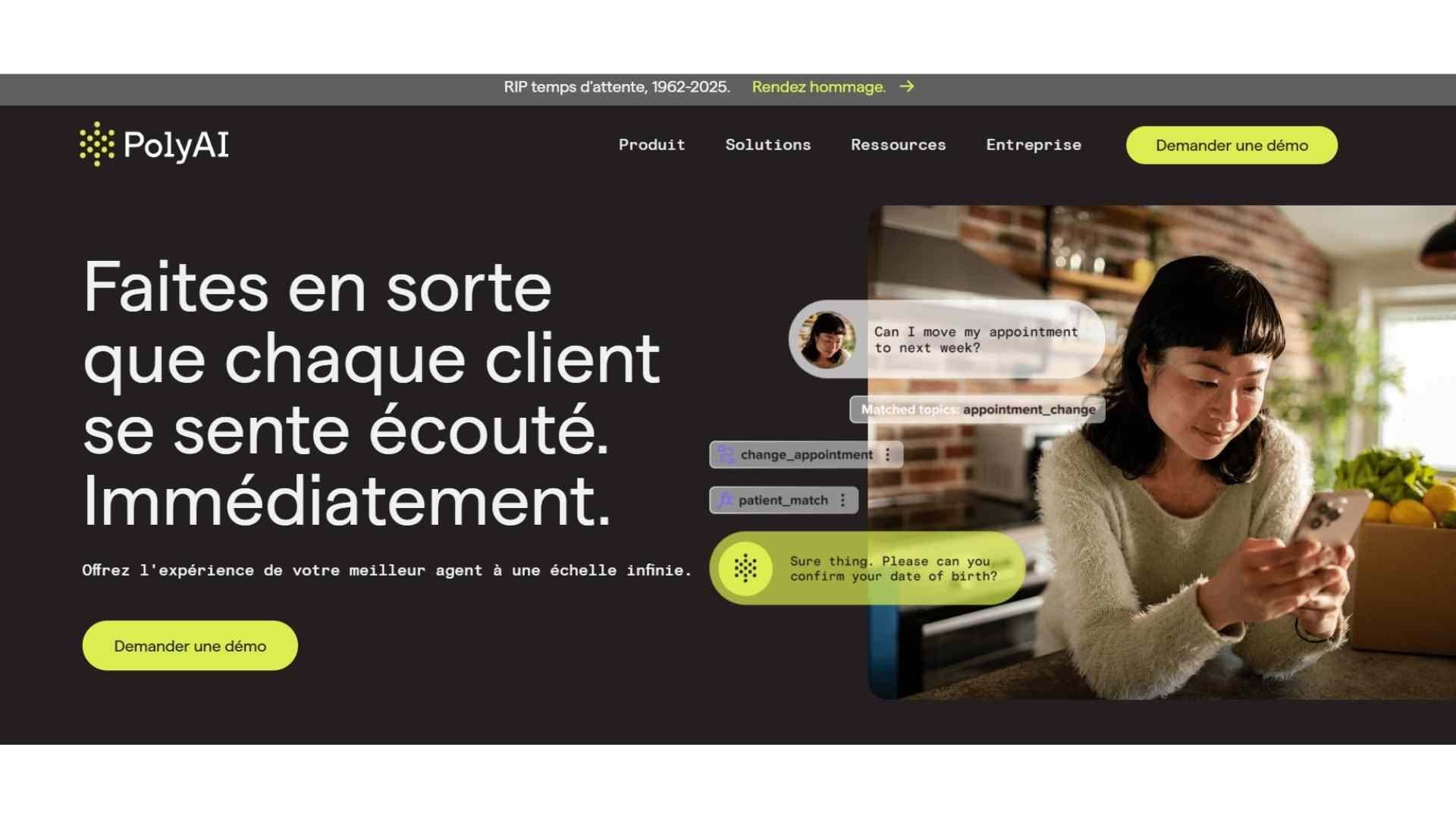
PolyAI
PolyAI is a voice agent platform designed to provide natural, fluid conversations that sound close to a human voice. Using NVIDIA models and its "Owl" technology, it accurately understands regional accents and variations in tone.
Pros
Highly realistic voice quality and fluid management of complex conversations.
High-performance voice recognition, even with strong accents.
Can be integrated with existing telephony systems and CRM tools.
Cons
High entry cost, reserved for companies with a substantial budget.
Large companies looking to provide a premium voice experience.
International brands wishing to maintain consistent service quality across multiple linguistic markets.
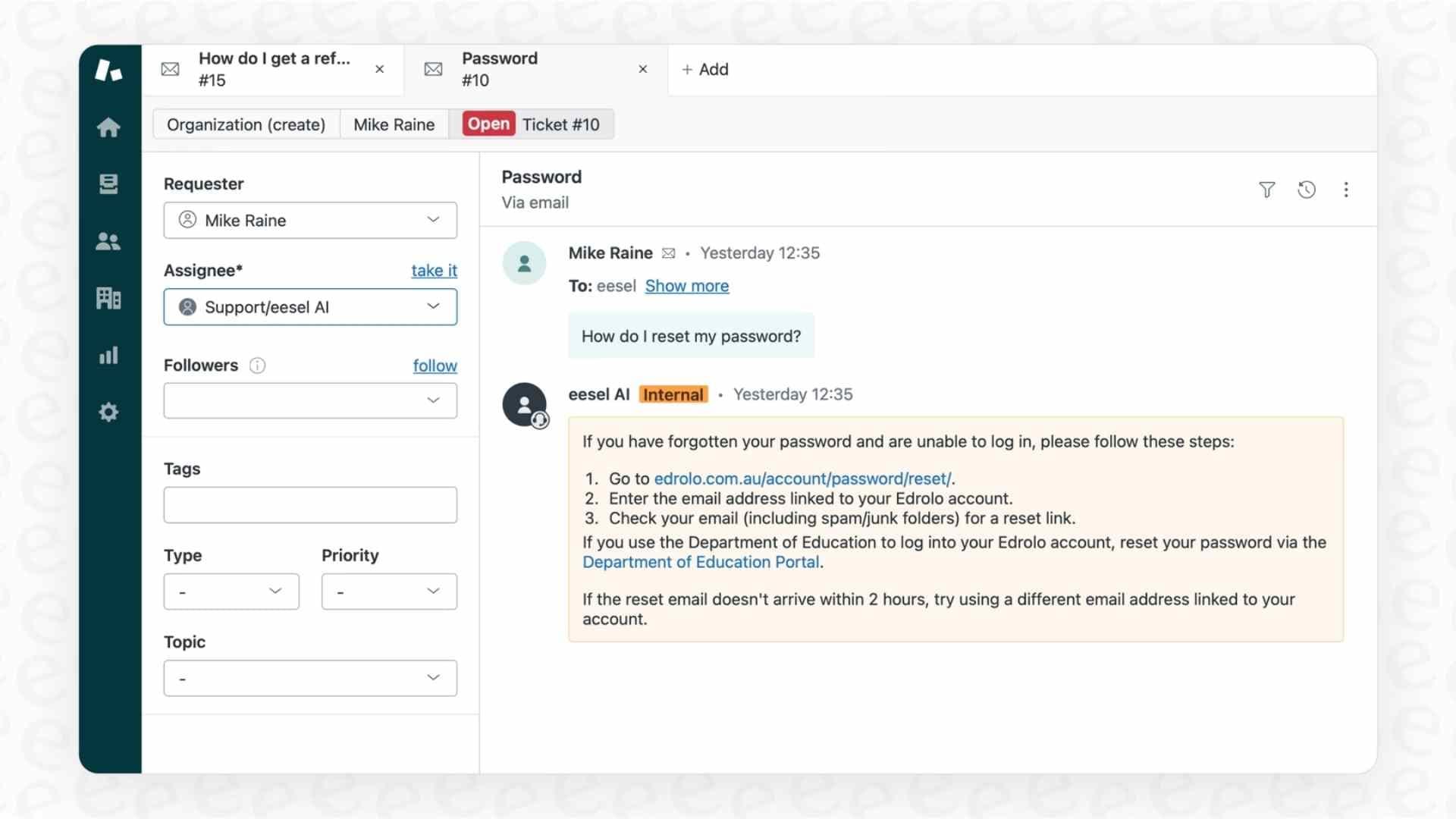
Zendesk Voice AI
Zendesk Voice AI is the voice solution integrated into the Zendesk ecosystem. It allows you to manage incoming calls via a conversational agent while synchronizing data with existing tickets, emails, and chats.
Pros
Native integration with Zendesk for total omnichannel consistency.
Automates up to 80% of simple customer requests.
Voice analysis and transcription integrated into tracking dashboards.
Cons
Requires already using Zendesk to benefit from its full potential.
Advanced AI features are only available on higher-tier plans.
Recommended for:
Companies that are already Zendesk customers and want to add an automated voice channel.
Support teams looking to reduce human workload while maintaining consistent service quality.
Criteria for choosing the best AI voice agent
Analyze business needs : The first step is to understand your actual use cases. Annual inbound call volume, complexity, required languages, and industry-specific requirements determine the level of sophistication needed for your AI voice agent.
Evaluate technical performance : The quality of speech recognition, NLP performance, multilingual capabilities, and workflow customization are essential differentiating factors. Real-world testing, particularly using your industry terminology, is vital to evaluate model accuracy.
Verify integration capabilities : Successful deployment depends on compatibility with your existing tools (CRM, helpdesk, business solutions). API maturity, documentation quality, GDPR compliance, and voice data security are decisive factors, especially in regulated industries.
Determine the expected level of configuration : Depending on your internal resources, you should choose between a No-Code (simplicity), Low-Code (flexibility), or API-first (maximum customization) approach. Ease of use directly influences your ability to evolve the voice agent over time.
Calculate the Total Cost of Ownership (TCO) : It is essential to consider not only the pricing model (subscription, usage, license) but also integration, training, and maintenance costs, as well as any potential additional fees (setup, premium support).
Evaluate the quality of support : Guaranteed response times, availability of support in French, the presence of a dedicated success manager, and mature escalation processes are key factors in ensuring long-term service reliability.
Estimate the gains of a voice agent based on your own call volumes with our ROI simulator.
How many calls can your voice agent absorb?
Estimate in one minute the number of automated calls and the savings on your own volumes, with our ROI calculator.