Best practices for optimizing the customer experience with a callbot
Personalization, integration, continuous learning, escalation to an agent, and measurement: 5 best practices for optimizing the customer experience with a callbot.


In today's business world, callbot technology, also known as voice bots, plays a crucial role in improving efficiency and user experience. Callbots are automated systems that interact with customers via voice calls, offering 24/7 support and instant responses to inquiries.
At YeldaAI, we specialize in providing sophisticated callbot solutions to help companies optimize their customer service. This article will highlight some of the best practices for optimizing the user experience with a callbot.
Article summary
Voice personalization, a clearly defined scope of intervention, integration with your existing channels, continuous learning, and seamless escalation to an agent: these five practices make the difference between a callbot that frustrates and one that solves. Management then focuses on resolution rate, transfer rate, and average handling time. Adjustments are made based on performance.
1. Callbot personalization
To offer an authentic and engaging user experience, it is important to personalize your callbot. This can be achieved by assigning a unique voice to your callbot and equipping it with the ability to understand and respond to your customers' specific requests. At YeldaAI, our callbots are equipped with machine learning and artificial intelligence capabilities to ensure optimal personalization.
A callbot is not a magic bullet that can answer every customer request. You must therefore clearly define the callbot's scope of intervention—that is, the types of queries it can handle and those it should transfer to a human agent. For example, the callbot can be used to:
- Provide simple and recurring information, such as opening hours, pricing, delivery terms, etc.
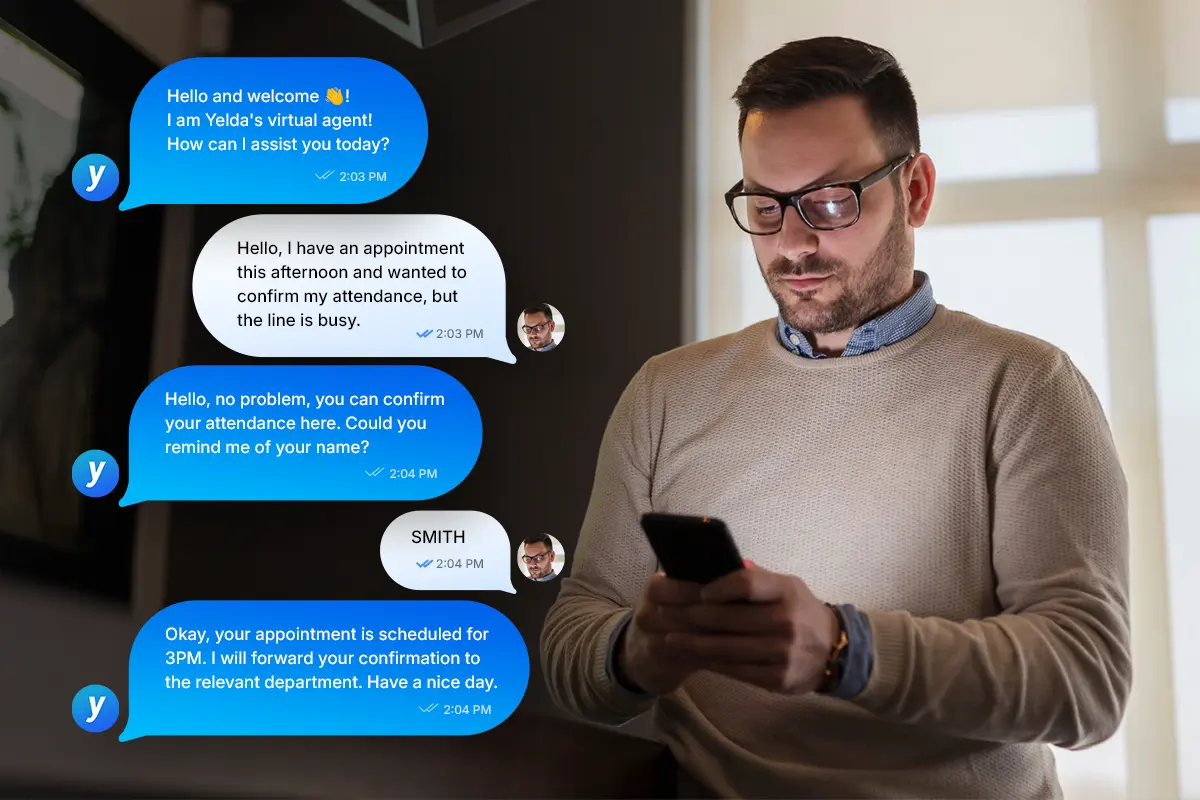
- Carry out simple and secure transactions, such as booking appointments, confirming orders, paying invoices, etc.
- Qualify caller needs and route them to the most appropriate department or agent
- The callbot's scope of intervention must be consistent with company goals, customer expectations, and the capabilities of the technology.
2. Seamless integration
Seamless integration of your voice AI agent callbot into your existing communication channels is crucial for ensuring a smooth user experience. Whether it's your call center, website, or mobile apps, ensure that your callbot is easily accessible and interacts consistently with customers across all touchpoints.
3. Continuous training and learning
To optimize the customer experience, it is essential that your callbot continues to learn and improve. This involves regularly feeding your callbot relevant data and training it to recognize and respond to an increasingly wide range of queries. At YeldaAI, we use advanced machine learning techniques to ensure the continuous training of our callbots.
4. Effective escalation management
Even the most sophisticated callbot won't be able to resolve every customer issue. It is therefore crucial to have an effective system for escalating complex requests to a human agent. Your callbot should be able to recognize when a request exceeds its capabilities and quickly transfer it to a member of your customer service team.
5. Constant measurement and improvement
Finally, to optimize the user experience with your callbot, it is important to regularly measure its effectiveness and make improvements based on user feedback. The following key performance indicators will allow you to do this:
- Call handling rate: the percentage of calls processed by the callbot
- Resolution rate: the percentage of calls resolved by the callbot without human intervention
- Transfer rate: the percentage of calls transferred by the callbot to a human advisor
- Abandonment rate: the percentage of calls disconnected by the caller before the end of the dialogue
- Satisfaction rate: the percentage of callers satisfied or dissatisfied with the service provided by the callbot
- Average handling time per call
These indicators make it possible to measure the effectiveness, quality, and profitability of the callbot, as well as to identify potential areas for improvement.
In conclusion, a callbot is an innovative solution that helps optimize the user experience with customer service. To achieve this, you must define its scope of intervention, design its conversational flow, and measure its performance and satisfaction levels. At YeldaAI, we support you in implementing a custom callbot tailored to your needs and those of your customers. Contact us today to learn more!
How many calls can your voice agent absorb?
Estimate in one minute the number of automated calls and the savings on your own volumes, with our ROI calculator.