Conversational AI in telecommunications
Billing, account access, cancellations, technical issues: how conversational AI automates frequent telecom requests and how to roll it out.


Imagine your customers getting fast, relevant, tailored answers on every channel, always up to date. A customer sends an email, then continues on your website chatbot? No problem, the conversation follows them. That is the promise of conversational artificial intelligence, a technology that is transforming telecommunications by making customer interactions natural and seamless. It not only automates, it also improves the quality of customer service.
In short: in telecoms, customer service quality is key to retention. Conversational AI automates the most frequent requests, such as customer account access, billing, cancellations and some technical issues. Callbots like YeldaAI handle these requests autonomously and transfer to advisors only the situations that truly need them.
The benefits of conversational AI in telecommunications
Telecoms is a highly competitive market, which makes customer service quality even more important. Conversational AI is profitable, good for the customer experience and a strong ally for staff productivity. Let's take a closer look.
Shorter waiting times
Waiting is what customers hate most: 56% of consumers say long waits are the most common form of bad customer experience (Replicant survey, United States).
Conversational AI can handle a large number of calls at the same time and route or answer them automatically, which drastically reduces waiting times. It also speeds up responses: a voicebot or callbot takes only a few seconds to understand a spoken request and answer.
Higher agent productivity
Deploying conversational AI in a call center increases operational productivity: agents spend less time on routine customer service processes.
Automated handling of common requests
An intelligent conversational agent automates answers to frequent, simple questions, and up to 80% of requests are considered routine. Your customers often contact you about access to their customer account, renewing or cancelling their plan, or a billing issue. Conversational AI can talk with them, ask questions and guide them to a solution on its own, without any human agent.
The time freed up lets agents focus on the most complex requests.
Lower operating costs
Automating customer service with conversational AI reduces:
- handling times (for example the average handle time of a call);
- the direct cost of handling customer requests, since some of them are fully delegated to AI instead of human agents.
You remove some live interactions between customers and advisors, or shorten them. The time saved lowers your operating costs.
Estimate what a voice agent could save on your own call volumes with our ROI calculator.
Better customer experience
24/7 availability and responsiveness are the most obvious advantages of an AI voice agent in your telecom call center compared with a traditional switchboard. You offer continuous service and boost customer satisfaction.
Worried your customers will be reluctant to talk to an AI? Most customers are now open to AI that improves their customer experience.
Use cases of conversational AI in telecoms
Here are concrete cases where conversational AI can help you.
Troubleshooting and support
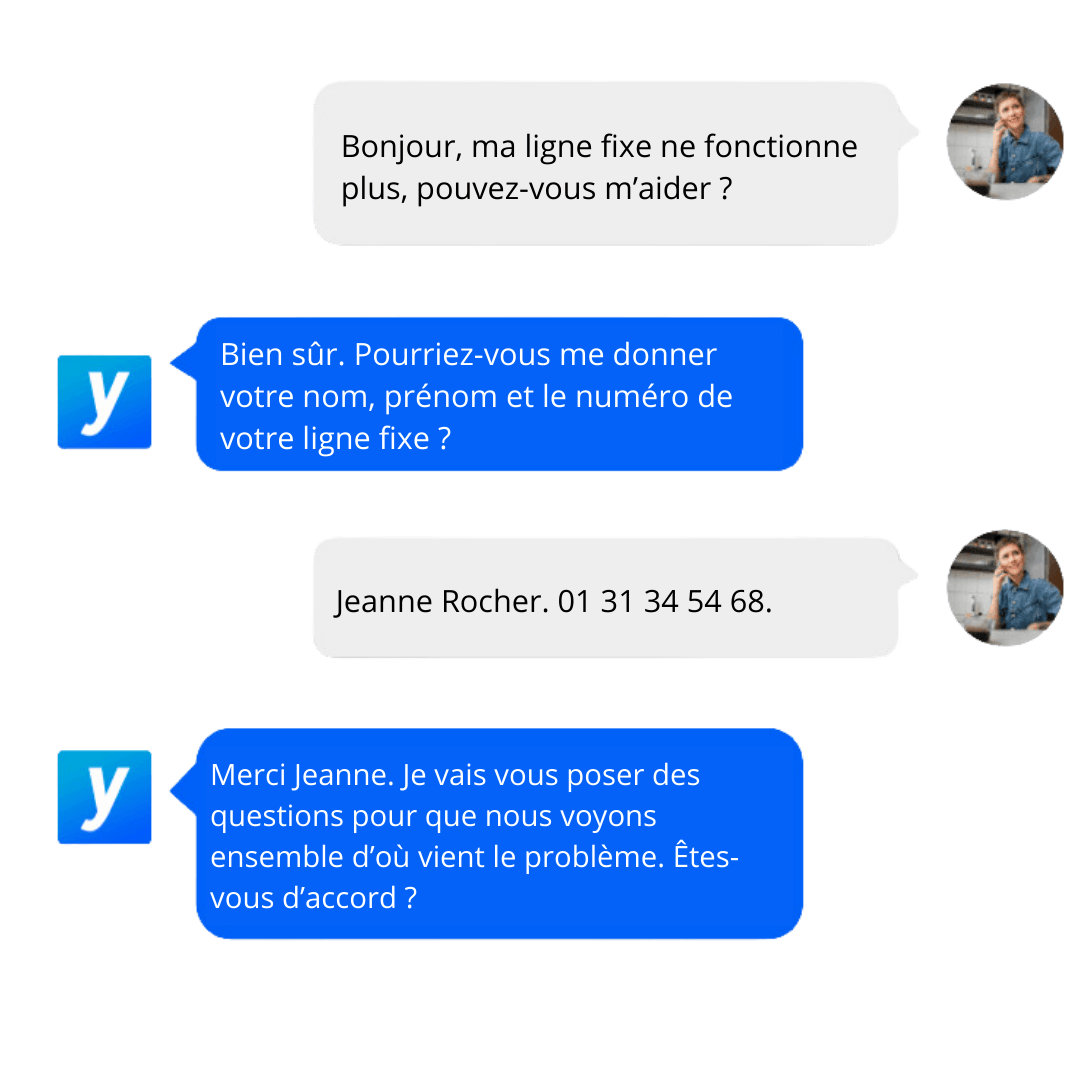
A customer contacts you on your website chat to report a problem with her landline. Conversational AI answers her.
Billing and payments
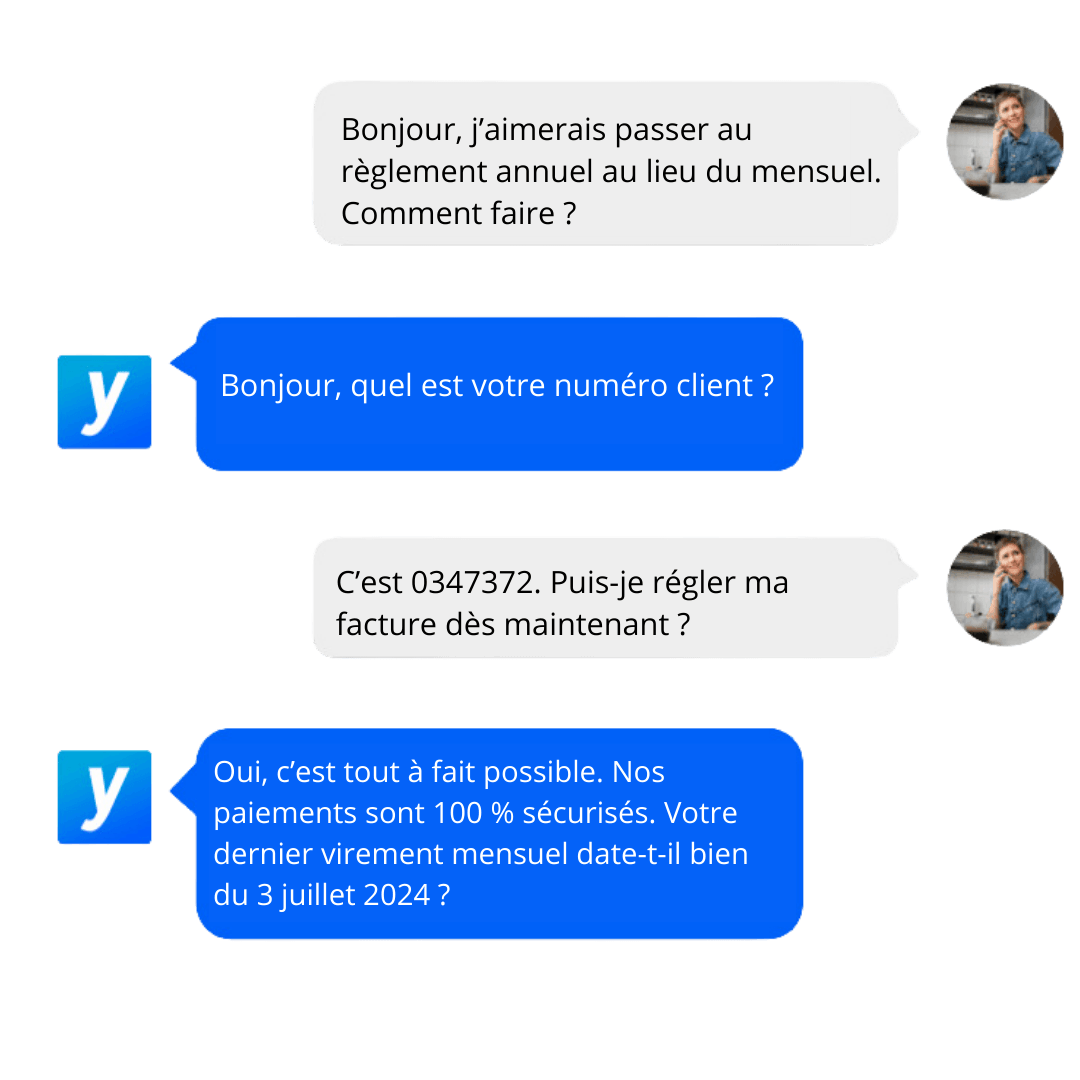
A customer calls because he wants to switch from monthly to annual billing and pay the full amount now. Your conversational AI handles the payment for a fast, secure transaction.
Call reception and transfer
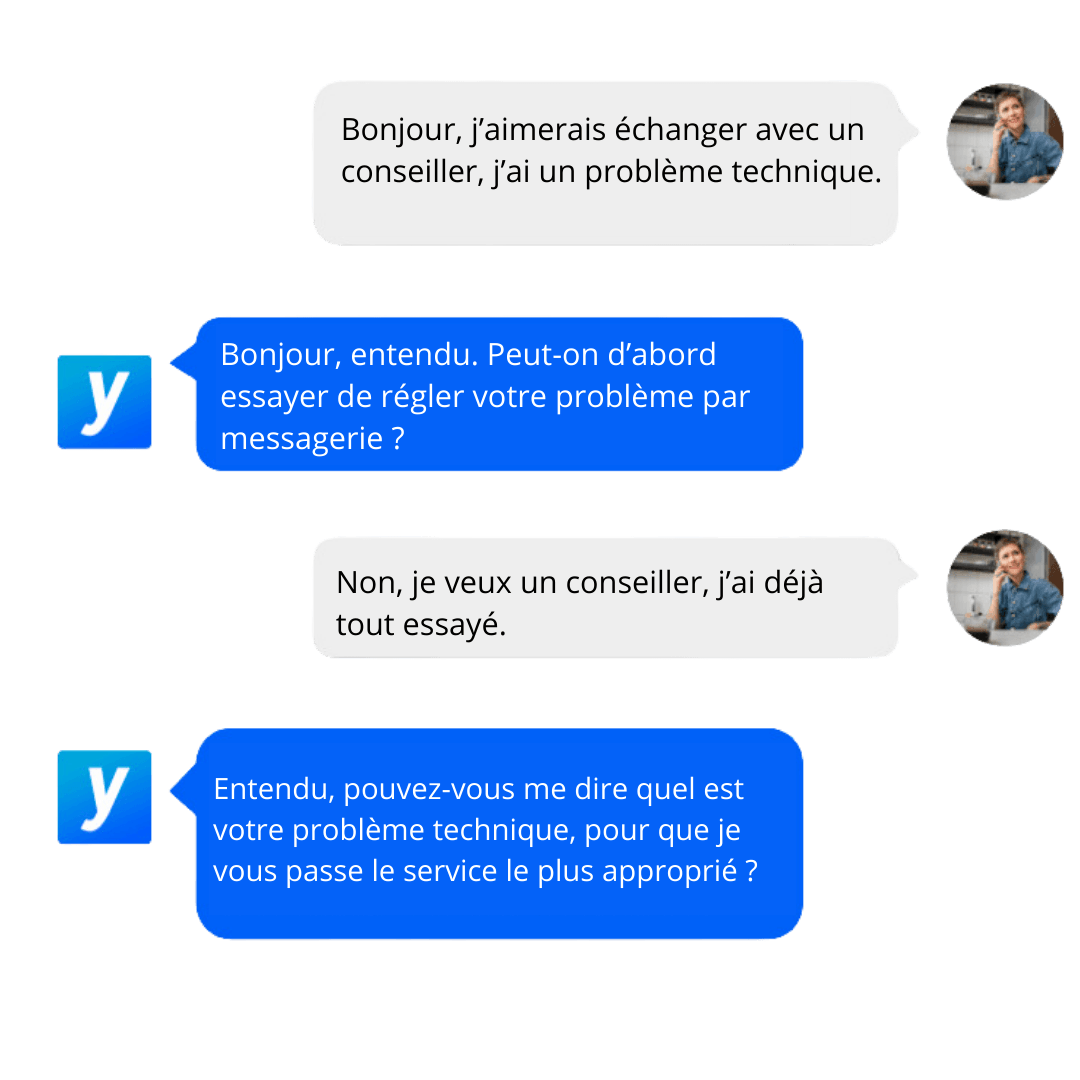
A customer wants to speak to an advisor about a technical problem. She has already searched online without finding an answer. Your virtual agent handles authentication securely, then transfers her to customer service as requested. The advisor can help her straight away, since she is already authenticated.
Appointment management
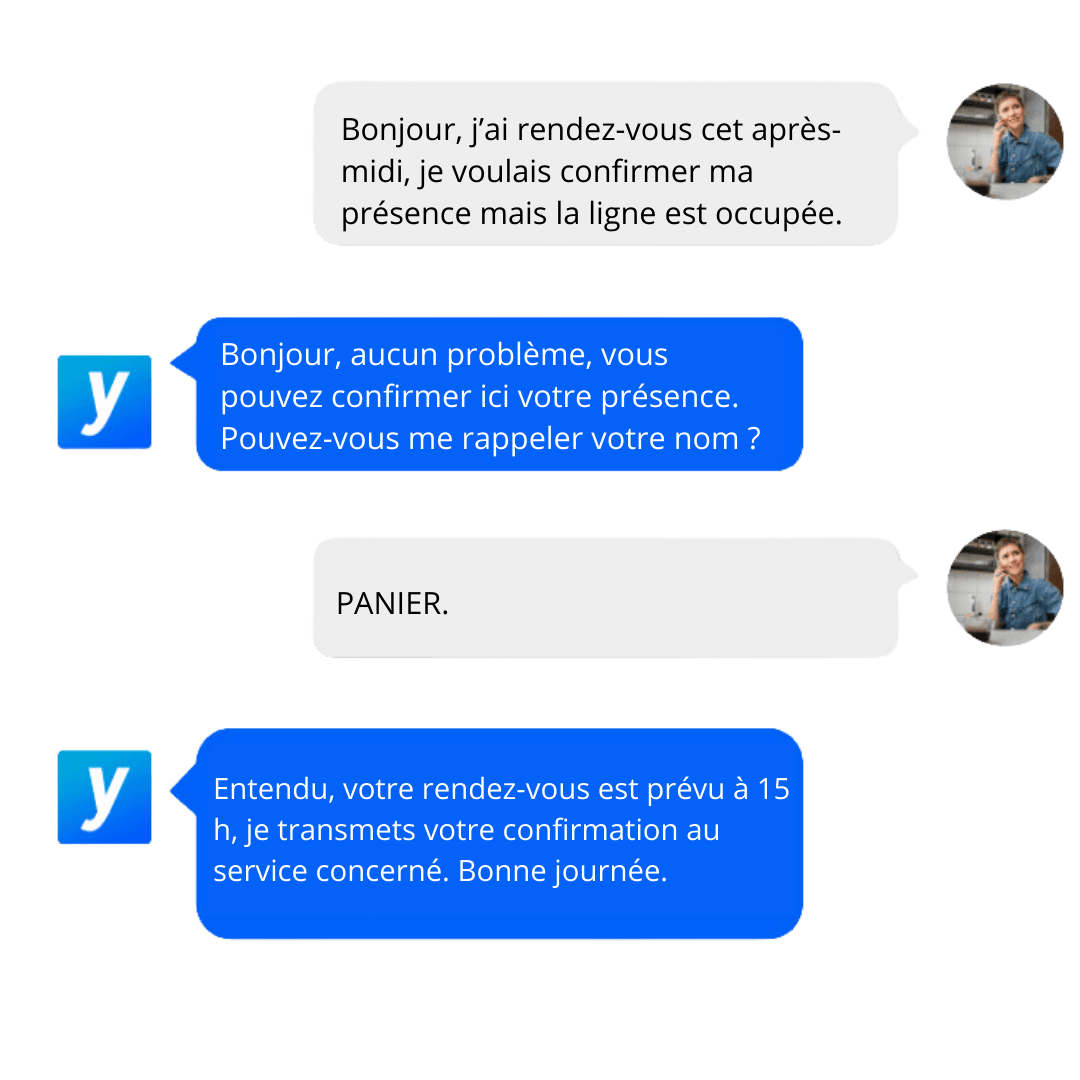
A customer wants to confirm an appointment, but all your advisors are busy. Conversational AI takes the call and records the confirmation.
Account management
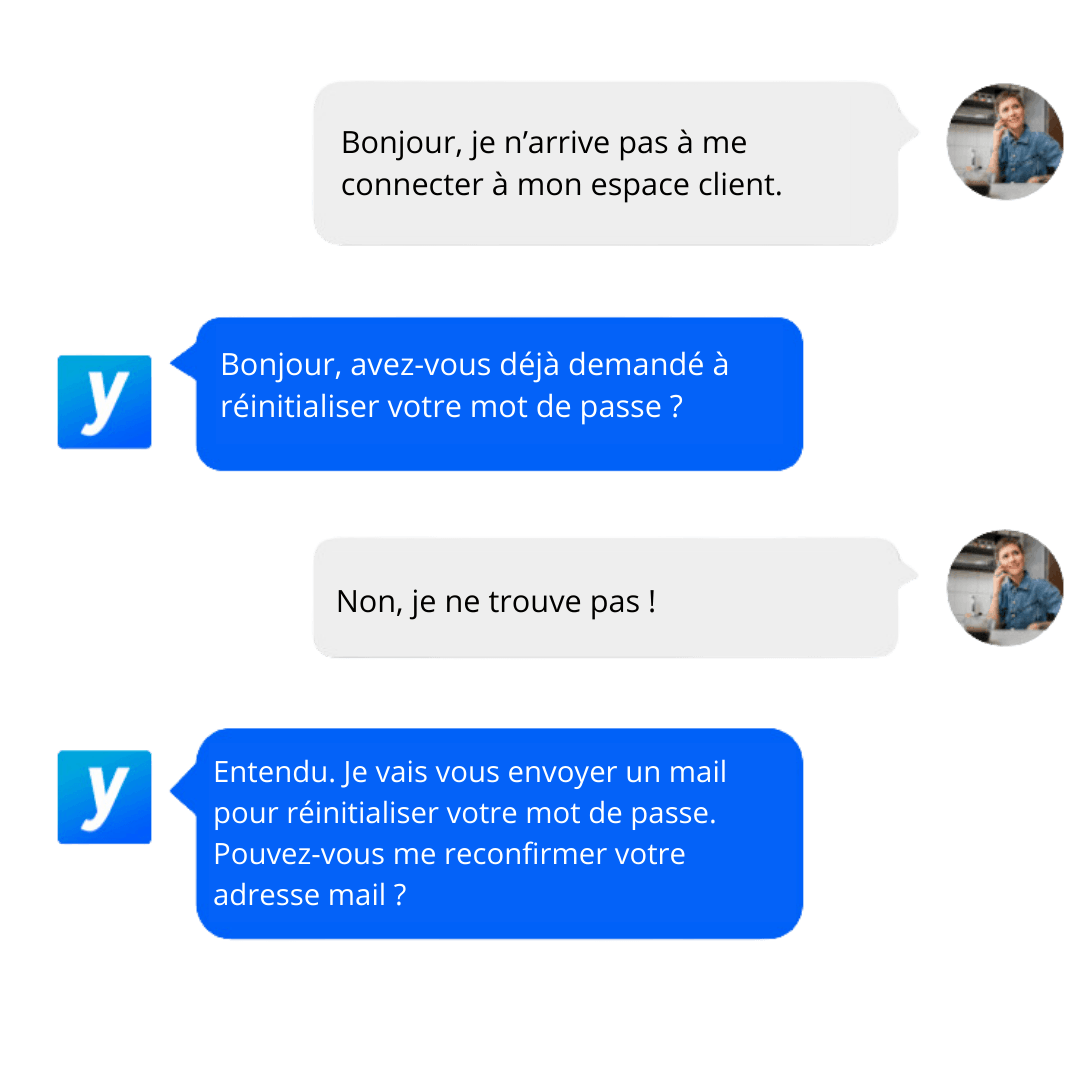
A customer can no longer log in to her account and needs a new password. The conversational agent securely sends her an email to reset it.
Upselling and cross-selling
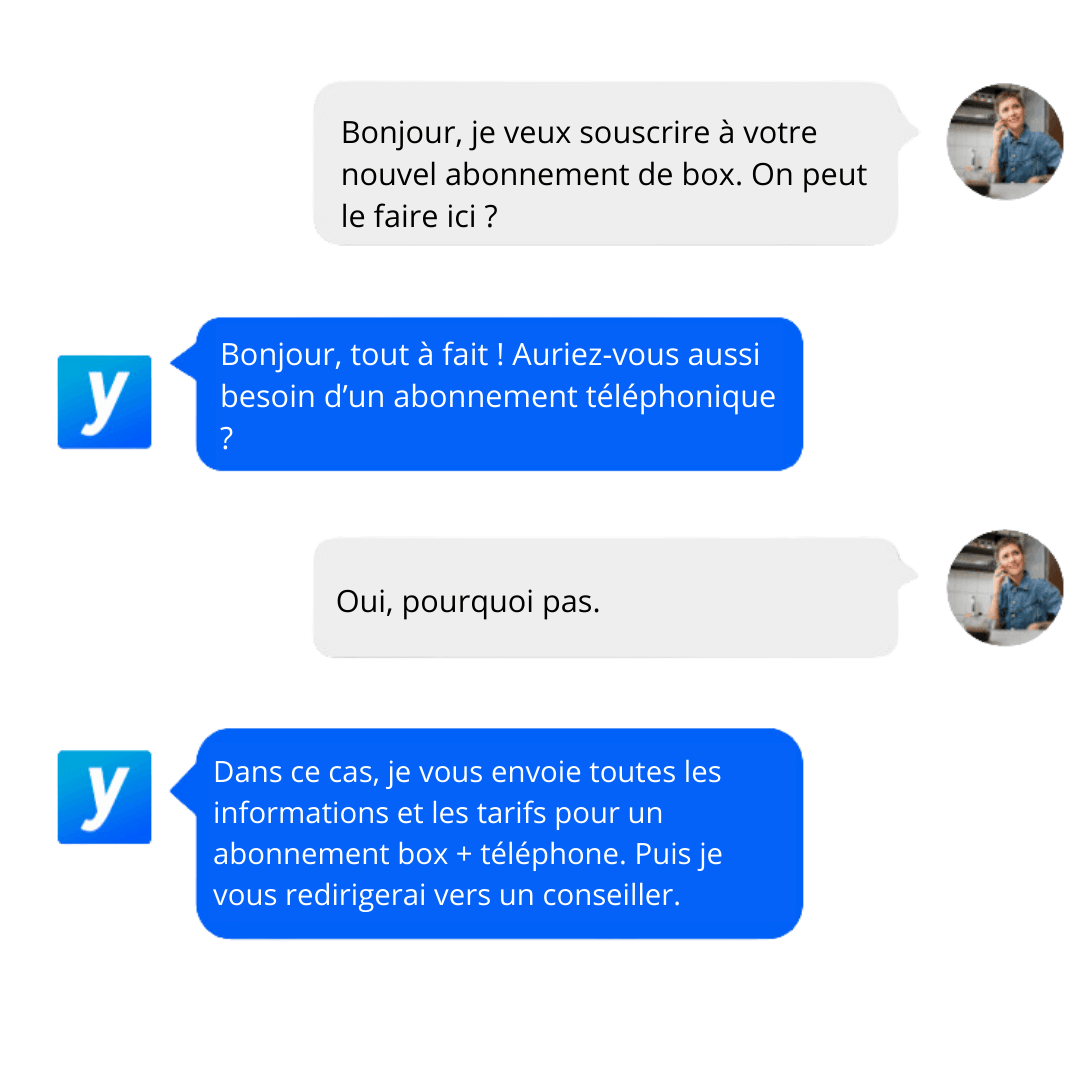
A prospect wants to subscribe to a new internet plan. Conversational AI handles authentication and account creation, offers an additional mobile plan, then transfers the call to an advisor who finalizes the sale.
How to bring conversational AI to your customer service
Intelligent conversational agents can carry out many automated tasks for customer service teams. Voicebots, chatbots and callbots all bring productivity, profitability and customer satisfaction. You still need to integrate them into your existing setup. Here is how, step by step.
1. Identify your touchpoints
Ask yourself these questions to define your needs:
- What are customers' most frequent questions, and on which channels?
- Which teams can answer callers' questions?
- Which channels most need automation?
- Which use cases cost you the most time and money?
- On which channels would customers see real value in AI?
2. Identify where AI applies
Now define all the use cases where conversational AI will be:
- useful for your telecom company's growth;
- compatible with your current customer service setup;
- appreciated by your customers.
As seen above, you can automate tasks such as:
- customer authentication;
- routing to another department;
- appointment booking;
- post-call or post-order feedback for the continuous improvement of your customer service.
3. Train the AI
Next, train the conversational AI in real conditions so it gives the most relevant answers to your customers. Tone matters: if your advisors address customers formally and the virtual agent does not, it can hurt your brand image. With the support of a callbot platform provider, you train your AI to answer as closely as possible to how your employees would.
4. Test and deploy
Finally, test your agent in real conditions:
- Does the AI work as expected?
- Is the customer experience still good, or even better?
- Is customer feedback positive? If not, why?
Then you can launch your virtual agent.
5. Measure results
Monitor continuously to detect issues and optimize performance, tracking KPIs such as:
- first contact resolution (FCR);
- average handle time (AHT);
- abandonment rate.
Conversational AI is transforming telecommunications by improving how companies interact with their customers. With chatbots, voicebots and callbots, operators offer always-on customer service, lower costs and more productive advisors. Conversational AI makes troubleshooting, payments and customer authentication easier. By investing in these tools, telecom companies can increase customer satisfaction and keep a real competitive edge.
How many calls can your voice agent absorb?
Estimate in one minute the number of automated calls and the savings on your own volumes, with our ROI calculator.