Customer verbatim: definition, benefits, and analysis
Customer feedback is a valuable resource for your business. Learn everything you need to know about customer verbatims!


Customer verbatims are a valuable resource for your business. Every word used by a customer carries a signal, an emotion, an expectation, and actionable information for making strategic decisions and improving the customer experience.
By collecting this qualitative data from surveys, reviews, social media, chats, and more, and by structuring and analyzing the information, it is possible to identify customer pain points and take action on what truly makes a difference in your service.
What is a verbatim?
A verbatim is an exact transcription of the words used by a customer when expressing their thoughts on a product or service they have used. Verbatims capture the tone, emotions, and feelings of the customer without any modification and provide an authentic perspective on the customer experience. Analyzing these verbatims allows companies to grasp valuable qualitative insights that cannot be analyzed through quantitative data alone.
We can distinguish between two types of customer verbatims: solicited and spontaneous. Solicited verbatims are those where brands ask customers for feedback and control the timing of the request, whereas spontaneous verbatims are those where the customer shares their opinion on their own initiative without being asked. Often, solicited verbatims follow a rather positive sentiment, while spontaneous verbatims are frequently prompted by a negative experience, which can have a real impact on a brand's online reputation.
How can you collect customer verbatims?
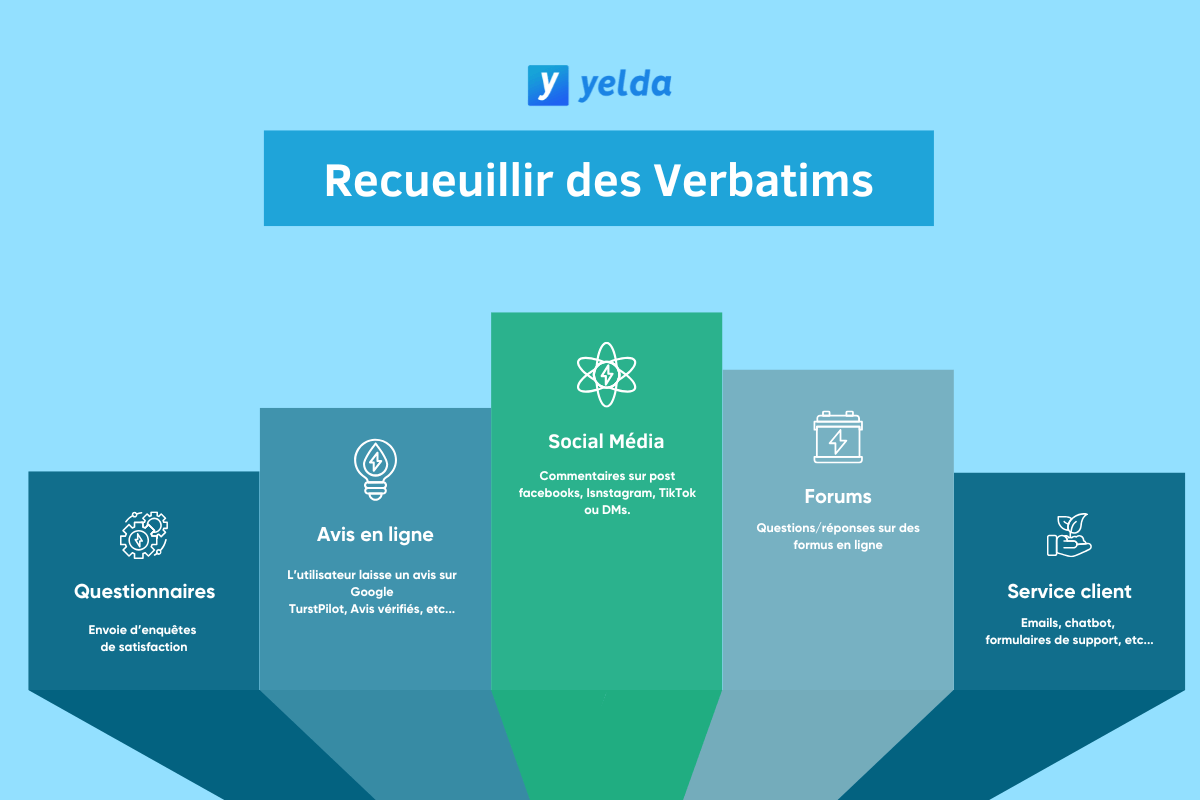
Verbatims from satisfaction surveys
Qualitative satisfaction surveys are the richest source of verbatims. Often anonymous, the respondent provides concrete details following their purchasing experience using their own vocabulary, without self-censoring. They are aware that their feedback is useful for improving the company's services and provide an honest response.
You can automatically send a survey, either by requesting post-purchase comments or by sending a service evaluation following an interaction with customer support.
Online review verbatims
Consumers today are keen on online reviews, whether they are reading or writing them. Google, Trustpilot, Amazon, Avis Vérifiés... there are many platforms that allow you to collect customer feedback.
All you have to do is export each comment and analyze them to discover the strengths and weaknesses your customers are pointing out!
Social media verbatims
Social media platforms are also full of verbatims from your target audience: comments on posts, reactions to stories, and private messages on Facebook, Instagram, LinkedIn, or TikTok are all sources of information to better understand your persona.
Online forum and community verbatims
There are many forums where your customers discuss the products and services you offer among themselves. They exchange ideas and provide their opinions and advice as consumers. The advantage here is that if they are satisfied, they will use the exact terms needed to convince others to buy your product or service. You can simply use their verbatim as is!
Email and postal mail verbatims
Your customers also express themselves through emails. However, they are addressing you directly and may not use the same language they would with other consumers, as they might on an online forum. Nevertheless, positive and negative feedback emails or letters represent a valuable resource for analyzing your persona's needs: what dissatisfactions come up most frequently? What words do they use to describe your product or service? Do they appreciate your response?
Online chat and chatbot verbatims
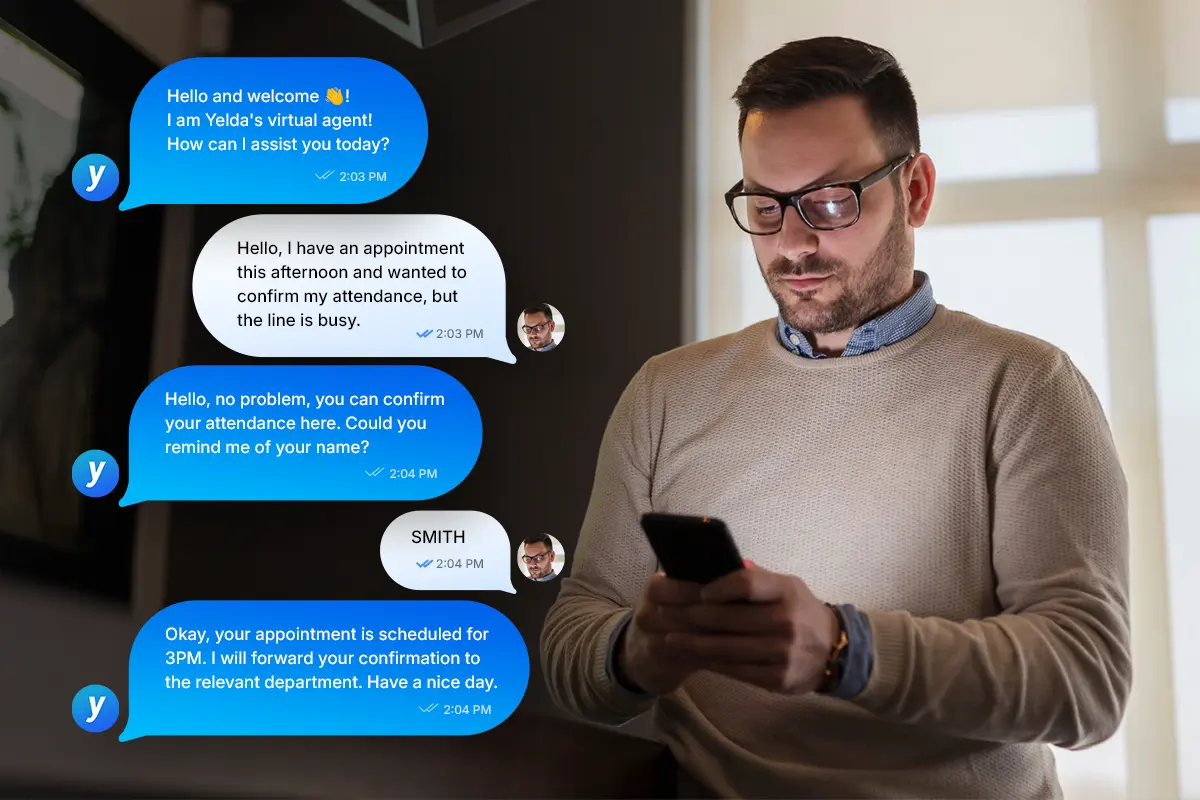
You can find these same verbatims in the form of online chats or voicebot chatbots. Here, the consumer will use shorter, more direct language, as they are more likely to be contacting you via their smartphone rather than their computer. Take this into account in your analysis.
By leveraging these different types of verbatims, companies can gain a comprehensive and concrete view of the customer experience, thereby enabling them to improve their products, services, and communication strategies over the long term.
Why is it essential to analyze customer verbatims?
Analyzing customer verbatims is necessary and useful for many reasons:
Understanding customer expectations : they provide valuable insights into customer needs.
Improving the customer experience : verbatims make it easier to address pain points and, consequently, improve overall customer satisfaction through concrete actions.
Strengthening customer loyalty they will feel valued when they see that their feedback is being taken into account.
Anticipating and resolving issues : by quickly detecting recurring problems, you can intervene before they become critical, thereby limiting the negative impact on your brand image.
Improving communication strategy : customer feedback can reveal insights into how your brand is perceived and the effectiveness of your marketing campaigns, which helps you continuously adjust your content and communication strategies.
Methods for analyzing customer feedback
Manual analysis
Manual analysis of feedback requires your employees to select, read, and analyze customer comments. This method is more time-consuming, but the analysis is also much more in-depth.
Here are its advantages:
In-depth analysis : human analysts can grasp the nuances and context of feedback, offering a richer and more precise understanding of consumer emotions and needs.
Flexibility of interpretation : employees who analyze feedback are able to adapt their analysis based on variations in language, political and societal context, idioms, and cultural nuances. This is not the case for AI-powered tools, at least not entirely.
And here are its disadvantages:
High time and cost : manual analysis proves to be very expensive and time-consuming, especially for large volumes of data.
Risk of cognitive bias : human analysts can introduce subjective cognitive biases, thereby influencing the objectivity of the results.
Automated analysis with AI
Automated analysis uses artificial intelligence algorithms to process and interpret feedback. This method offers several advantages:
AI speed and efficiency : it can analyze large volumes of data in a short amount of time, which is ideal for companies with a lot of customer feedback to process.
Consistency and objectivity : algorithms apply criteria objectively to ensure true consistency in verbatim analysis.
But automated analysis also has its limits:
Lack of nuance and subtlety in analysis : AI can sometimes lack subtlety and context, misinterpreting certain expressions or emotions. It is advisable to have a human review the analyses.
Need for initial configuration : before it is operational, AI requires initial configuration and training on datasets specific to the company. This is extra time to spend on verbatim analysis, even if it is less time-consuming than manual analysis.
How to conduct a customer verbatim analysis?
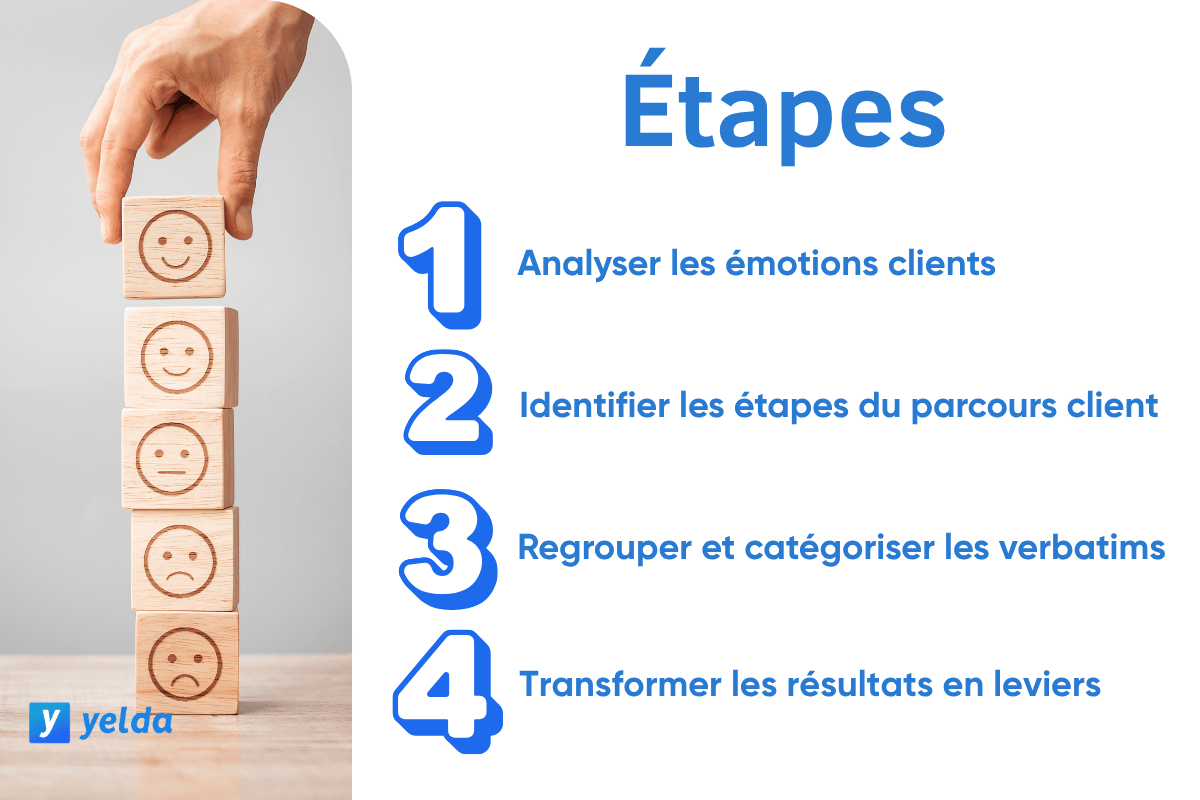
1. Analyze customer emotions
First, you need to analyze the emotions revealed in the verbatims. This helps you understand how customers feel when they are in contact with the company. This emotional analysis is crucial for identifying your persona's pain points. For example, by determining the recurring emotions in the verbatims, you can identify the aspects of your product or service that trigger frequent reactions and leverage them more in your marketing communication.
2. Identify the stages of the customer journey
It is essential to understand which stages of the customer journey the verbatims refer to. Each comment can correspond to a different phase of the sales funnel, such as purchase, product usage, or customer support. Here is how to proceed:
Define the current customer journey.
Assign each verbatim to a stage of the journey.
Identify critical touchpoints.
For example, verbatims that report facts about navigation issues on the website are typically associated with the purchase phase. Those mentioning difficulties with technical support relate more to the after-sales service phase.
3. Group and categorize verbatims
Grouping and categorizing verbatim feedback helps identify trends and structure insights for in-depth analysis.
For example, in the Customer Service category, you could have sub-categories such as:
Wait times at the telephone system.
Agent skills.
Availability of the B2B call center.
4. Turning results into operational levers
Analyzing verbatim feedback is only useful if it leads to concrete actions. Here is how to turn your analysis results into operational levers:
Formulate recommendations based on the insights drawn from the verbatim feedback.
Prioritize actions by ranking recommendations based on priority and feasibility.
Track progress by setting up performance indicators.
How many calls can your voice agent absorb?
Estimate in one minute the number of automated calls and the savings on your own volumes, with our ROI calculator.