
How can you reduce your call center costs?
Reduce your call center costs and maintain excellent customer satisfaction with 7 tips for saving without sacrifice.


Reduce costs or satisfy our customers? This question haunts many call center managers. The reality? You can do both at the same time.
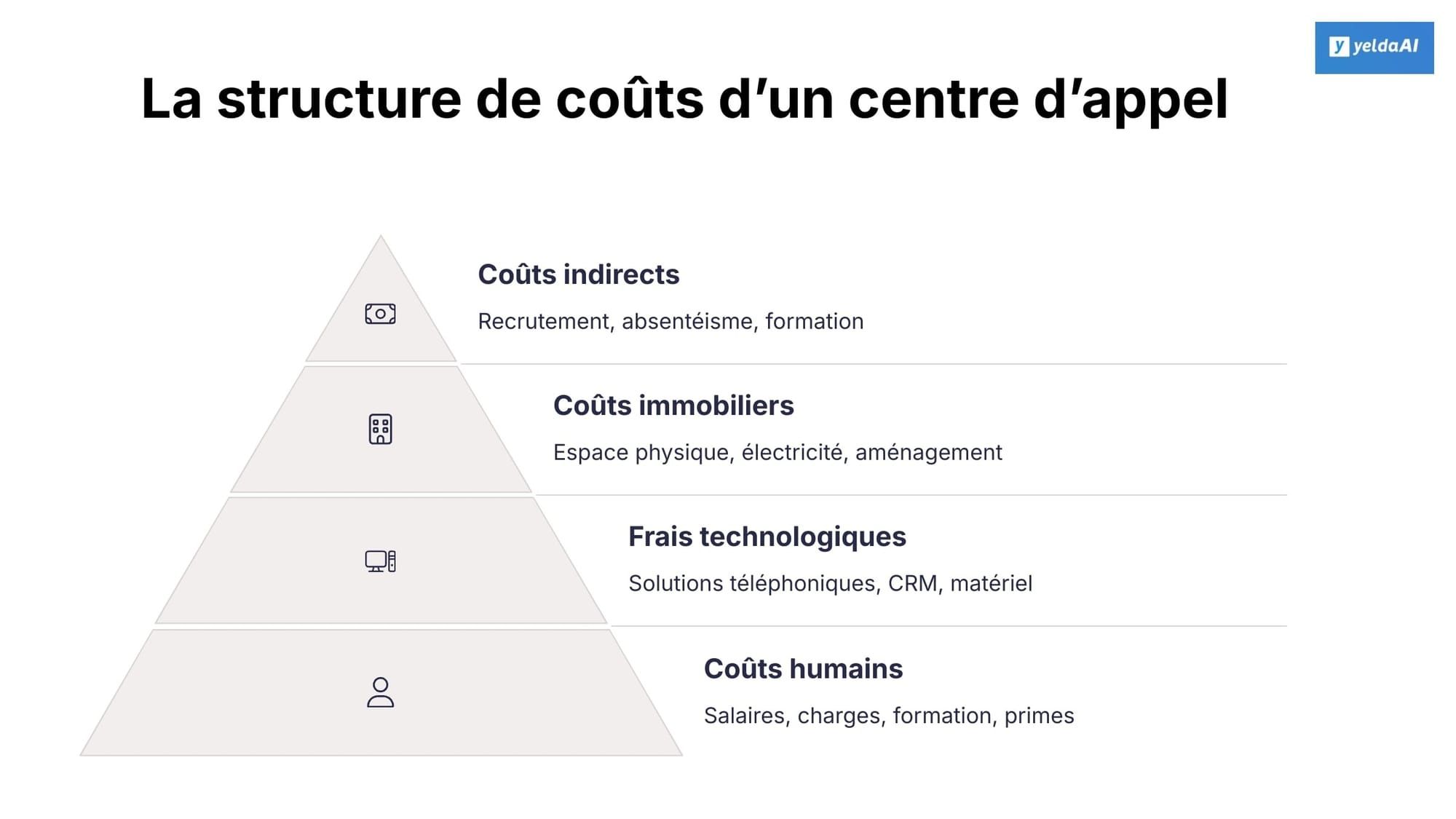
According to FinModelslab, the typical financial structure of a call center is roughly broken down as follows: 70% in personnel costs, 15% in technology, and 15% in infrastructure. These figures indicate significant potential for optimization.
The most successful companies have grasped this secret: an optimized call center has the capacity to generate more value at a lower cost.
Want to know the secrets to a cost-effective AND high-performing call center? Read on.
The importance of the call center for your customer satisfaction
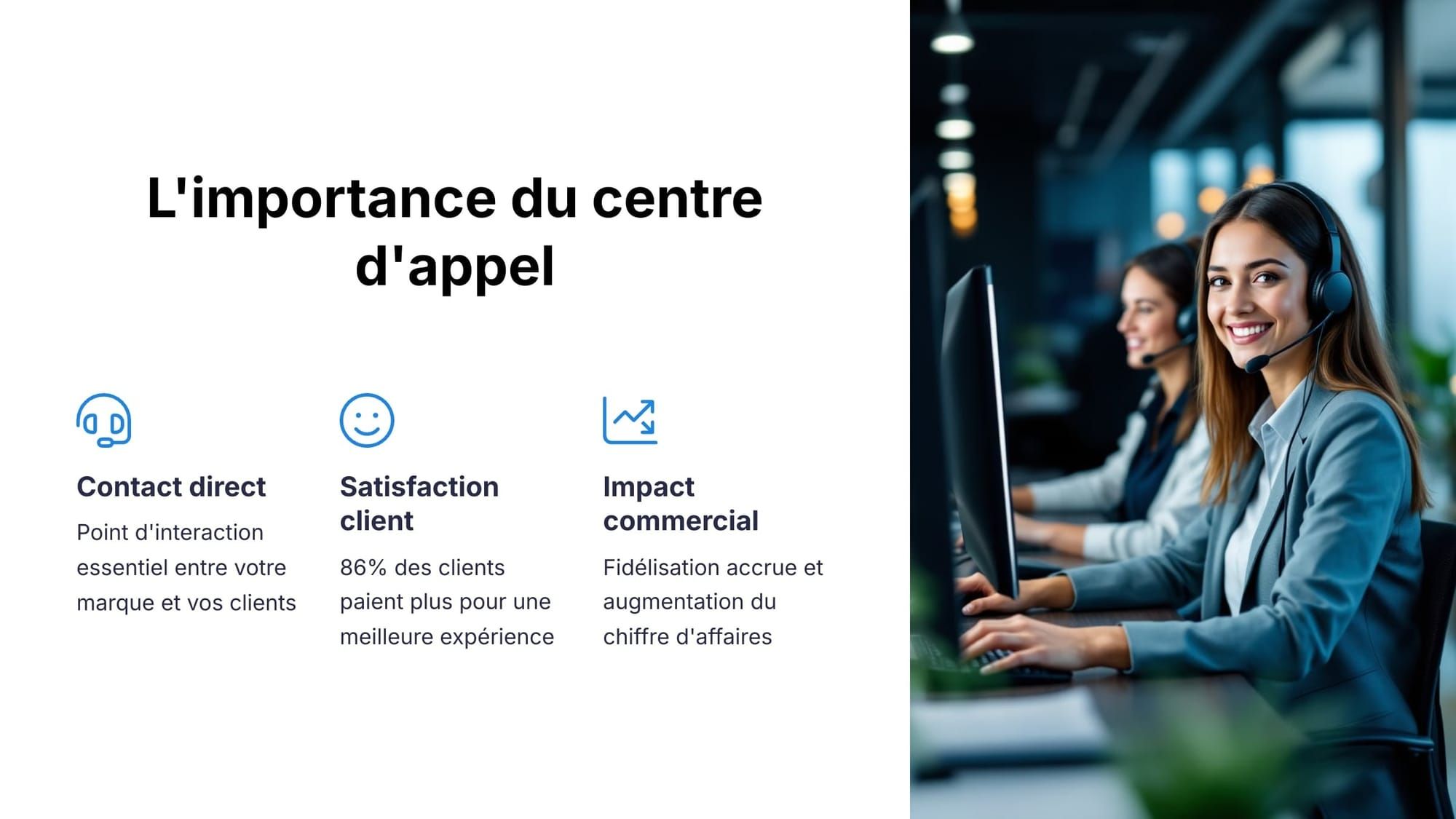
Your call center acts as the direct point of contact between your brand and your customers.
A study by American Express shows that 86% of customers are willing to pay more for a better experience. Conversely, a poor phone experience will send 74% of consumers to a competitor according to MarTech.
High-performing customer service generates:
- Increased loyalty : customers whose issues are resolved on the first call remain significantly more loyal to your brand
- Additional revenue : your agents can seize upsell opportunities during incoming calls
- A crisis shield : your call center becomes your best ally for defusing tense situations
- A valuable source of information : customer feedback captured during calls fuels the continuous improvement of your products
The current paradox? Call centers are simultaneously a cost center to be optimized and a strategic growth lever. The question, therefore, is not simply whether to cut expenses, but how to do so without compromising the customer experience.
The cost structure of a call center
To effectively reduce your call center expenses, a precise understanding of its cost structure is essential. This financial X-ray reveals the priority spending areas to optimize.
Human costs generally represent the largest share of the overall budget. This category includes salaries, social security contributions, training, and bonuses for agents and supervisors. The human factor is therefore the primary lever for financial optimization.
Technology costs usually form the second most significant budget item:
- Telephone solutions and network infrastructure
- CRM software and contact management tools
- Computer hardware for workstations
- System licenses and maintenance
Real estate and logistics costs also weigh heavily on the overall budget. Physical space, electricity, air conditioning, and workstation setup make up this sometimes underestimated category.
A call center also generates less visible indirect costs:
- continuous recruitment due to turnover,
- absenteeism,
- new agent training,
- and increased team supervision.
These hidden costs erode profitability if left unaddressed.
The good news? Every component of this financial structure can be optimized.
7 tips for optimizing contact center costs
Faced with budget pressures and rising customer expectations, reducing costs without compromising service quality is a top priority. We have compiled seven concrete strategies to help you strike that delicate balance between financial efficiency and customer satisfaction.
Audit your current cost structure
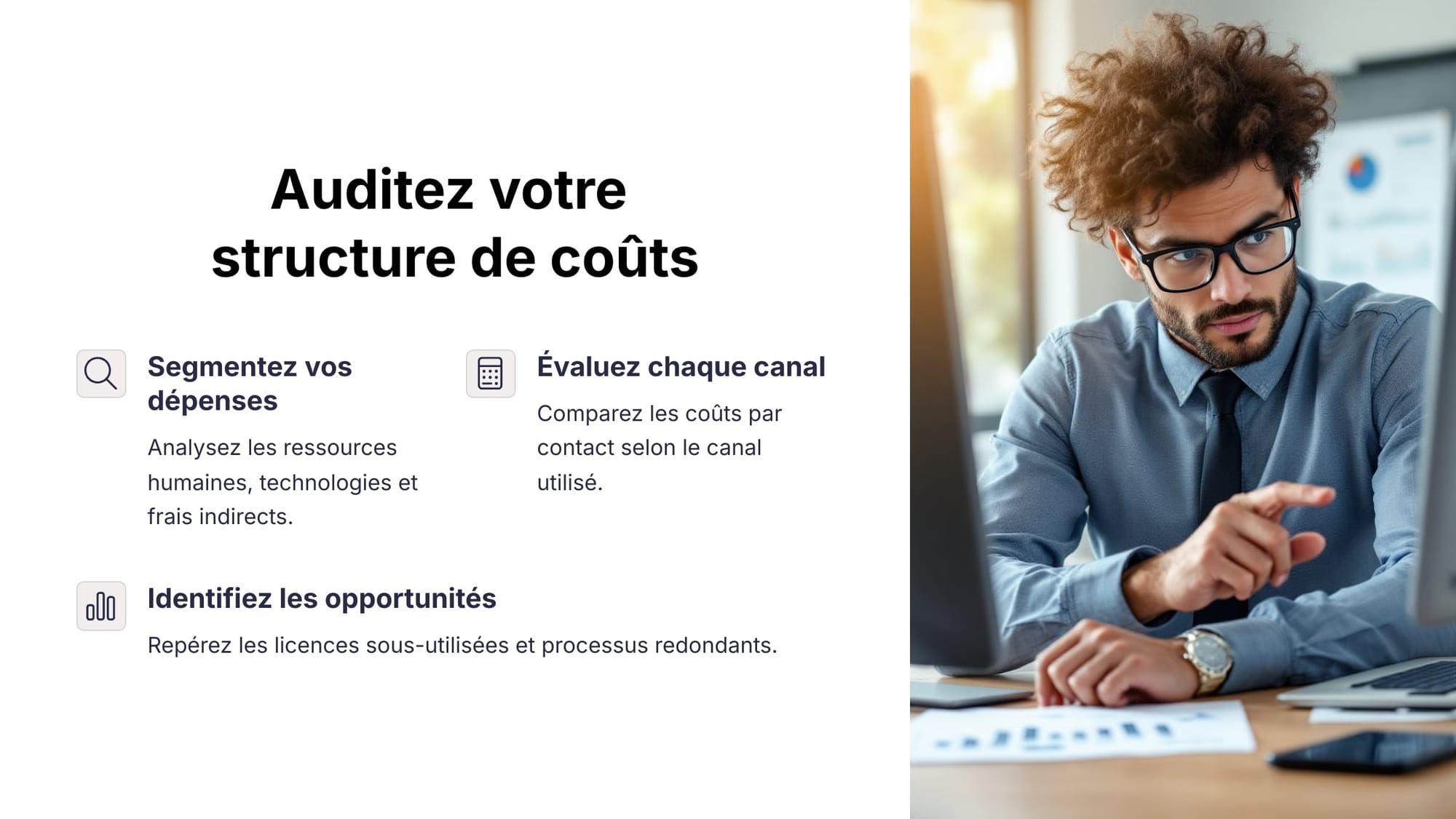
Effective optimization begins with a precise analysis of your current spending. A comprehensive audit will reveal where every dollar is being spent and which cost-saving levers to prioritize.
Start by segmenting your costs into distinct categories: human resources, technology, facilities, and indirect expenses. Then, examine each item closely with these key questions:
- What is the average cost per contact by channel: phone, email, chat?
- How are calls distributed by reason, and which ones generate the highest costs?
- Which processes consume the most agent time?
This spending map prevents counterproductive budget cuts and directs your efforts toward high-potential savings opportunities. A good audit frequently highlights unexpected optimization opportunities, such as underutilized software licenses or redundant processes.
Invest in AI solutions
Artificial intelligence has revolutionized how contact centers manage their operations and costs. Contrary to popular belief, its adoption is not intended to replace agents, but to free them from repetitive and time-consuming tasks.
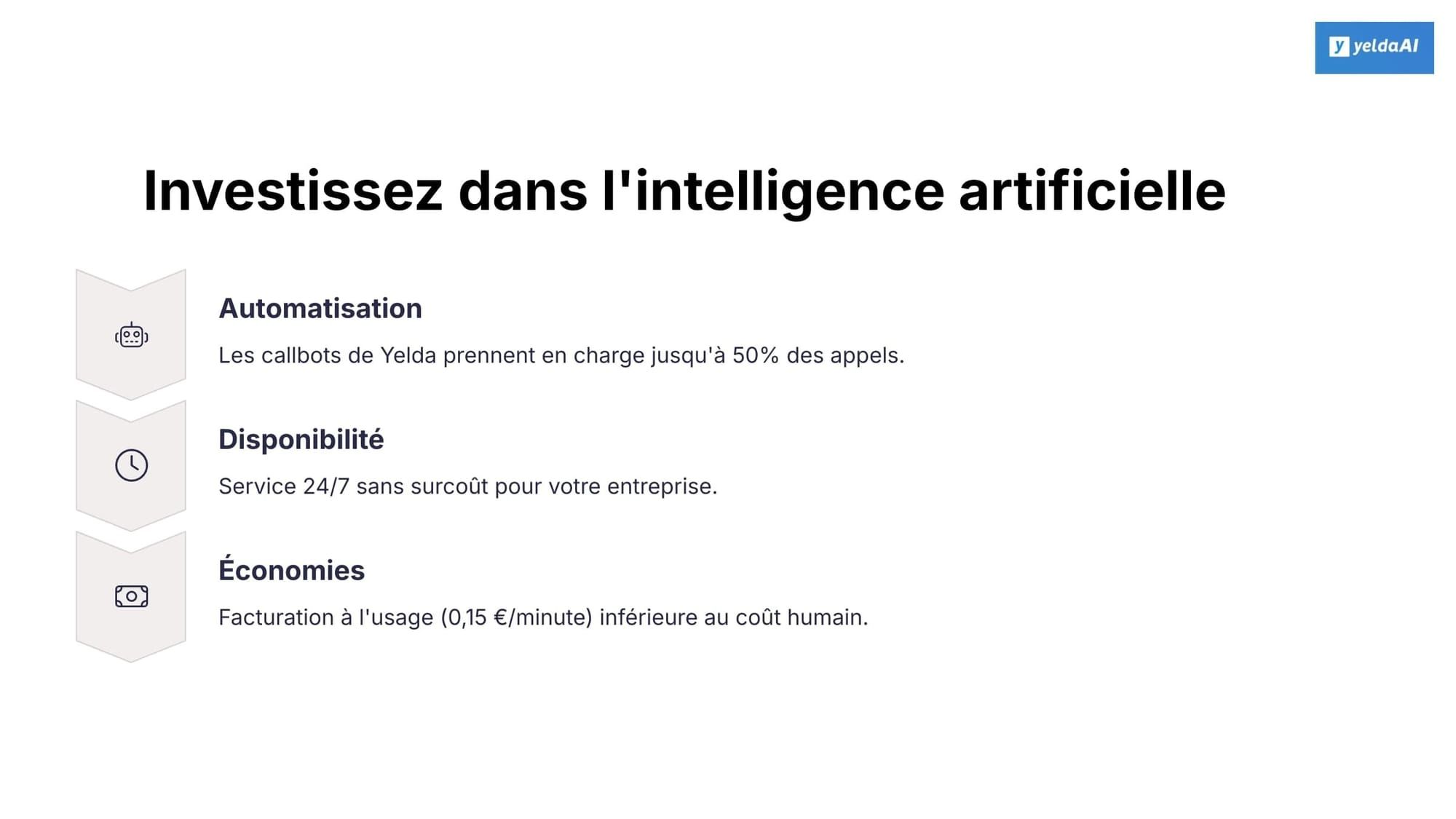
YeldaAI's callbots perfectly illustrate this evolution: they handle up to 50% of calls completely autonomously. These virtual voice agents answer frequently asked questions, qualify requests, and execute simple operations without human intervention.
Financial benefits are quickly apparent :
- Reduction in call volume handled by human agents
- Decrease in call spikes and better workload distribution
- 24/7 availability at no extra cost
The average cost per call via a call center is around €0.80 (excl. tax) in the Indian Ocean region and can reach €3 in mainland France.
The AI voice agents therefore act not only as a productivity booster but also as a powerful cost-reduction lever for your call center.
Focus on agent training
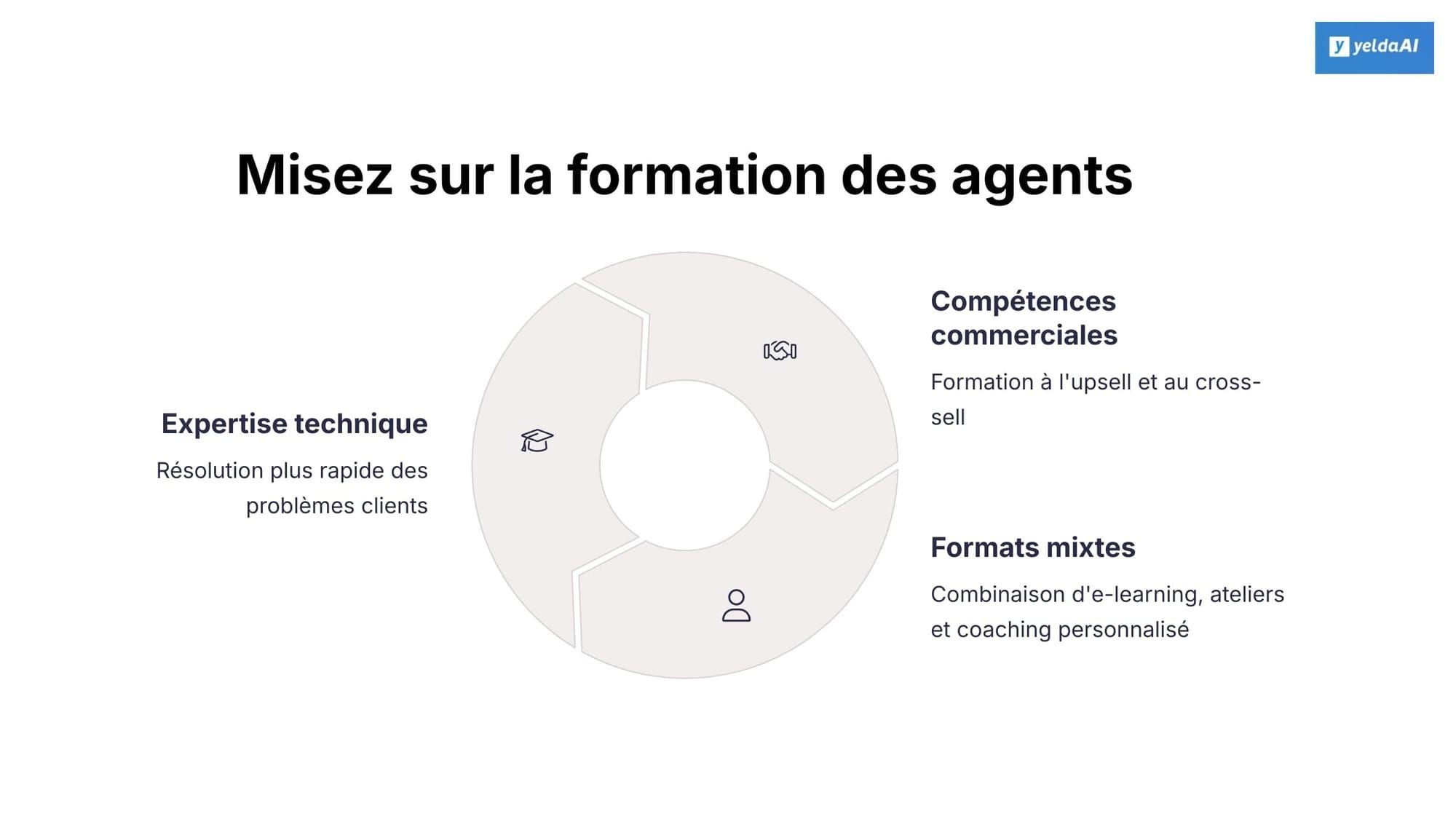
Your agents are your most valuable resource — and your primary expense. Their continuous training is a strategic investment with multiple impacts on your operational costs.
Well-trained agents resolve issues faster, reduce AHT (Average Handle Time) and increase the first-contact resolution rate. Their increased expertise reduces call transfers and callbacks, both of which significantly inflate your costs.
Training should specifically target upselling and cross-selling in order to turn every contact into a sales opportunity. An agent capable of identifying a customer's latent needs and proposing an appropriate solution generates additional revenue that easily offsets the cost of the call center.
Prioritize blended learning formats combining:
- e-learning,
- hands-on workshops
- and personalized coaching.
Simulations and role-playing effectively prepare your teams to handle various customer scenarios with confidence and efficiency.
Adopt CCaaS solutions
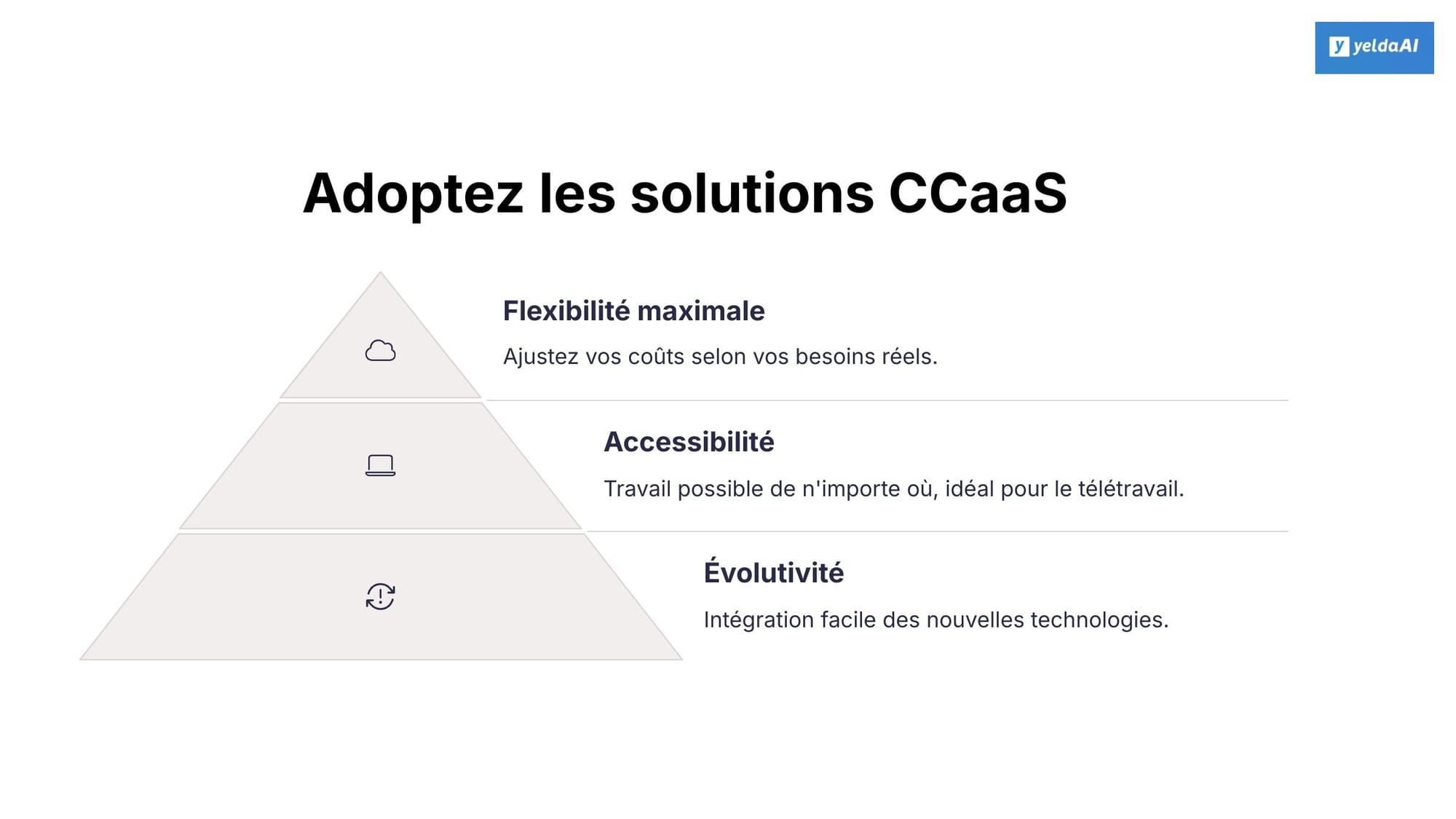
CCaaS (Contact Center as a Service) completely transforms the financial approach to your contact center. This technology solution provides all the features of a traditional call center (call routing, queuing, recording, analytics) but as a cloud-based service accessible via subscription.
By adopting CCaaS, you eliminate costly purchases of physical equipment and servers (capital expenditure or CAPEX) to switch to a monthly subscription based on actual usage (operating expenditure or OPEX).
This flexibility prevents you from tying up large amounts of capital and allows you to adjust your costs based on your current needs, without overinvesting in unused capacity.
This budgetary agility comes with major operational benefits: accessibility from anywhere (ideal for remote work), automatic updates, and simplified integration with your other tools (CRM, ERP).
CCaaS also facilitates the gradual adoption of innovations like AI, predictive analytics, or omnichannel support, without requiring a complete overhaul of your existing systems.
Identify the causes of calls and implement self-service solutions
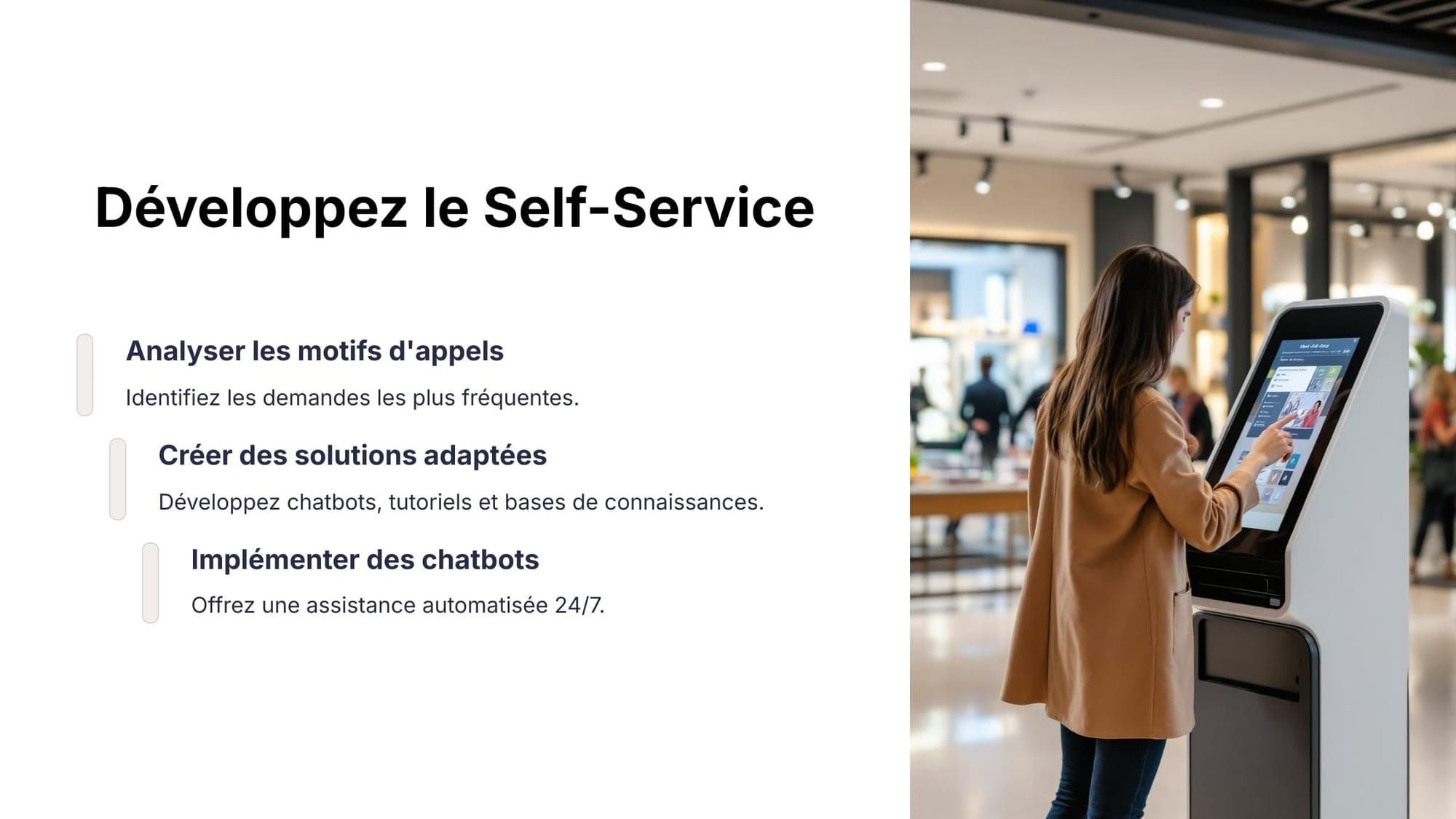
Every avoided call equals a net saving. Systematic analysis of contact reasons frequently highlights recurring patterns that can be addressed upstream, effectively reducing the overall call volume.
Start by extracting data from your contact management systems to identify the most frequent call reasons. For each one, ask yourself these questions:
- Could this request be handled via self-service?
- Is a faulty process generating these avoidable calls?
- Would proactive information resolve the issue?
Then, develop tailored self-service solutions: dynamic FAQs, video tutorials, knowledge bases, chatbots on your website. These 24/7 resources significantly reduce call volume.
Optimize Workforce Management (WFM)
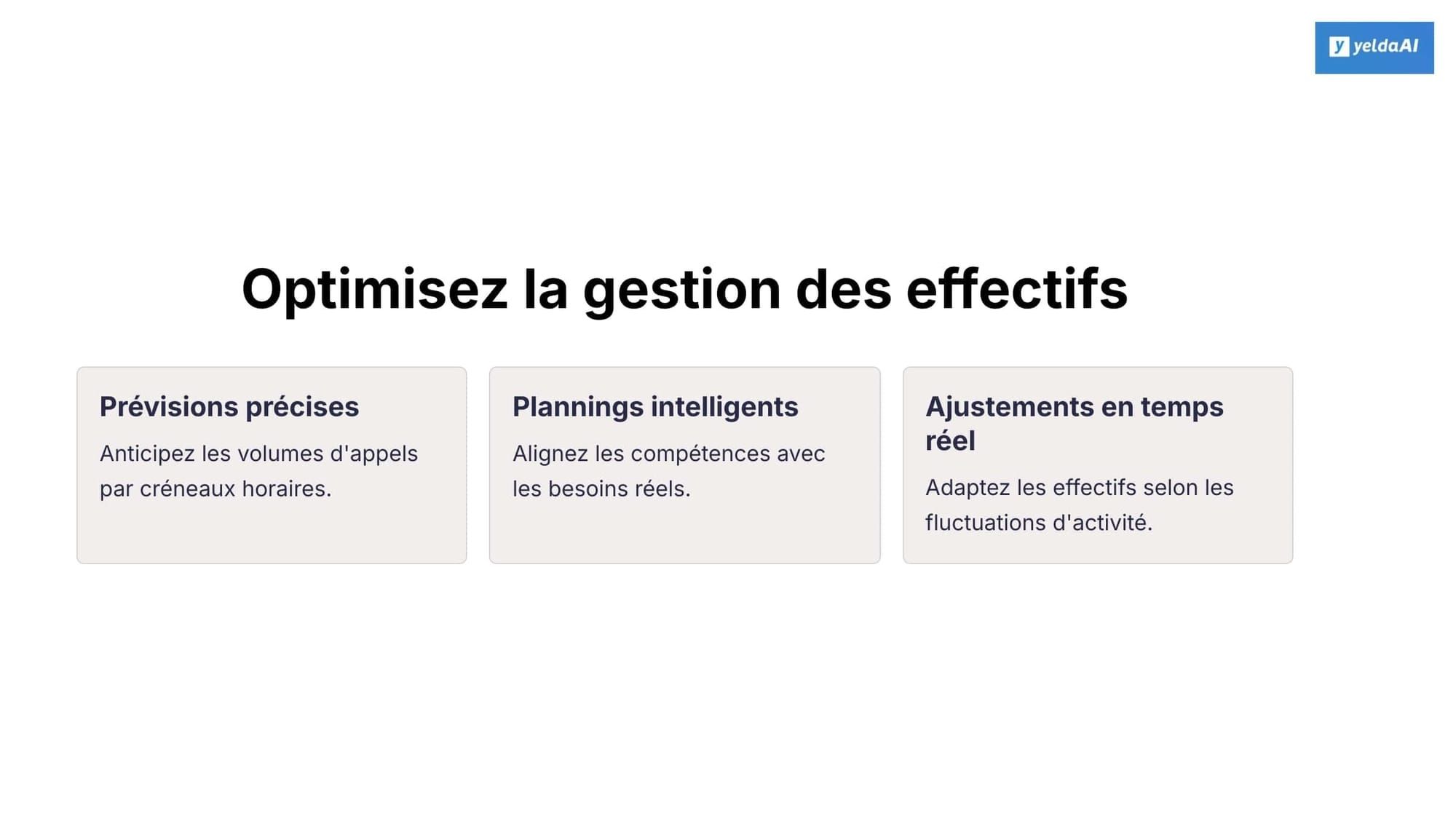
Workforce Management is a major lever for economic optimization in any contact center. Precise planning of your human resources aligns your processing capacity with actual demand. No more costly overstaffing or understaffing that harms quality.
Modern WFM tools rely on sophisticated algorithms to:
- Forecast call volumes with high precision
- Calculate staffing requirements by time slot
- Optimize schedules based on skills and availability
- Adjust staffing in real time according to activity fluctuations
Refined schedule management reduces agent idle time and minimizes overflow situations. Integrating remote work into your WFM strategy adds an extra layer of flexibility and potential savings.
Outsource strategically
Selectively outsourcing certain contact center functions can generate substantial savings when approached as a strategic decision rather than a simple cost-cutting exercise.
➡️ Want to accurately calculate the costs and savings of implementing a callbot for your company or business unit? Feel free to contact us at contact@yelda.ai!
Estimate the gains of a voice agent based on your own call volumes with our ROI simulator.
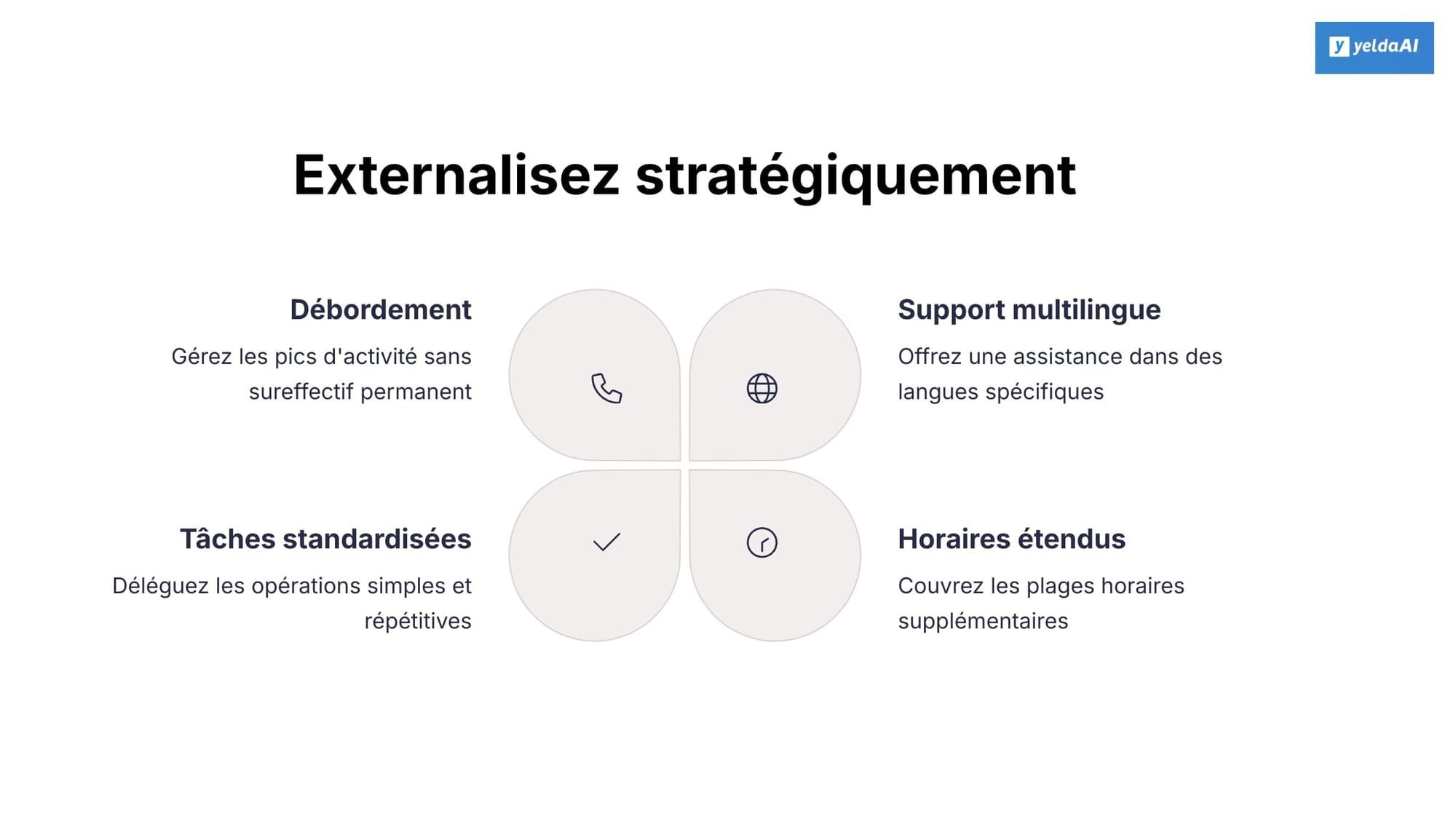
The winning approach is to distinguish your core business activities, which should be kept in-house, from peripheral or generic functions that can be entrusted to specialized providers:
- Overflow during peak activity periods
- Handling simple or standardized calls
- Coverage for extended operating hours
- Support in specific languages
Select your outsourcing partners carefully, prioritizing those who understand your corporate culture and share your quality standards. Establish clear performance indicators and effective feedback processes to maintain consistency in your customer experience.
Finding the right balance between cost and quality
Reducing costs without compromising customer satisfaction is a strategic endeavor, not just a hunt for savings. High-performing call centers adopt a 360-degree view where every financial optimization simultaneously strengthens the customer experience.
Every euro saved must therefore generate a tangible benefit in perceived quality.
Regularly measuring a few key KPIs — customer satisfaction, first-contact resolution, and NPS — will alert you to any potential decline in quality resulting from your optimization initiatives. This vigilance ensures a path of continuous improvement where operational efficiency and service excellence go hand in hand.
Ready to turn your call center into a profit center? Contact our YeldaAI experts to discover how our voice AI solutions will help you reduce costs while elevating your customers' experience.
How many calls can your voice agent absorb?
Estimate in one minute the number of automated calls and the savings on your own volumes, with our ROI calculator.