
Contact center call spikes: How to manage them?
How can you handle call spikes without the stress? Maintain service quality and protect your customer relationships, even during peak periods.


Monday morning, 9:01 AM. Your call center has just opened its doors, and the lines are already jammed. A promotion launched over the weekend, combined with a minor technical glitch, has created the perfect storm. In less than an hour, your abandonment rate exceeds 30%..
These call spikes sometimes strike when you least expect them, and the consequences are immediate. Customer satisfaction plummets, agents feel the pressure, and sales opportunities are missed. Every minute of overflow translates into tangible financial losses and the erosion of your brand's trust.
The most successful call centers don't just suffer through these spikes : they anticipate them, absorb them, and turn them into positive moments of truth. How do they do it? That is exactly what we are going to reveal in the following lines.
Article summary
Call spikes can quickly overwhelm a customer service department and degrade the quality of support. To manage them better, you need to anticipate periods of high demand and automate a portion of your calls. Callbots like YeldaAI can handle up to 50% of inquiries, taking the pressure off your teams during these busy times.
What causes a call spike?
Contact centers face sudden increases in call volume for various reasons. These surges, often predictable but sometimes unexpected, put your teams under pressure and test the robustness of your infrastructure.
Seasonality : Holiday periods, back-to-school season, or vacations naturally generate more customer inquiries.
Product launches : The release of a new product line or service leads to a flood of questions and requests for technical support.
Special promotions : Sales, flash deals, or temporary discounts trigger a massive influx of contacts.
Technical issues : Service outages, software bugs, or system malfunctions lead to a surge in urgent calls.
External events : Regulatory changes, extreme weather conditions, or health crises generate specific types of inquiries.
Billing Bulk invoicing or price changes often trigger questions and complaints.
Each of these factors can double or even triple your usual call volume in a matter of hours.
What are the risks of poorly managed call spikes?
These sudden increases in call volume, when not properly anticipated, create a ripple effect throughout your business. Poor management of these spikes simultaneously affects your customers, your agents, and your bottom line.
| Impact | Consequences | Long-term effects |
|---|---|---|
| Customer satisfaction | Endless queues, abandoned calls, accumulated frustration | Lower NPS, damaged brand image, negative social media mentions |
| Financial performance | Missed business opportunities, canceled orders, early contract terminations | Lower average order value, higher customer acquisition costs, declining revenue |
| Employee experience | Increased stress, feelings of helplessness, emotional exhaustion | Higher absenteeism, faster staff turnover, a poorer working environment |
| Operational efficiency | Reduced service quality, higher AHT, repeated callbacks | Lower First Contact Resolution, higher costs per interaction |
| Competitive advantage | Customers lost to more responsive competitors | A weaker market position and loss of market share |
A poorly managed call spike creates a vicious cycle: your dissatisfied customers keep trying to reach you, your agents burn out under the pressure, and your customer service enters a downward spiral. The impact is measured as much in lost revenue as it is in eroded customer trust.
Solutions for handling call spikes
Faced with the disastrous consequences of a poorly managed call spike, you must act proactively rather than reactively. It is possible to anticipate periods of high call volume, and several strategies will help you maintain service quality during these critical moments.
A callbot for a 100% pickup rate
The first challenge during a call spike? Answering every call, without exception. Callbots are an ideal solution for absorbing waves of calls without sacrificing the customer experience.
YeldaAI callbots handle up to 50% of calls completely autonomously thanks to their advanced artificial intelligence. Unlike traditional IVRs, these virtual voice assistants understand natural language and respond fluently to customer requests. This technology ensures an instant telephone greeting, 24/7, even during the most intense spikes.
Another advantage? voice AI agents YeldaAI callbots fully resolve simple requests and qualify complex calls before routing them to your agents. This intelligent automation significantly reduces the pressure on your teams and maintains impeccable service.
➡️ Calculate your own return on investment with a personalized simulation:
Estimate the gains of a voice agent based on your own call volumes with our ROI simulator.
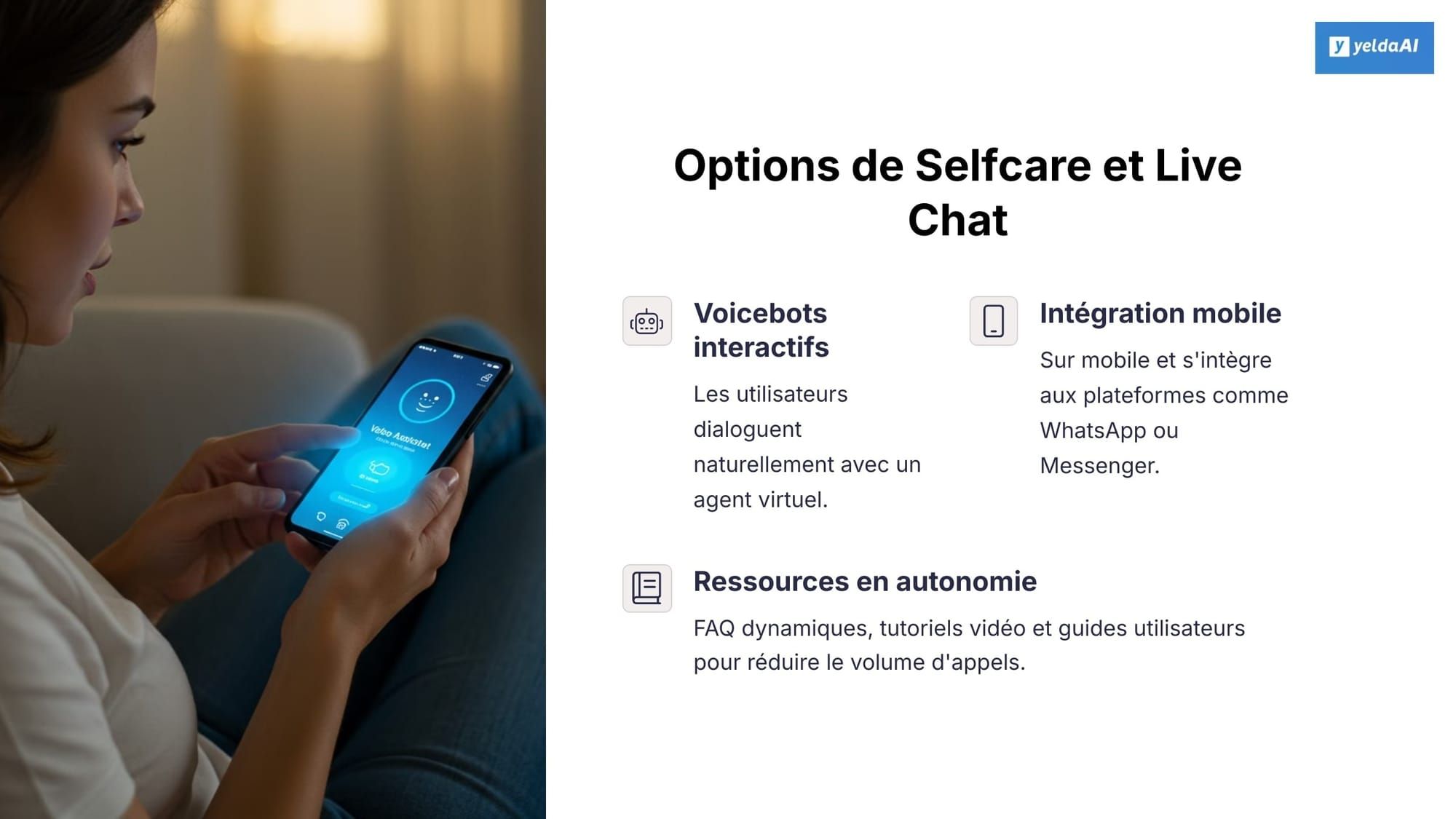
Providing self-service and live chat options
Diversifying contact channels reduces the pressure on your phone lines. Direct some of your customers toward alternatives that are efficient and less costly.
YeldaAI voicebots enhance your website with interactive voice assistance. Users can have natural conversations with a virtual agent capable of answering their questions or resolving their issues without any wait time. This technology also works on mobile and integrates with popular platforms like WhatsApp or Messenger.
Such a voicebot uses the same knowledge base as your telephone callbot, but diverts a portion of the traffic from your switchboard. This multichannel consistency simplifies your management and relieves pressure on your contact center.
Additionally, add dynamic FAQ sections, video tutorials, and user guides to encourage customer self-service. These resources reduce call volume for recurring topics and free up your agents for complex cases.
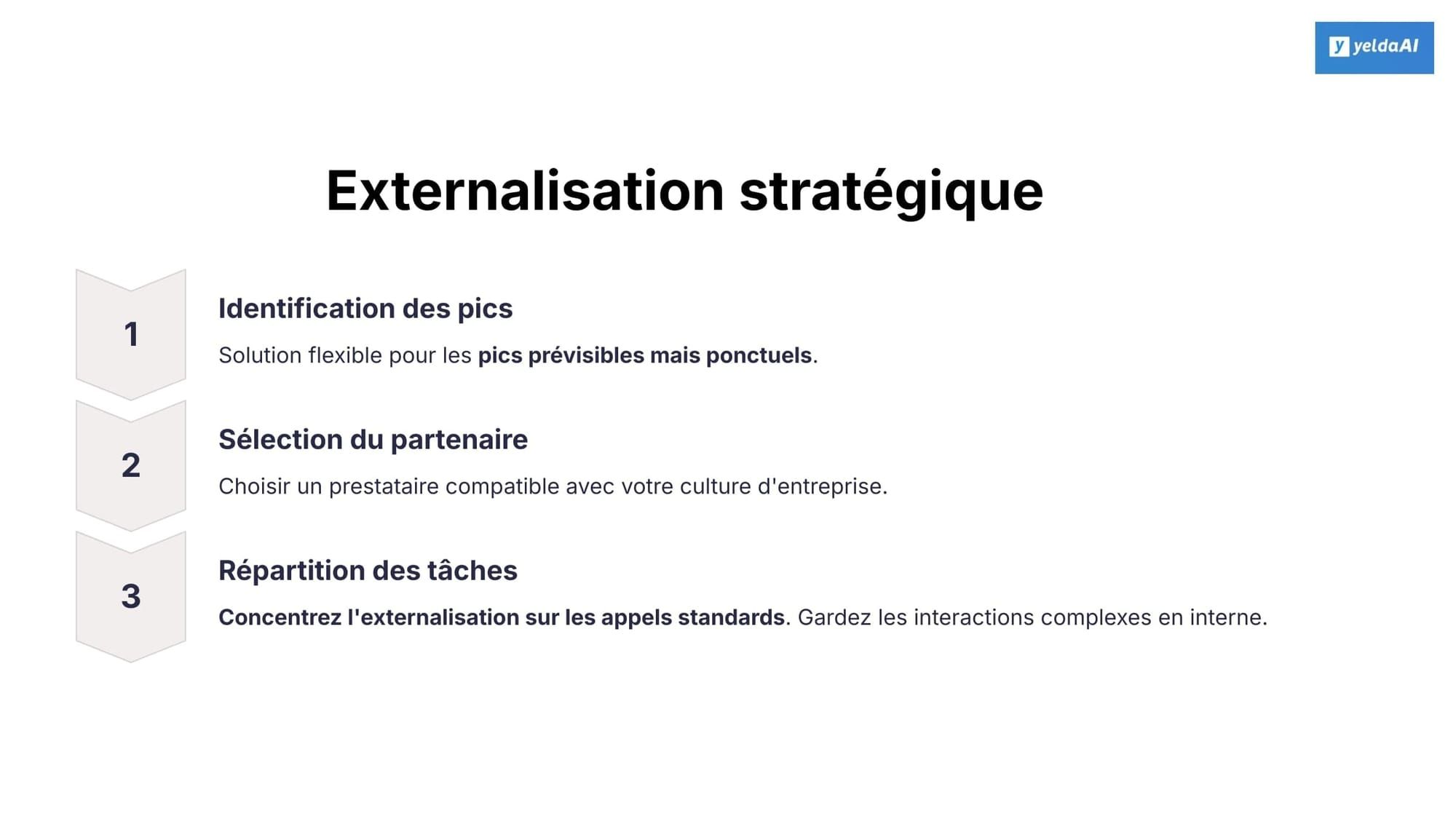
Outsourcing inbound calls to a call center
During predictable but occasional spikes, tactical outsourcing to a specialized provider offers a flexible solution without the need for permanent hiring.
Select a partner that aligns with your company culture and your quality standards. Train them on your procedures and integrate them into your tools to ensure a seamless experience. This option is particularly well-suited for product launches, promotional campaigns, or seasonal events.
Focus outsourcing on standard or repetitive calls, and keep high-value interactions in-house. This hybrid approach preserves service quality for sensitive matters while absorbing excess volume.
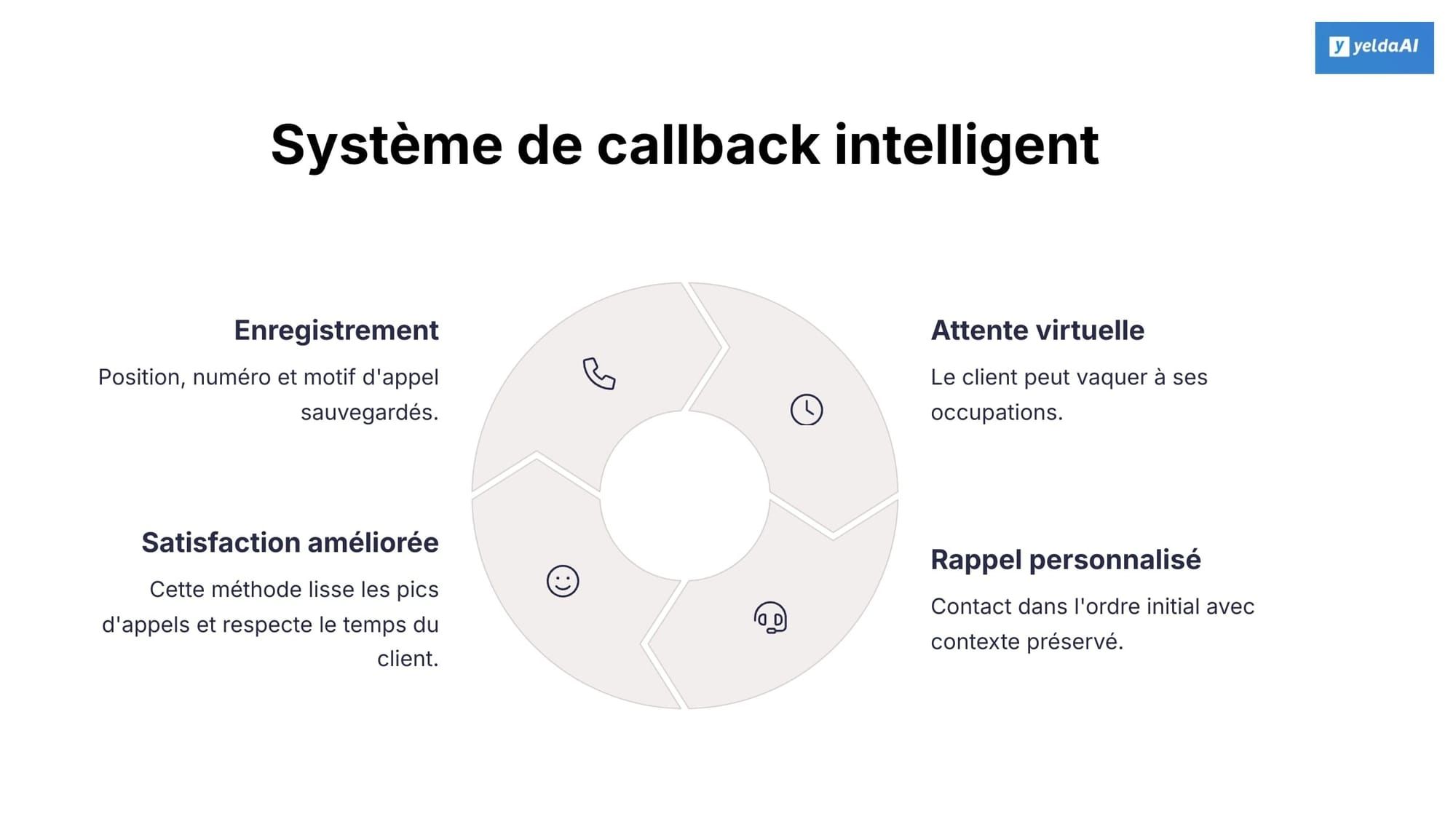
Implementing a callback system
Rather than forcing customers to wait on hold, offer them the option to be called back as soon as an agent becomes available. This solution turns a frustrating wait into a promise of personalized service.
The system records:
the customer's position in the queue,
their number
and, if applicable, the reason for their call.
Your agents then contact customers in the original order, with the necessary contextual information at their fingertips.
This method smooths out call spikes by distributing the workload over a longer period. It also improves customer satisfaction by respecting their time and eliminating the stress of waiting.
Effective agent training
Even with the best technology, your agents remain at the heart of managing call spikes. Prepare them specifically for these intense periods with targeted training.
Develop optimized scripts for typical high-volume requests. Train your teams to quickly identify customer needs and respond concisely without sacrificing quality.
Organize call spike simulations to test your agents' reflexes under pressure. These practical exercises build their confidence and sharpen their instincts for real-world situations.
Create teams of "super-agents" specialized in crisis management, capable of stepping in to provide support during spikes. These experienced employees accelerate the resolution of complex cases and defuse tense situations.
KPIs to track during your call spikes
Accurately measuring your performance during high-traffic periods helps you adjust your strategies in real time and prepare for future call spikes.
Answer rate : The percentage of calls answered relative to the total volume, a direct indicator of your ability to handle the surge in activity
Average wait time : The average duration customers wait before being connected to an agent
Abandon rate : The proportion of customers who hang up before speaking to an agent, a direct reflection of their frustration level
Average Handle Time (AHT) : The average duration of a call, including conversation time and post-call work
First Call Resolution (FCR) : The percentage of issues resolved during the first contact, without the need for a follow-up call
Customer Satisfaction Score (CSAT) : A score reflecting the experience your customers had during these high-pressure periods
Monitor these metrics with particular attention during your peak activity periods. For a complete analysis of your call center's performance indicators, check out our detailed guide on essential call center KPIs.
How many calls can your voice agent absorb?
Estimate in one minute the number of automated calls and the savings on your own volumes, with our ROI calculator.