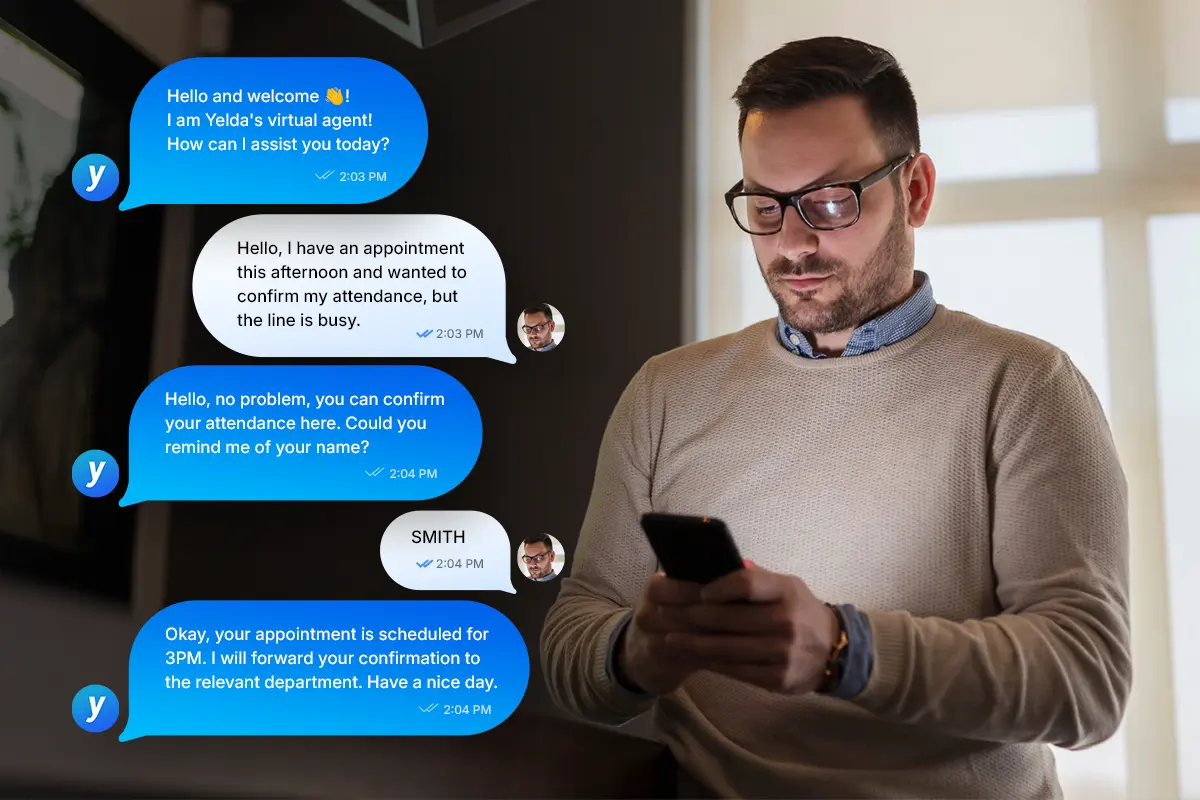
Phone greeting scripts: 31 proven phrases
Discover the best phone greeting templates to improve your company's image and provide impeccable customer service.


Nearly one in two French people has felt, while on the phone, that an advisor was rushed or stressed. And for 84% of them, this degraded the quality of the interaction (2025 Customer Service Observatory).
The problem rarely lies with the advisor themselves, but rather with the mental load they carry during the call. And that is where templates become useful. They aren't meant for reciting a script, but for freeing up mental bandwidth to truly listen.
We have gathered 31, field-tested and organized according to the key stages of a phone call: greeting, qualification, hold, listening, and closing. It’s up to you to adapt them to your sector, your caller, and the context of the call.
Introductions and greetings: how to start every call off right?
The first few seconds of a call shape your company's image. A botched greeting leaves a customer doubting your professionalism. Conversely, a polished opening immediately builds trust.
Examples of phone greeting templates
Every effective greeting contains three elements: a salutation, the name of the company or department, and the agent's first name. Here are three proven formulas:
- "Hello, [Company Name], [First Name] speaking. How can I help you?"
- "[Company Name], [Department Name] department, [First Name] speaking. What can I do for you?"
- "Thank you for calling [Company Name], this is [First Name] from customer service. How may I assist you today?"
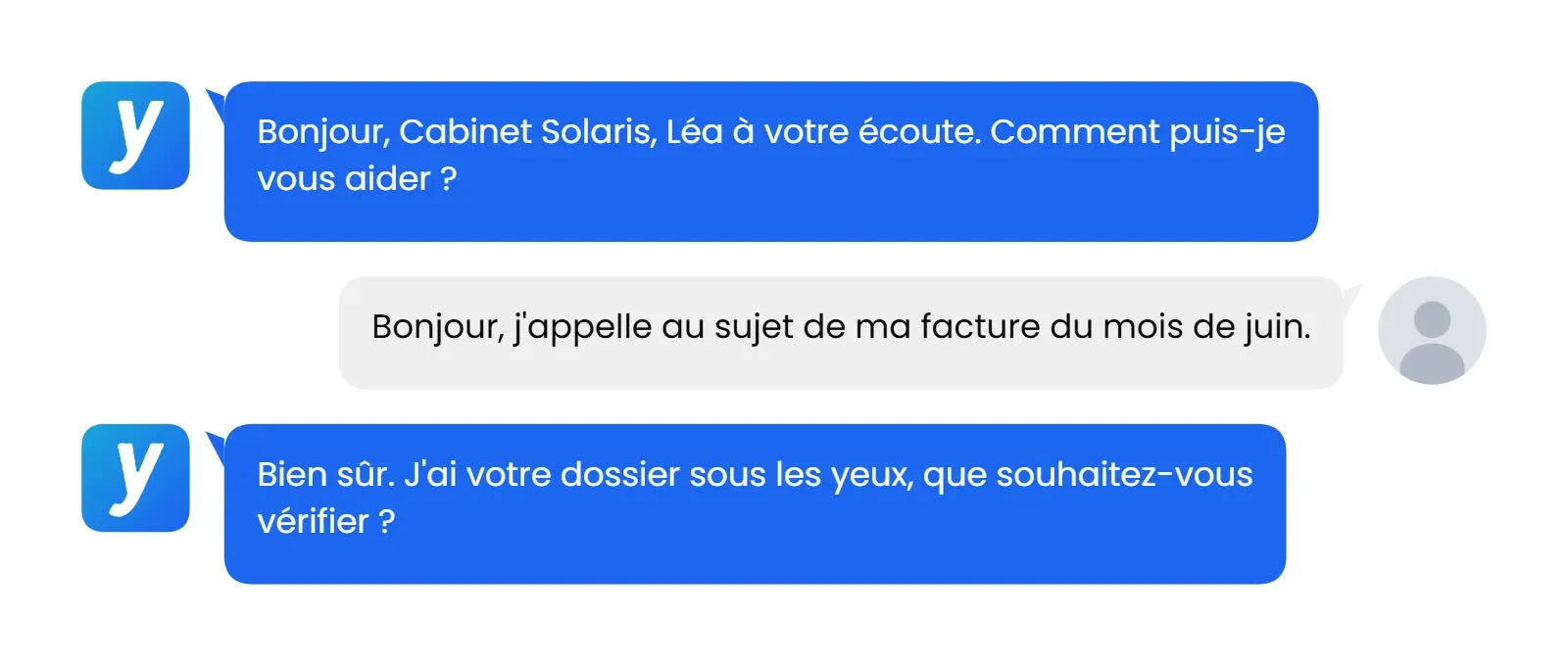
Adapt the phrasing based on who you are speaking to: a prospect expects a sales-oriented opening, a supplier prefers to get straight to the point, and a loyal customer appreciates a touch of familiarity.
Best practices for receptionists and phone switchboards
You can hear a smile over the phone Even if the person on the other end cannot see you, your tone reveals your state of mind. Prioritize positive and courteous language, avoiding negative phrasing such as "I don't know" or "that's not possible."
Furthermore, if you know the caller's name, use it whenever the opportunity arises. This personalization strengthens the connection. Finally, every sector has its own conventions; a law firm does not greet its clients the same way a travel agency does. Respect the conventions of your industry.
Call qualification: understanding and effectively directing the caller
Once the greeting is complete, it is time to identify the need. Quickly gauging the caller's profile and the reason for their call helps you direct them to the right department. Ask open-ended questions without appearing intrusive, using professional and reassuring language.
Standard phrases for qualifying the purpose of the call
Four effective phrasings:
- "Could you please tell me the reason for your call so I can direct you appropriately?"
- "How can I help you today?"
- "Could you clarify your request so that I can put you in touch with the right department?"
- "I am going to take down some information to ensure your call is directed as effectively as possible."
Phrases for verifying and restating the need
Before taking action, verify that you have correctly understood the request. Restating the request demonstrates your active listening:
- "If I understand correctly, you would like to...?"
- "Let me restate your request to ensure I have understood correctly..."
- "To summarize, you need...?"
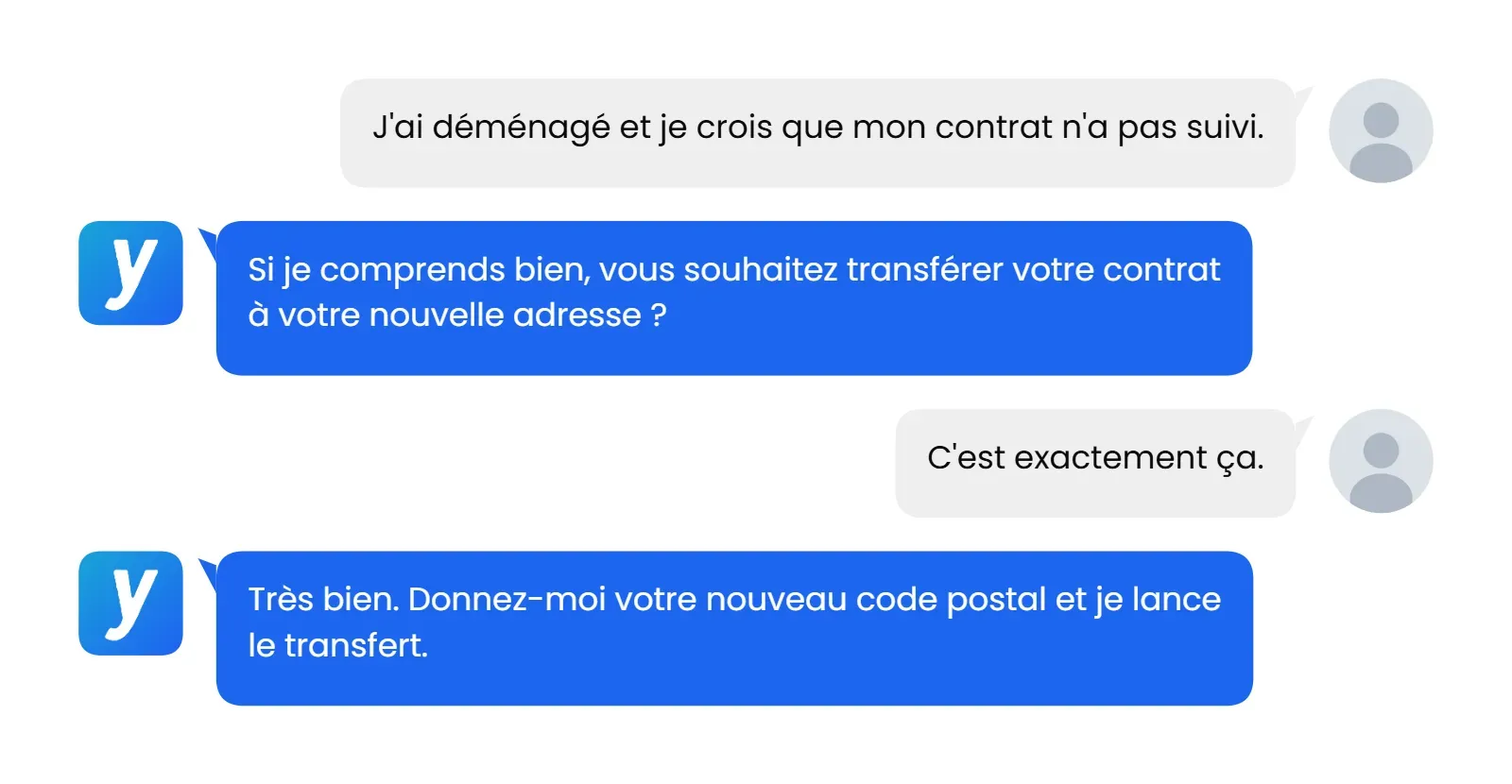
This technique proves to the caller that you have listened to them, rather than just heard them. They feel taken seriously, which strengthens their trust in your service.
Managing hold or transfers: ensuring fluidity and satisfaction
Nobody likes waiting on the phone. However, putting someone on hold or transferring a call is sometimes unavoidable. The golden rule is to always inform the caller and get their consent before taking any action. This transparency minimizes frustration and maintains the quality of the interaction.
Phrases for putting a caller on hold
Three standard phrases to inform the caller and obtain their consent:
- "May I put you on hold for a few moments while I look up the information you requested?"
- "Would you mind holding while I check with the relevant department?"
- "Would you like to hold, or would you prefer that I call you back as soon as I have the answer?"
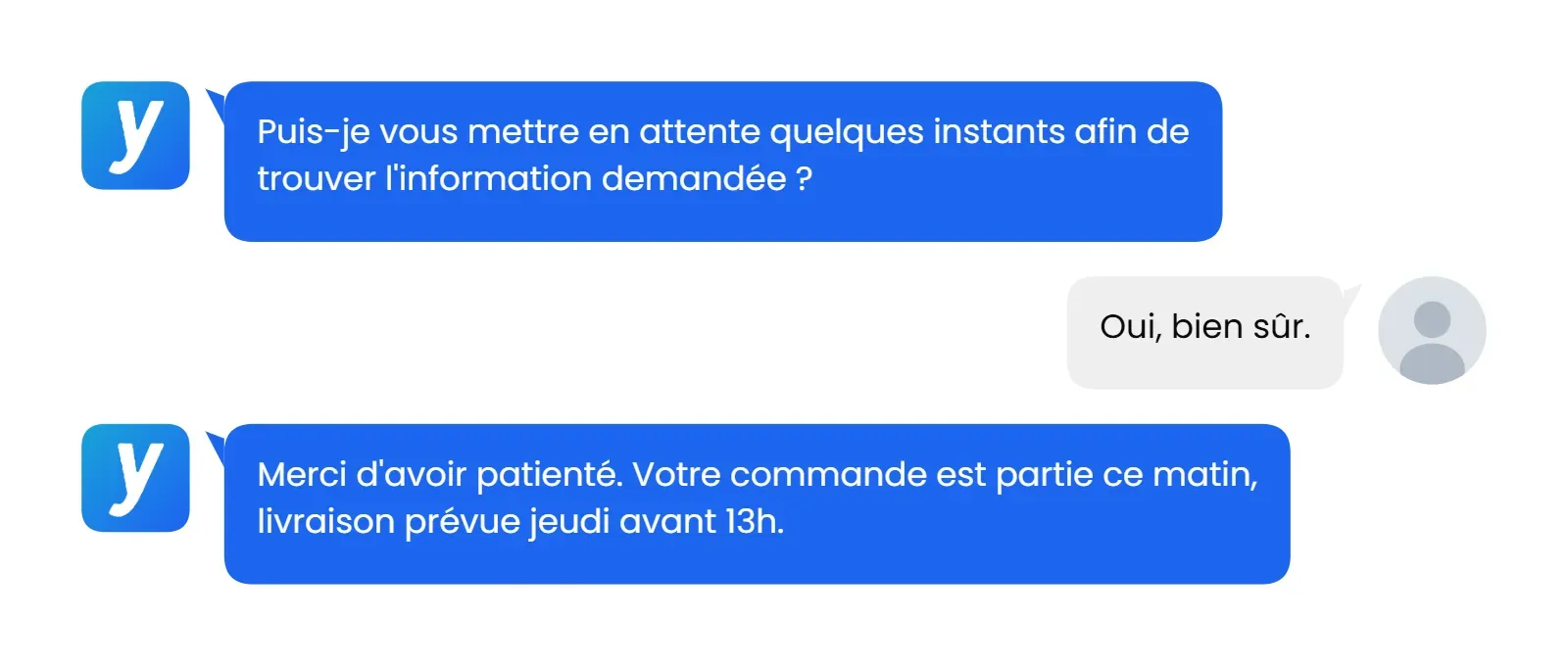
Thanking and resuming after a hold
When returning to the call, always thank the caller :
- "Thank you for holding; here is the information you need."
- "Thank you for your patience; we can continue now."
Transferring a call effectively
A successful transfer involves two steps: announce the name of the new contact and explain the reason for the transfer. This way, the caller knows who they are being directed to and why.
- "I am going to transfer you to [Name/First name or department], who will be better able to assist you with your request."
- "One moment, I am connecting you with our specialist in the [Name] department."
Taking a message and ensuring follow-up
When the recipient is unavailable, offer to take a message. Collect key information : name, phone number, and the reason for the call. End with a clear promise of a callback.
- "[Name] is not available at the moment. May I take a message for them?"
- "I will note your request and pass it on to the person concerned. Could you please leave your name and phone number?"
- "We will get back to you as soon as possible."

Listening: showing empathy and understanding of the customer's issue
On the phone, the person you are speaking with cannot see you. They therefore need clear signals to know that you are following their request. Active listening increases satisfaction and promotes first-contact resolution.
Signals of presence and active listening
Three simple phrases to show that you are attentive:
- "Yes, I'm listening."
- "I'm noting your request."
- "I see, I understand."
Punctuate the conversation regularly with these confirmations. This lets the caller know that their information has been received and that they do not need to repeat themselves.
Personalizing the relationship through vocabulary
Using the name of the person you are speaking with creates an immediate climate of trust. "Mr. Durand, I will check that right away" sounds warmer than a vague "I'll check."
Also, adapt your vocabulary to the industry and the caller's profile. A technician will appreciate precise terminology, while a private individual will prefer accessible explanations. Avoid overly generic phrases that sound like they are being read from a script rather than tailored to the person on the other end of the line.
Standard phrases for handling an unhappy customer
When dealing with an annoyed caller, stay calm and never contradict them directly. Here are three effective phrases:
- "I understand your frustration, and I will do everything I can to help you."
- "I am sincerely sorry for this inconvenience. Let's look at how we can resolve this together."
- "I am taking personal charge of your request and will keep you updated on its progress."
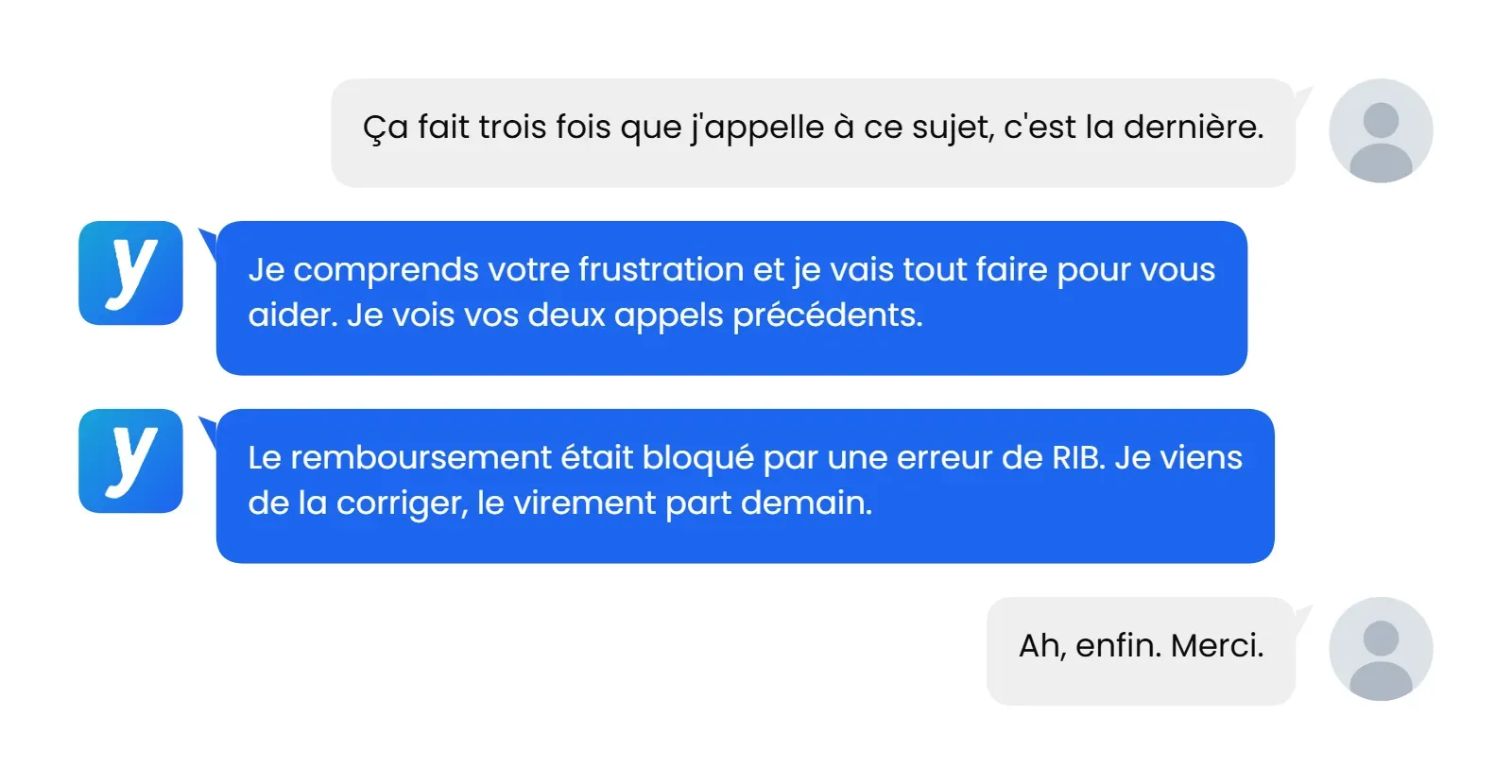
The key lies in three actions: acknowledging the problem, expressing empathy, and proposing a concrete solution. This approach defuses tension and steers the conversation toward a positive outcome.
Ending the call: closing well to leave a positive impression
The last impression matters just as much as the first. Before hanging up, follow four steps: summarize the conversation, check the caller's satisfaction, thank them, and offer a personalized sign-off. Don't forget to reiterate your contact details or the service's availability for any future needs.
Checking satisfaction and concluding the conversation
Three phrases to ensure the caller leaves satisfied:
- "Did I answer all your questions?"
- "Do you have any other requests or needs?"
- "Please feel free to call us back if needed; we are here to help."
Thanking the caller and closing the call professionally
Two polite ways to end a call:
- "Thank you for your call, and have a great day."
- "Thank you for your trust; we are always here to assist you."
Tailor your closing to the context: "have a good evening" after 6 p.m., "have a great weekend" on Fridays, or "happy holidays" during the festive season. This final touch strengthens customer loyalty and leaves a positive impression of the interaction.
Estimate the gains of a voice agent based on your own call volumes with our ROI simulator.
What are the mistakes to avoid when answering the phone?
Certain blunders can instantly ruin the quality of your service. Here are the eight most common mistakes :
- Answering after more than 3 rings
- Not introducing yourself clearly
- Using a monotone or rushed tone
- Using negative phrasing ("I don't know," "that's impossible")
- Interrupting the caller
- Putting someone on hold without warning or asking for permission
- Forgetting to paraphrase to confirm understanding
- Transferring a call without explaining who it is going to or why
Each of these mistakes creates frustration for the caller and damages your company's image. It is better to identify them so you can correct them quickly.
How can you train your teams to use standard phrases?
Start by creating a shared phone greeting guide containing all the recommended phrases. Then, organize training sessions with simulations and role-playing exercises. Listening to pre-recorded calls is an effective way to illustrate best and worst practices. For follow-up, schedule regular coaching and personalized feedback.
Finally, leverage technology. A well-configured IVR or an intelligent callbot ensures consistent greetings, even outside of business hours. This allows your teams to focus on high-value calls.
How many calls can your voice agent absorb?
Estimate in one minute the number of automated calls and the savings on your own volumes, with our ROI calculator.